
"Early Universe's Small Galaxies Dominated by Unexpectedly Massive Black Holes"
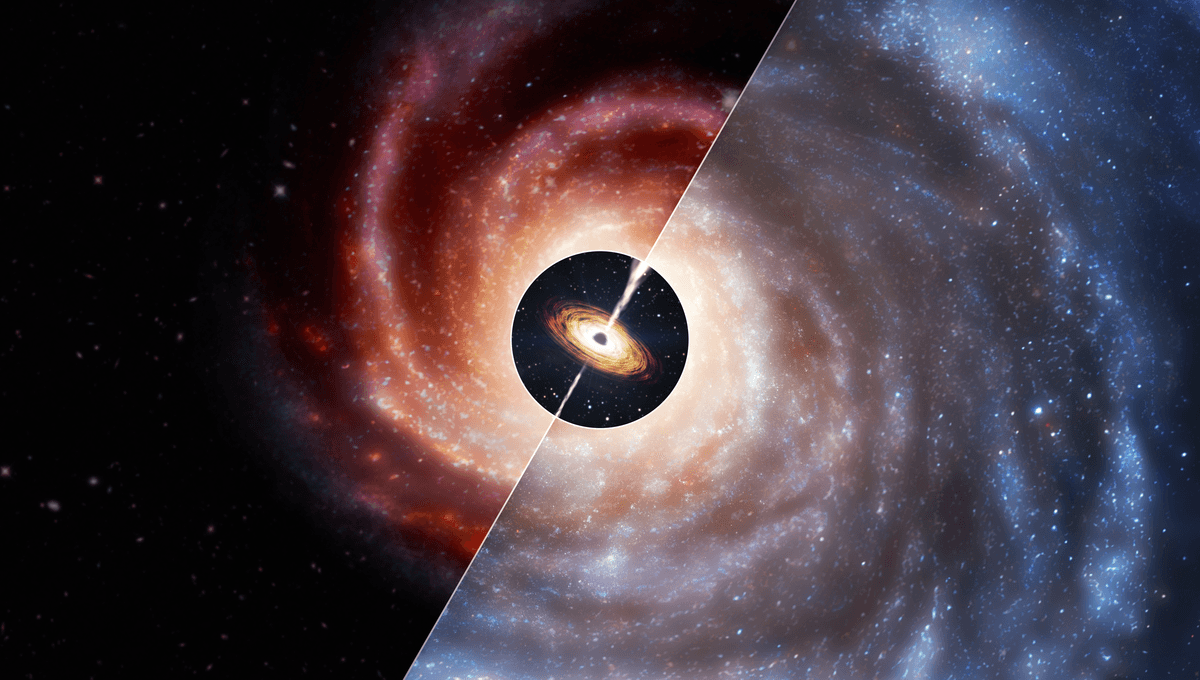
Astronomers have discovered "overmassive" black holes in the early universe, which are significantly larger than those in similar-sized galaxies in the local universe, challenging the established relationship between the mass of a host galaxy and its central black hole. Using the JWST, they observed 21 distant systems and found that the proportion between the black hole and the stars in these galaxies deviates from the norm. This discovery provides evidence for the formation of these supermassive black holes, suggesting that they may have originated from heavy seeds, impacting the entire galaxy and stunting star formation. The study was presented at the 243rd meeting of the American Astronomical Society and published in The Astrophysical Journal Letters.
Reading Insights
0
12
3 min
vs 4 min read
81%
621 → 115 words
Want the full story? Read the original article
Read on IFLScience