
"James Webb Space Telescope Reveals Ancient Cosmic Web and Galaxies"
TL;DR Summary
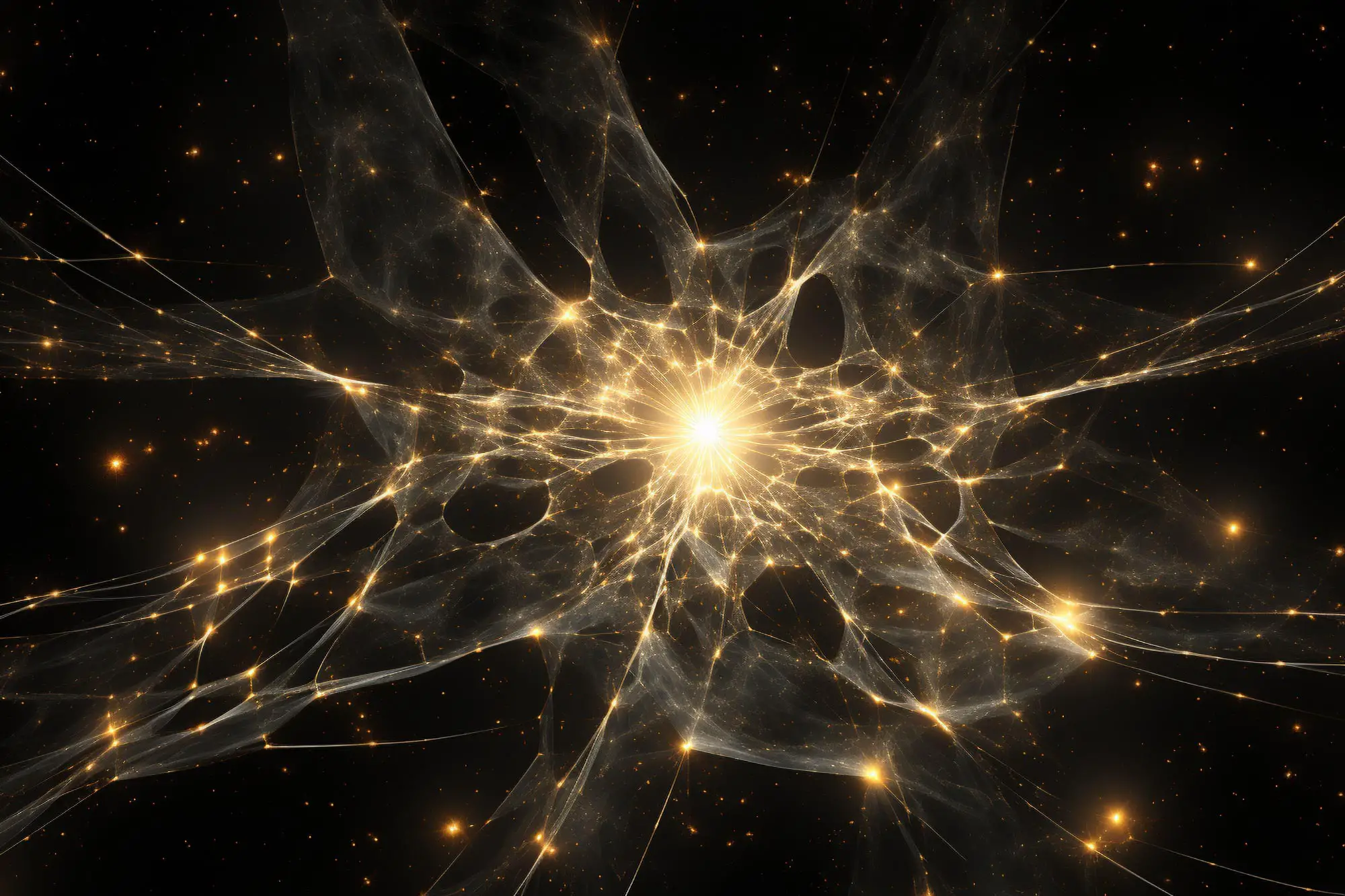
Astronomers using the James Webb Space Telescope have discovered an early strand of the cosmic web, a long filament of 10 galaxies existing just 830 million years after the big bang. This structure, anchored by a luminous quasar with a supermassive black hole at its core, is expected to evolve into a massive cluster of galaxies. The study also provides insights into the properties of eight quasars in the young universe, revealing the range in mass of their central black holes and the potential impact of these black holes on star formation.
Topics:science#astronomy#cosmic-web#early-universe#james-webb-space-telescope#quasars#supermassive-black-holes
- Webb Space Telescope Illuminates Earliest Strands of the Cosmic Web SciTechDaily
- JWST Turns Its Eyes on Supermassive Black Holes and the Galaxies That Host Them Sky & Telescope
- James Webb telescope detects the earliest strand in the 'cosmic web' ever seen Livescience.com
- James Webb Space Telescope's latest amazing discovery: starlight from ancient quasars msnNOW
- Webb Detects 3-Million-Light-Year-Long Filament of Galaxies in Early Universe Sci.News
- View Full Coverage on Google News
Reading Insights
Total Reads
0
Unique Readers
10
Time Saved
8 min
vs 9 min read
Condensed
94%
1,627 → 92 words
Want the full story? Read the original article
Read on SciTechDaily