
"James Webb Telescope's Discovery of Baby Quasars Redefines Black Hole Understanding"
TL;DR Summary
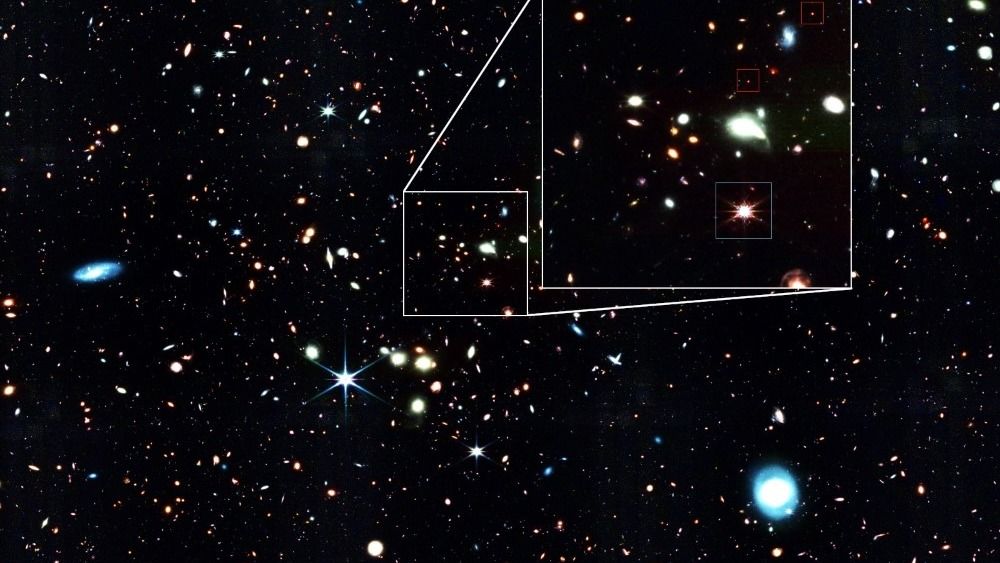
The James Webb Space Telescope has discovered "baby quasars," small versions of supermassive black holes, in the farthest reaches of the universe, challenging current understanding of how these ultra-monstrous black holes form. These mysterious spots, previously seen by the Hubble Space Telescope, were distinguished as baby quasars by the JWST, indicating rapid growth and posing a challenge to existing cosmological theories. Further study of these baby quasars could provide insights into the rapid growth of supermassive black holes.
Topics:science#astronomy#astrophysics#early-universe#james-webb-space-telescope#quasars#supermassive-black-holes
- 'Baby quasars' spotted by James Webb telescope could transform our understanding of monster black holes Livescience.com
- How do some black holes get so big? The James Webb Space Telescope may have an answer Space.com
- Baby Quasars Could Help Solve An Astronomical Mystery Popular Mechanics
- Supermassive Black Hole Challenges Cosmic Theories – “The Spectra Were Just Mind-Blowing” SciTechDaily
- 'Baby quasars': James Webb Space Telescope spots little giants in the deep past Phys.org
Reading Insights
Total Reads
0
Unique Readers
9
Time Saved
2 min
vs 3 min read
Condensed
86%
550 → 78 words
Want the full story? Read the original article
Read on Livescience.com