
JWST spots wind-driven clouds cycling around a hot exoplanet 690 light-years away
TL;DR
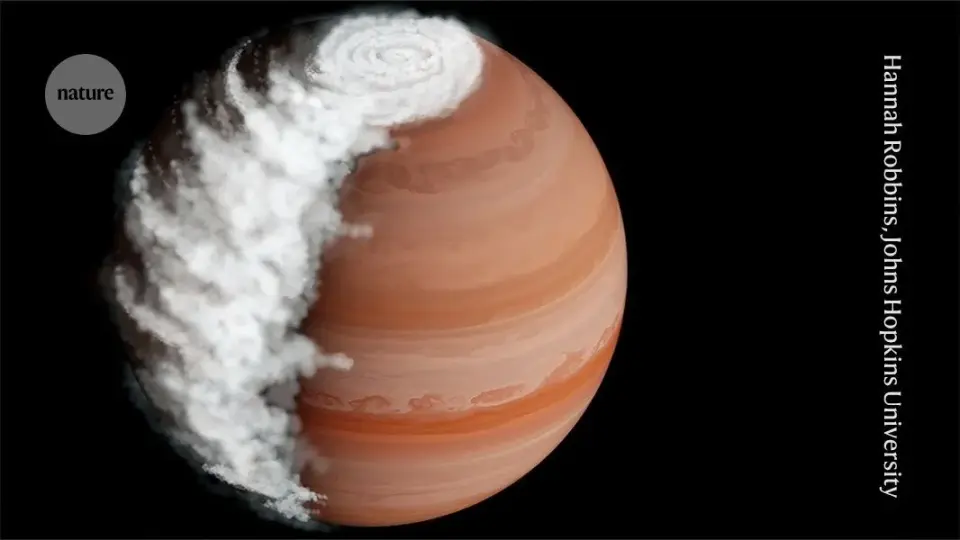
The James Webb Space Telescope detected phase‑dependent cloud formation on the hot exoplanet WASP‑94 A b during transit, revealing thick clouds on the night side that form and dissipate as winds move them onto the day side; the clouds are likely mineral droplets due to dayside temperatures around 1,600 K, offering new insight into how exoplanetary atmospheres weather and rotate.
- See the clouds streaming and vanishing around this planet — 690 light years away Nature
- Astronomers de-fog exoplanet atmospheres with new cloud-detecting method Phys.org
- This exoplanet's sky is full of puffy clouds made of vaporized rock—but only on one side Scientific American
- JWST maps the weather on a hot gas giant 700 light-years away Ars Technica
- This exoplanet weather forecast by the James Webb Space Telescope calls for sandy skies and a clear (alien) sunset Space
Want the full story? Read the original reporting
Read on Nature