Tag

Atmospheres

All articles tagged with #atmospheres

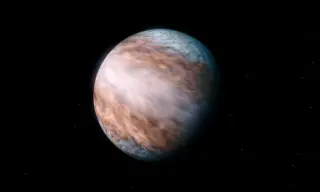
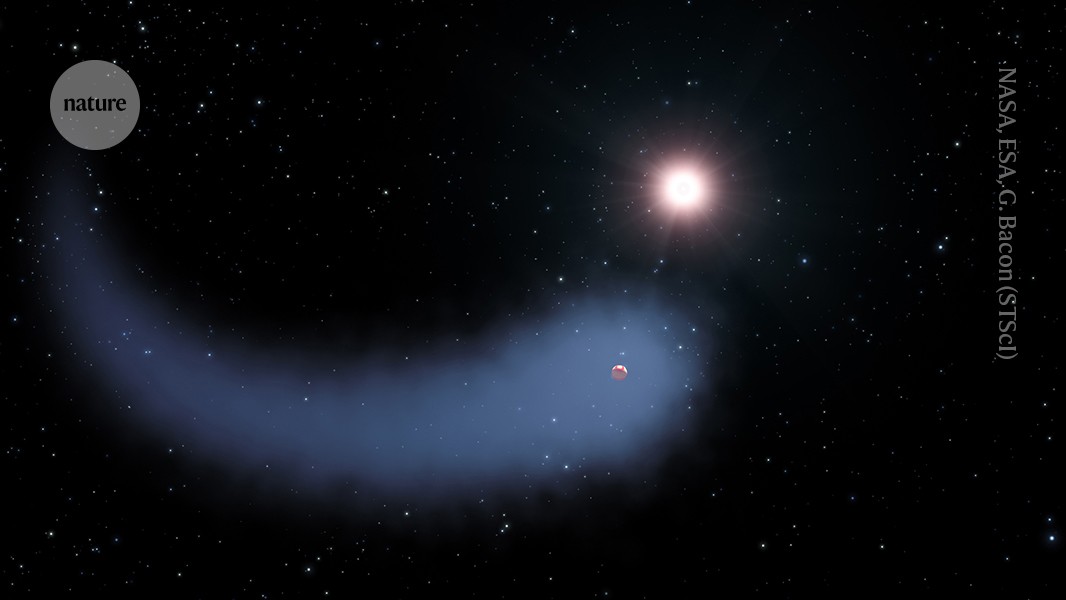
JWST spots wind-driven clouds cycling around a hot exoplanet 690 light-years away
astronomy4 days ago

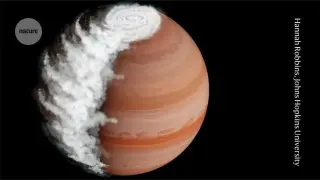
JWST spots wind-driven clouds cycling around a hot exoplanet 690 light-years away

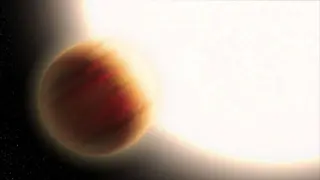
The James Webb Space Telescope detected phase‑dependent cloud formation on the hot exoplanet WASP‑94 A b during transit, revealing thick clouds on the night side that form and dissipate as winds move them onto the day side; the clouds are likely mineral droplets due to dayside temperatures around 1,600 K, offering new insight into how exoplanetary atmospheres weather and rotate.

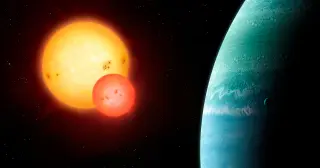
Venus-like exoplanets may outnumber Earths, researchers claim
space5 days ago

Venus-like exoplanets may outnumber Earths, researchers claim

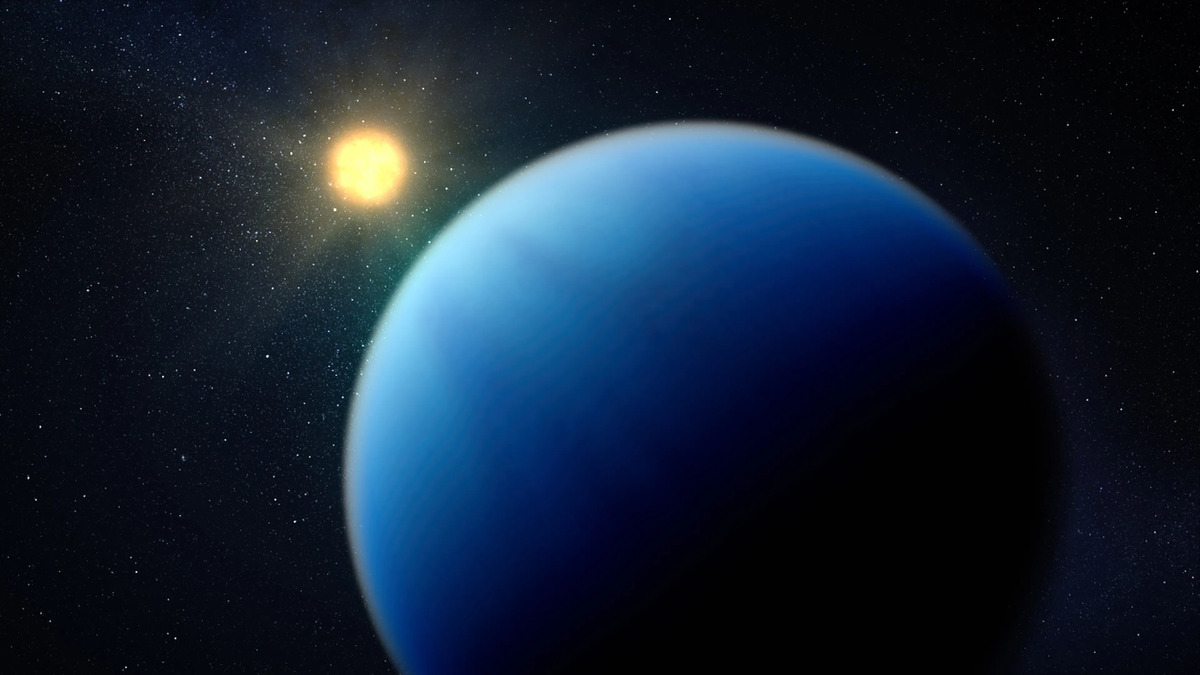
Preliminary modelling presented at the EGU General Assembly suggests Venus-like, CO₂-dominated atmospheres on rocky exoplanets could be about twice as common as Earth-like worlds with oceans, though the results are not yet peer-reviewed and observational confirmation is lacking. Venus is the nearest planetary reference point, but it remains underexplored due to data gaps and shifting science priorities; confirming exoplanet Venus-like atmospheres will require future missions and more capable telescopes, with biases toward short-period planets complicating detection.

JWST maps contrasting day-night weather on a distant hot gas giant
science5 days ago

JWST maps contrasting day-night weather on a distant hot gas giant

JWST studied WASP-94A b, a hot, tidally locked gas giant about 690 light-years away, using limb-resolved spectroscopy during transit to compare its morning and evening limbs. The morning limb is cloudier with high-altitude aerosols; the evening limb is clearer and shows water vapor, driven by strong equatorial winds and a day–night temperature difference around 450 K. Averaging the limbs biases atmospheric composition estimates (e.g., oxygen enrichment and metallicity), highlighting the need to account for day-night asymmetries in exoplanet studies and to refine models to mitigate these biases.

A 0.8 Earth-Radius Threshold Signals When Tiny Planets Lose Their Atmospheres
space13 days ago

A 0.8 Earth-Radius Threshold Signals When Tiny Planets Lose Their Atmospheres

A new model called STEHM finds that planets smaller than about 0.8 Earth radii struggle to hold onto atmospheres due to weaker gravity and faster interior cooling, which suppresses outgassing; under common CO2 conditions, 0.6–0.5 R⊕ worlds can lose atmospheres in tens to hundreds of millions of years, while planets at or above 0.8 R⊕ retain thick atmospheres for billions of years. Exceptions exist for unusually high initial carbon, minimal core radius, or a cold start delaying outgassing. The study suggests using 0.8 R⊕ as a practical filter in planning future exoplanet observations and prioritizing targets for atmospheric characterization.

Ancient lava world TOI-561 b cloaked in a surprising thick atmosphere
space2 months ago

Ancient lava world TOI-561 b cloaked in a surprising thick atmosphere

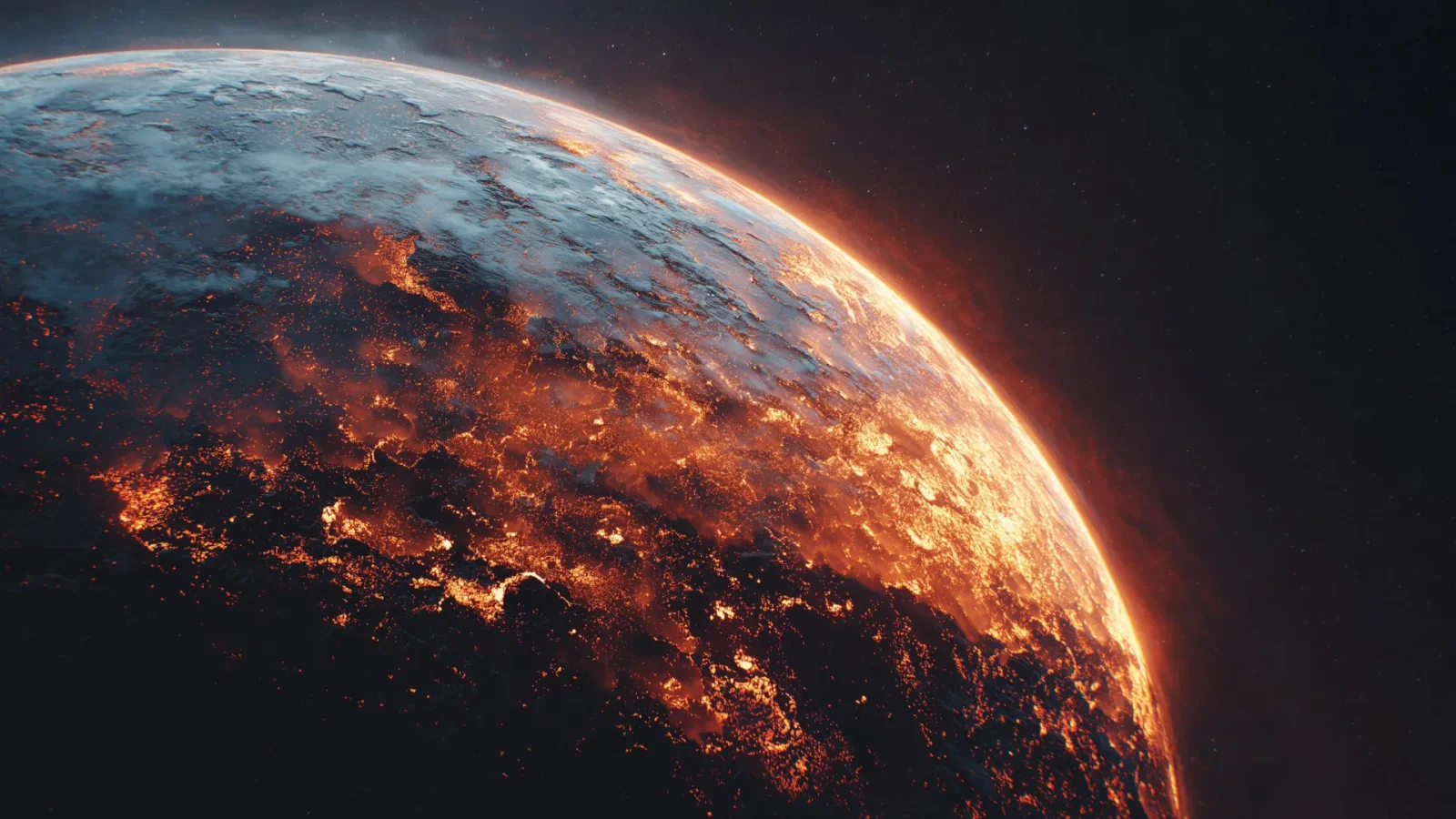
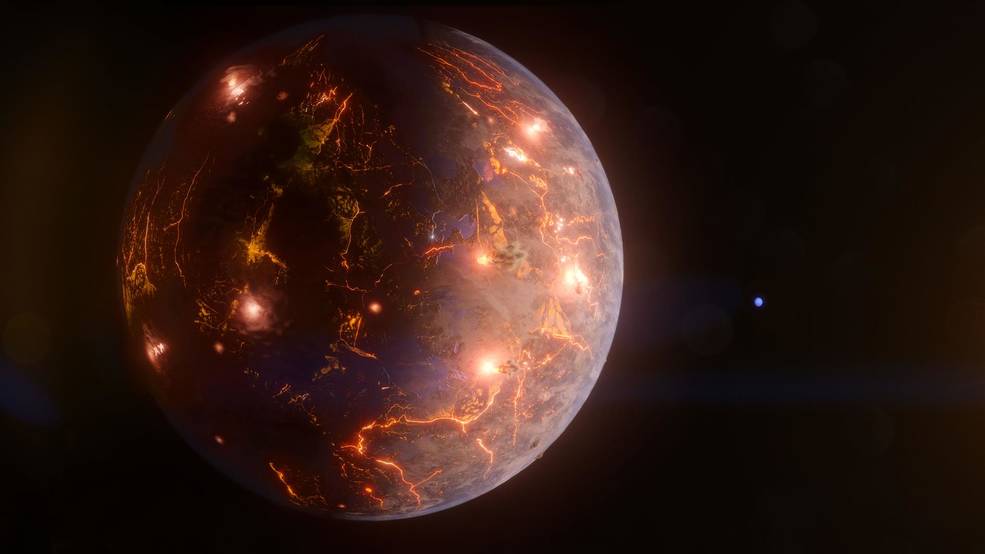
NASA’s James Webb Space Telescope detected signs of a relatively thick atmosphere around TOI-561 b, an ultra-hot, short-period rocky planet likely with a magma ocean. The planet’s dayside is cooler than a bare rock would be, indicating heat is redistributed by a volatile-rich atmosphere—potentially with water vapor and silicate clouds—challenging expectations that such extreme worlds would lose their atmospheres. The atmosphere may also help explain TOI-561 b’s lower-than-expected density, suggesting a recycling system between the magma ocean and the atmosphere and classifying the world as a “wet lava world.”

Webb Telescope Discovers Unusual Planet 35 Light Years Away
science1 year ago

Webb Telescope Discovers Unusual Planet 35 Light Years Away

The James Webb Space Telescope has detected unusual atmospheric data from exoplanet L98-59d, 35 light years away, suggesting a thick, sulfurous atmosphere possibly due to volcanic activity. However, the data is considered noisy and tentative, with some scientists skeptical about the conclusions. The findings highlight the challenges of studying distant exoplanet atmospheres and the need for further observations to confirm these initial results.

Unraveling the Mystery: NASA's Findings on Shrinking Exoplanets
science-and-astronomy2 years ago

Unraveling the Mystery: NASA's Findings on Shrinking Exoplanets

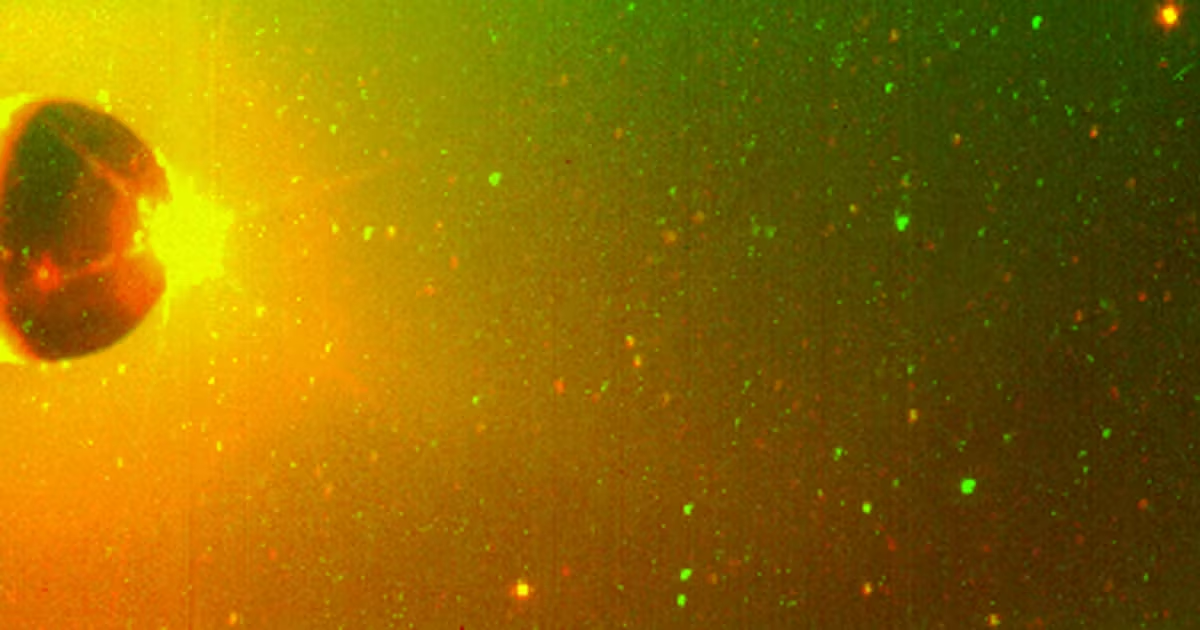
Astronomers have discovered that some exoplanets are losing their atmospheres, causing them to shrink. This phenomenon, known as "core-powered mass loss," occurs when radiation from the planet's hot core pushes away its atmosphere from within. This process can transform a puffy, sub-Neptune planet into a rocky super-Earth. The findings explain why there are few exoplanets with sizes between a super-Earth and sub-Neptune. The study analyzed exoplanet data collected by NASA's Kepler 2 mission and suggests that core-powered mass loss is the likely reason behind atmospheric escape on these planets.

"Unveiling the Enigmatic Connection: Exploring the Link Between Life and Volcanoes"
astronomy2 years ago

"Unveiling the Enigmatic Connection: Exploring the Link Between Life and Volcanoes"

A new study investigates the diversity of carbon species in the atmospheres of exoplanets similar to Earth, aiming to understand the conditions for the formation of a carbon monoxide (CO)-rich atmosphere, which could indicate the presence of simple life. The study explores the concept of CO runaway, where more CO is produced than destroyed, and how it can contribute to the appearance of life. However, the presence of volcanoes on exoplanets can complicate the detection of biosignatures. The research provides insights into the complex relationship between atmospheric composition, climate, tectonic activity, and the origin of life, contributing to the ongoing exploration of habitable worlds beyond our solar system.

"Prioritizing TESS Discoveries: JWST's Target Exoplanets"
astronomy2 years ago

"Prioritizing TESS Discoveries: JWST's Target Exoplanets"

A recent study has identified 14 "best in class" exoplanets that should be prioritized for further study by the James Webb Space Telescope (JWST). Using a category grid based on planet radius and estimated surface temperature, the team ranked exoplanets by their potential for detectable transmission or emission spectra. After observing 103 exoplanets through the TESS Follow-up Observation Program, 14 were confirmed as top targets for JWST to characterize their atmospheres. These findings will serve as a valuable starting point for future telescopes and contribute to our understanding of exoplanet atmospheres.

"James Webb Space Telescope Challenges Assumption of Abundant Habitable Planets"
space-science2 years ago

"James Webb Space Telescope Challenges Assumption of Abundant Habitable Planets"

The James Webb Space Telescope (JWST) has not found evidence of a thick atmosphere on the rocky exoplanets TRAPPIST-1 b and c, but the search for habitable worlds in the TRAPPIST-1 system is not over. While the innermost planets are likely bare rock due to the proximity to their host star, new theoretical studies suggest that the planets in the habitable zone, such as TRAPPIST-1 e and f, may still have retained their atmospheres. Further observations and studies are needed to determine if there are habitable worlds in the TRAPPIST system and what this means for the prevalence of life in the galaxy.