
"JWST Unearths Surprising Clues to Early Galaxy Formation"
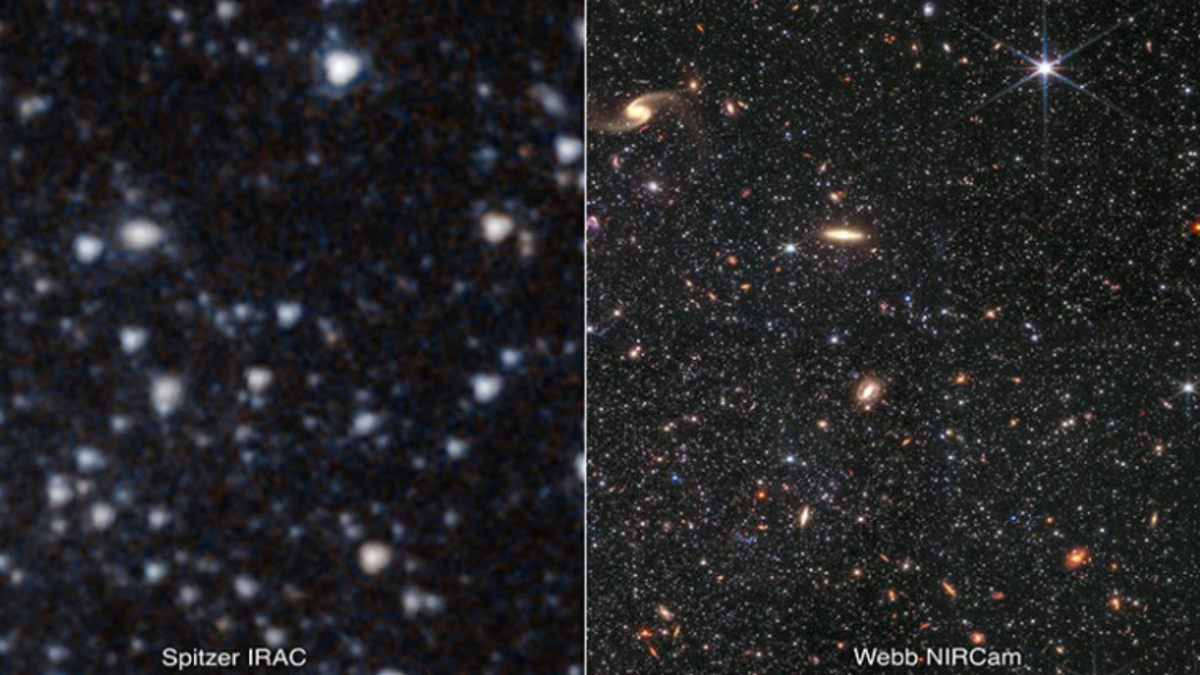
The James Webb Space Telescope has been used to study the history of stars in a low-mass dwarf galaxy, WLM, resembling early universe galaxies, providing insights into star formation rates over the last 13 billion years. The telescope's observations revealed that WLM produced the most stars over a 3 billion-year period starting between 2 to 4 billion years after the Big Bang, with a pause in star formation due to specific early universe conditions. The research, led by Rutgers University-New Brunswick astronomer Kristen McQuinn, demonstrates the JWST's capabilities and the significant computational effort required to process its data, offering valuable insights for the wider scientific community.
- James Webb Space Telescope tracks a galaxy's history back to just after the Big Bang Space.com
- Physics - JWST Sees More Galaxies than Expected Physics
- JWST Reveals a Surprise Twist in Black Hole And Galaxy Formation ScienceAlert
- JWST's Puzzling Early Galaxies Don't Break Cosmology--But They Do Bend Astrophysics Scientific American
- Unearthing Clues from the Cosmos: New Research from Rutgers University-New Brunswick Medriva
Want the full story? Read the original reporting
Read on Space.com