Tag

Astronomy Research

All articles tagged with #astronomy research

Discarded asteroid data hints at a 153-day Earth-to-Mars sprint
space2 hours ago

Discarded asteroid data hints at a 153-day Earth-to-Mars sprint

A Brazilian cosmologist, Marcelo de Oliveira Souza, uncovered a possible Earth-to-Mars trajectory that could, in theory, cut a round trip to about 153 days by using the early orbital solution of asteroid 2001 CA21 as a geometric reference plane and solving the transfer with Lambert methods. The fastest variant requires an impractically high departure speed (~27 km/s), and the result is a geometric demonstration, not a ready-to-build mission. The finding relies on preliminary asteroid data and would need broader validation across more objects before any planning use. The work highlights a methodological idea: discarded early asteroid orbits might reveal useful transfer geometries rather than being discarded outright.
"JWST Unearths Surprising Clues to Early Galaxy Formation"
astronomy2 years ago

"JWST Unearths Surprising Clues to Early Galaxy Formation"

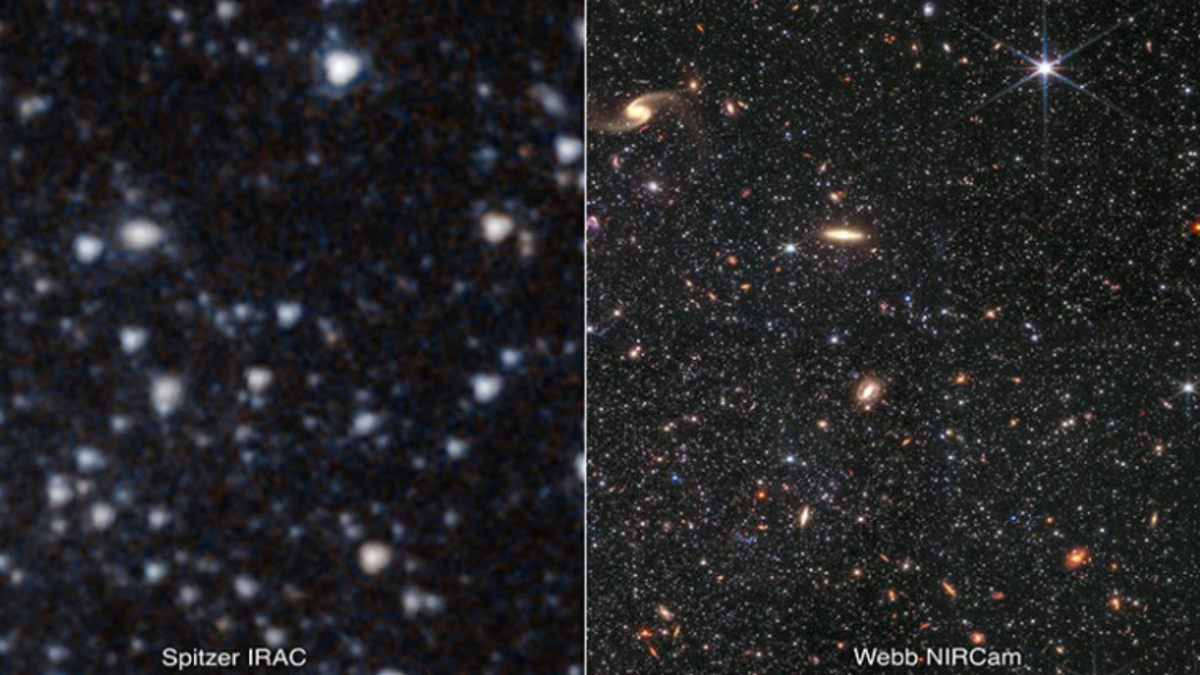
The James Webb Space Telescope has been used to study the history of stars in a low-mass dwarf galaxy, WLM, resembling early universe galaxies, providing insights into star formation rates over the last 13 billion years. The telescope's observations revealed that WLM produced the most stars over a 3 billion-year period starting between 2 to 4 billion years after the Big Bang, with a pause in star formation due to specific early universe conditions. The research, led by Rutgers University-New Brunswick astronomer Kristen McQuinn, demonstrates the JWST's capabilities and the significant computational effort required to process its data, offering valuable insights for the wider scientific community.

"Discovery of Ancient Star Birth Sparks Astronomical Interest"
astronomy2 years ago

"Discovery of Ancient Star Birth Sparks Astronomical Interest"

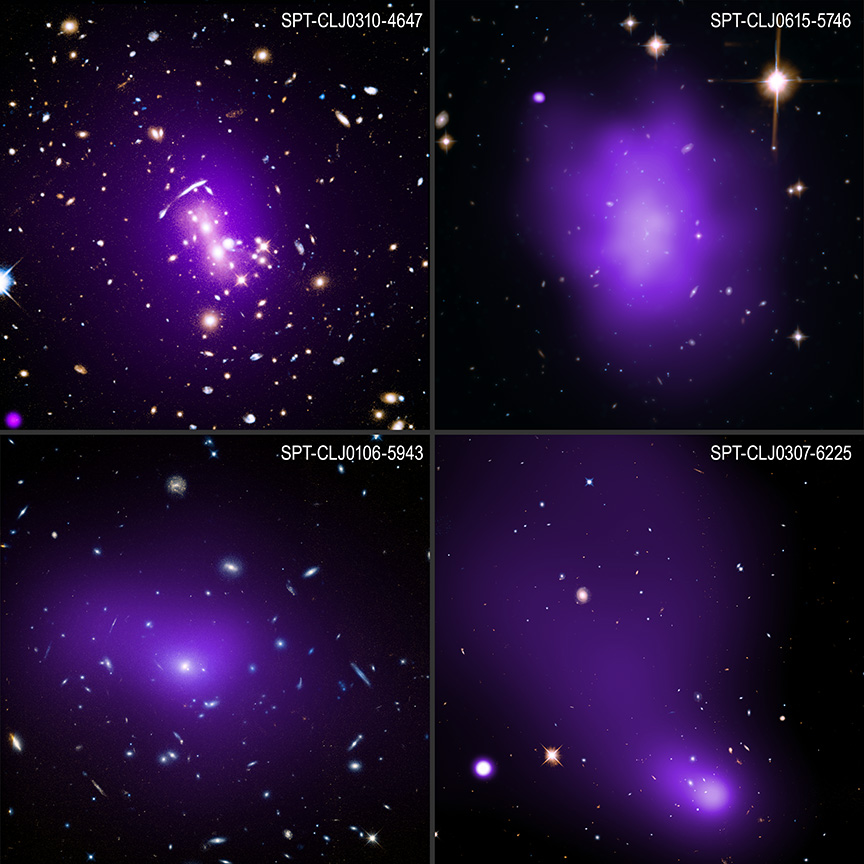
NASA's Chandra X-ray Observatory, along with other telescopes, has conducted a comprehensive study of galaxy clusters, revealing that the conditions for star formation in the universe's largest galaxies have remained consistent over the past ten billion years. The research focused on the brightest cluster galaxies (BCGs) in 95 galaxy clusters, located between 3.4 and 9.9 billion light-years from Earth, and found that the trigger for star formation is when the disordered motion in the hot gas falls below a critical threshold. The study utilized data from various telescopes and was presented at the American Astronomical Society meeting by Michael Caldazilla of MIT.

Betelgeuse's Unexplained 50% Brightness Increase Baffles Scientists
astronomy3 years ago

Betelgeuse's Unexplained 50% Brightness Increase Baffles Scientists

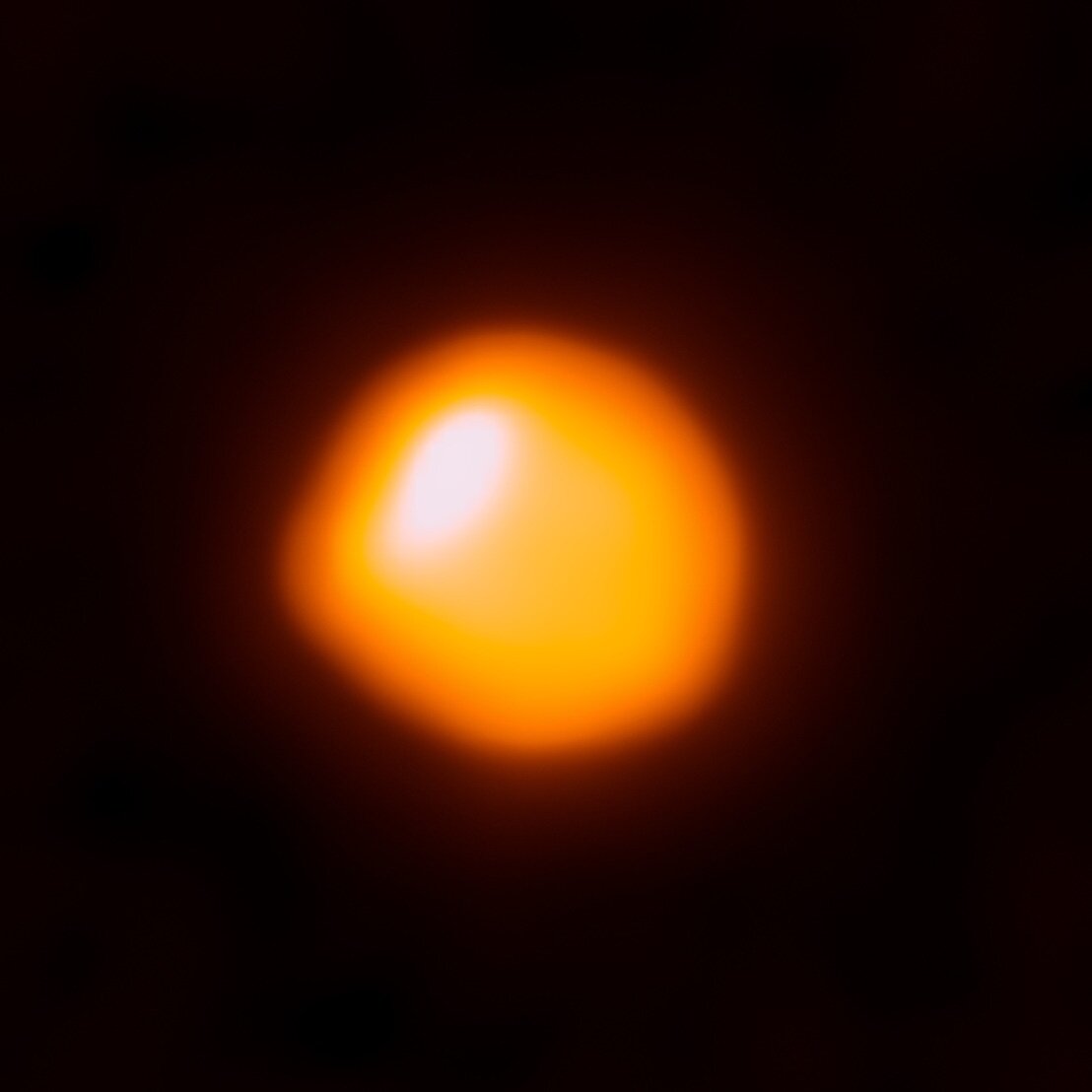
Betelgeuse, the red supergiant star, has brightened by almost 50%, leading to speculation about its potential supernova explosion. New research suggests that it could explode sooner than expected, but the exact evolutionary stage of the star is difficult to determine. Betelgeuse is a pulsating semiregular variable star with multiple cycles that make it challenging to understand. When it eventually explodes, it will be a light show visible to humanity and an unprecedented opportunity to study stellar evolution, supernovae, and stellar remnants.

Hubble Telescope Discovers Rare Pair of Quasars in Merging Galaxies
astronomy3 years ago

Hubble Telescope Discovers Rare Pair of Quasars in Merging Galaxies

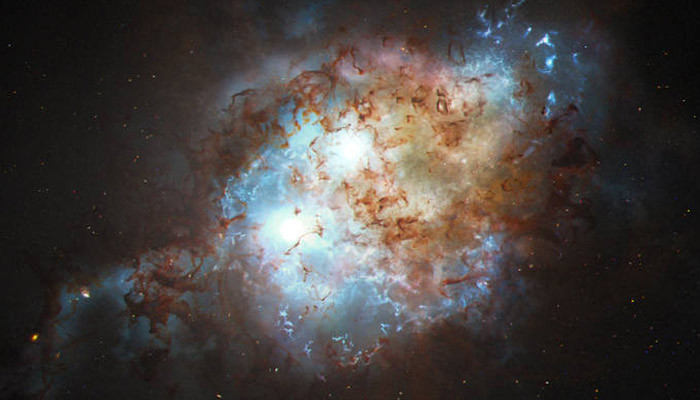
The Hubble Space Telescope has captured the image of two gravitationally-bound quasars generating a massive amount of brightness inside two merging galaxies. Quasars are objects emitting a large number of energies as they absorb gas, dust and anything within their gravitational area. The quasars existed when the universe was merely three billion years old. The study of finding a pair of quasars is relatively a new area of research and the modern technologically equipped astronomical observatories have enabled scientists to discover the areas where the quasars are active.