
Mars and Jupiter Align in Leo for Closest Approach Since 2024
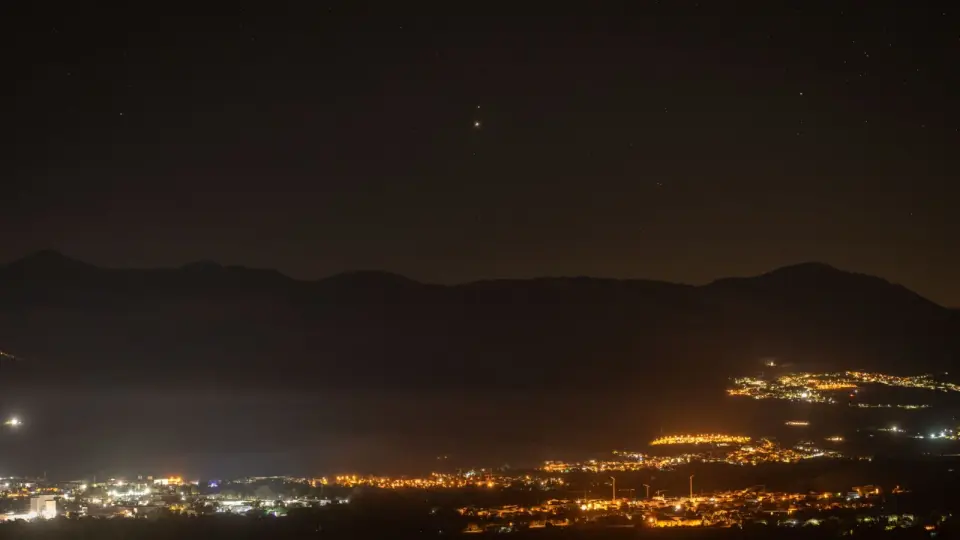
Mars and Jupiter will appear within 1.2 degrees of each other in the pre-dawn sky on November 15-16, marking their closest approach since August 2024. Visible to the naked eye in the constellation Leo, the pair offers a stark contrast between Jupiter’s bright cream light and Mars’s reddish hue. This alignment coincides with the peak of the Leonid meteor shower on November 17-18, providing a dense window for astronomical observation across the Northern Hemisphere.
Key points
- The planets reach minimum separation of 1.2 degrees on November 16, roughly the width of a little finger at arm’s length.
- Optimal viewing occurs before sunrise, typically between 5:00 and 6:00 a.m. local time, when the planets are high in the southeast sky.
- Jupiter appears significantly brighter than Mars, which is described as a distinct orange-red point.
- The event is a line-of-sight illusion; the planets are separated by approximately 368 million miles (592 million kilometers).
- The Leonid meteor shower peaks two days later, with rates of about 15 meteors per hour under dark skies.
Background
This conjunction follows a series of notable celestial events in November 2026, including the Taurid meteor showers and a supermoon on November 24. Previous close approaches occurred in August 2024, with the next similar alignment not expected until July 2029. The event has drawn attention from both astronomical communities and astrological forecasters, who have previously linked planetary alignments in Leo to themes of confidence and financial shifts.
How outlets are covering it
Space.com emphasizes the visual spectacle, noting the presence of the star Regulus below the planets and describing the event as an 'appulse' occurring every 2-2.5 years. Oregon Coast Beach Connection highlights local viewing conditions, noting that coastal areas may offer clearer skies than inland regions, and provides specific timing for the Pacific Northwest. ODT offers a more contemplative view from Dunedin, New Zealand, focusing on the pre-dawn timing and the Māori names for the planets, Pareārau and Matawhero. SNJ Today provides practical advice for South Jersey, suggesting that Tuesday and Wednesday mornings may offer better weather than the peak conjunction day, and notes the visibility of Venus in the same sky.
Why it matters
This conjunction provides a rare opportunity for amateur astronomers to observe two major planets in close proximity without specialized equipment. It also serves as a precursor to the Leonid meteor shower, allowing observers to track celestial activity in the constellation Leo over several nights. The event underscores the dynamic nature of the solar system, where orbital mechanics create temporary alignments that are visually striking but physically distant.
What to watch
Observers should monitor weather forecasts for clear pre-dawn skies through November 18. The Leonid meteor shower will peak on the night of November 17 into the morning of November 18, offering a chance to see bright fireballs and persistent trails. Following this, the next close approach between Mars and Jupiter is not expected until July 2029.
- See Jupiter and Mars make a spectacular close approach overnight Nov. 15-16 Space
- Meteor Showers and Bright Planets Illuminate Oregon, Washington and Coastal Skies Oregon Coast Beach Connection
- Keeping company ODT
- Mars and Jupiter Conjunction Before Dawn in South Jersey SNJ Today
- So close yet so far: Upcoming Mars, Jupiter alignment could provide unique viewing experience Buffalo Toronto Public Media
Want the full story? Read the original reporting
Read on Space