
MeerKAT Telescope Confirms First Direct Radio Emissions from Exoplanet Beta Pictoris b
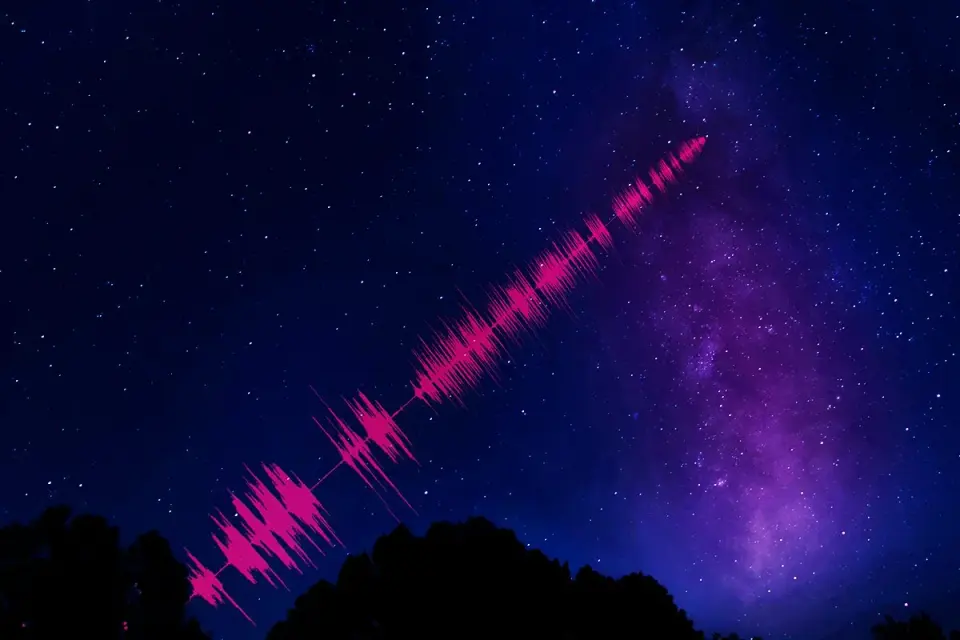
An international team using South Africa’s MeerKAT radio telescope array has detected variable radio bursts originating directly from Beta Pictoris b, a gas giant located 63 light-years from Earth. This marks the first confirmed instance of radio signals attributed to a single exoplanet rather than its entire star system. The discovery, which is not evidence of extraterrestrial life, allows scientists to study the magnetic fields of Jupiter-like planets, a factor critical for protecting atmospheres and assessing habitability.
Key points
- Researchers captured direct radio wave emissions from Beta Pictoris b, a massive gas giant orbiting a star 63 light-years away.
- The detection utilized the MeerKAT radio telescope array in South Africa to isolate variable bursts from the planet.
- This is the first time a radio signal has been confirmed as originating from a single planet rather than the entire planetary system.
- The host star is magnetically quiet, which enabled researchers to distinguish the planet's signal from stellar noise.
- Analyzing these radio waves provides data on planetary magnetic fields, which are essential for shielding atmospheres from stellar winds and determining habitability.
Background
This discovery follows recent astronomical efforts to map distant solar system objects, such as the identification of dwarf planet candidate 2017 OF201 in August 2026, which highlighted how archival data can reveal hidden bodies in the outer solar system. While previous milestones like the 1992 discovery of the first Kuiper Belt object and the 2006 reclassification of Pluto reshaped our understanding of solar system boundaries, this new finding shifts focus to characterizing exoplanets through electromagnetic emissions rather than visual observation alone.
Why it matters
Understanding planetary magnetic fields is crucial for assessing the habitability of exoplanets, as these fields protect atmospheres from being stripped away by stellar winds. This detection method offers a new tool for characterizing Jupiter-like planets across the galaxy without relying solely on optical observations.
What to watch
Researchers will analyze the detected radio bursts to determine the specific magnetic field properties of Beta Pictoris b. This data may serve as a template for detecting similar signals from other exoplanets, potentially expanding the catalog of characterized magnetic environments in the galaxy.
Want the full story? Read the original reporting
Read on BBC Sky at Night Magazine