
Crew-13 Sets Record with 7-Hour ISS Transit After Launch Delay
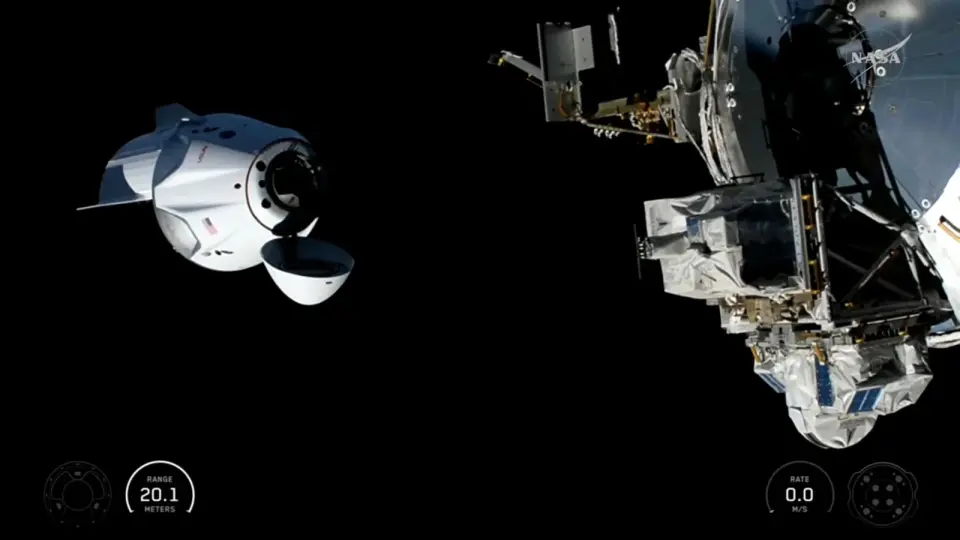
SpaceX's Crew-13 mission docked with the International Space Station in 7 hours and 55 minutes, setting a new record for the fastest American crewed transit. The four-person crew, led by Jessica Watkins, will join Expedition 75 for a six-month mission focused on biomedical research and lunar preparation.
Key points
- Crew-13 launched at 11:10 a.m. EDT on October 1, 2026, from Cape Canaveral and docked at 7:05 p.m. EDT, achieving a 7-hour, 55-minute transit time.
- The crew includes NASA astronauts Jessica Watkins and Luke Delaney, Canadian Space Agency astronaut Joshua Kutryk, and Roscosmos cosmonaut Sergey Teteryatnikov.
- The mission will join Expedition 75, which already includes six crew members, and will conduct studies on microgravity effects, blood clotting, and lunar piloting simulations.
- The Dragon capsule, named Grace, had previously been used for Axiom Space's Ax-4 mission, and the Falcon 9 booster B1101 had flown twice before.
- The launch followed a delay in September due to an oxidizer leak, and the weather forecast had a 60% chance of success at launch time.
Background
Crew-13 is part of NASA's ongoing commercial crew program, which includes a $5.92 billion contract with SpaceX through 2030. The mission follows Crew-12, which launched in February 2026, and is the first U.S. crewed launch in six months. The previous record for the fastest American crewed transit was 14 hours and 43 minutes, set by Crew-11 in August 2025.
How outlets are covering it
Space.com and NASA emphasize the record-breaking transit time and the crew's entry into Expedition 75. WESH and Spectrum News 13 focus on the local Florida connections, particularly Luke Delaney's background in DeBary and the public launch viewing. All sources agree on the launch time and docking, but Space.com and NASA highlight the record, while WESH and Spectrum News 13 provide more detail on the crew's personal backgrounds and the weather conditions.
Why it matters
The record-breaking transit time demonstrates SpaceX's improving launch and docking capabilities, which are crucial for future lunar and Mars missions. The biomedical research conducted by Crew-13 will help NASA understand how the human body responds to long-duration spaceflight, which is essential for future Artemis missions and potential Mars expeditions.
What to watch
Crew-13 will spend six months on the ISS, conducting scientific research and station maintenance. They will be joined by Expedition 75 crew members, and their findings will contribute to NASA's efforts to prepare for future lunar and Mars missions. The crew is expected to return to Earth in April 2027.
- SpaceX Crew-13 astronauts dock at ISS less than 8 hours after launch in fastest American flight ever Space
- Crew-13's 4 astronauts successfully launch from Space Coast on mission to International Space Station WESH
- SpaceX successfully launches NASA's Crew-13 mission to the ISS Spectrum News 13
- Crew-13 Members Enter Station, Join Expedition 75 NASA (.gov)
- New crew makes the quickest US flight to ISS DW.com
Want the full story? Read the original reporting
Read on Space