
"Unveiling Ultramassive Galaxies: JWST's Game-Changing Discoveries"
TL;DR Summary
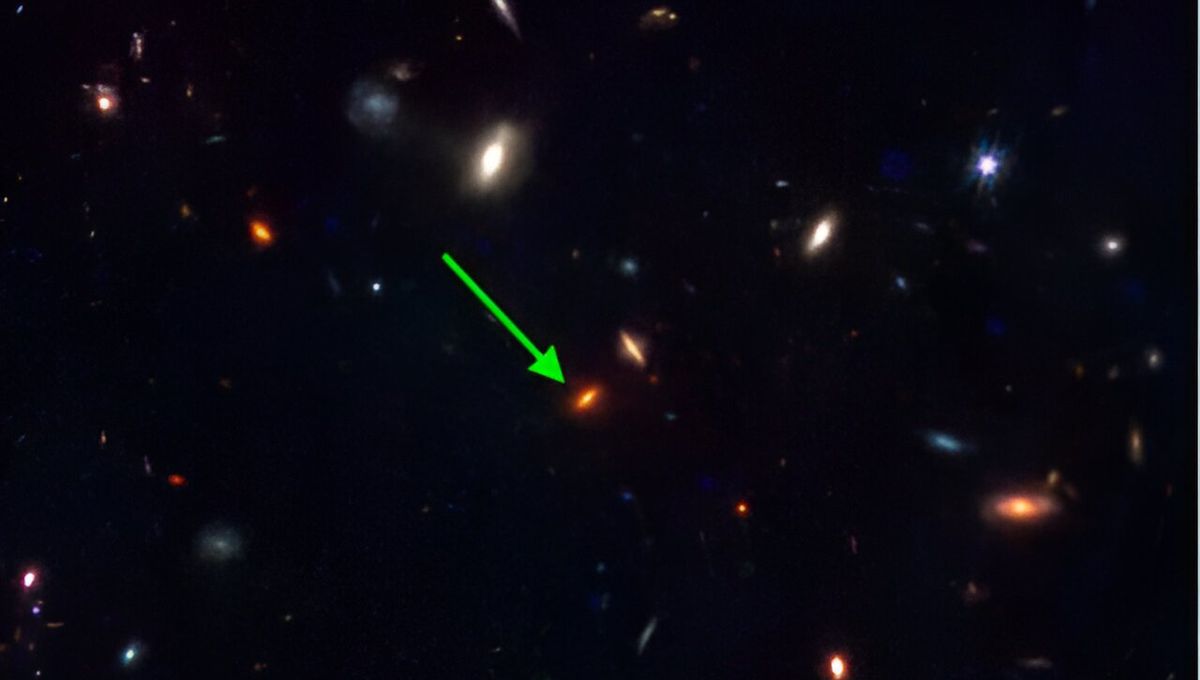
The James Webb Space Telescope (JWST) has discovered a massive and old-looking galaxy, ZF-UDS-7329, from when the universe was young, challenging current understanding of galaxy formation and evolution. This galaxy's massive stellar population was already in place 13 billion years ago, raising questions about how it formed so quickly. The discovery suggests more complexity in the early universe than previously thought and poses challenges to the standard model of cosmology, prompting the need for further observations to understand the prevalence and magnitude of such galaxies.
- JWST Discovers Another “Beyond Possible” Galaxy And We Have To Rethink Everything IFLScience
- James Webb Space Telescope tracks a galaxy's history back to just after the Big Bang Space.com
- Which came first: black holes or galaxies? The Hub at Johns Hopkins
- Physics - JWST Sees More Galaxies than Expected Physics
- Discovery of unexpected ultramassive galaxies may not rewrite cosmology, but still leaves questions Phys.org
Reading Insights
Total Reads
0
Unique Readers
12
Time Saved
3 min
vs 3 min read
Condensed
86%
600 → 85 words
Want the full story? Read the original article
Read on IFLScience