
Thwaites Glacier Melting Faster Than Thought, Doubling Sea-Level Threat
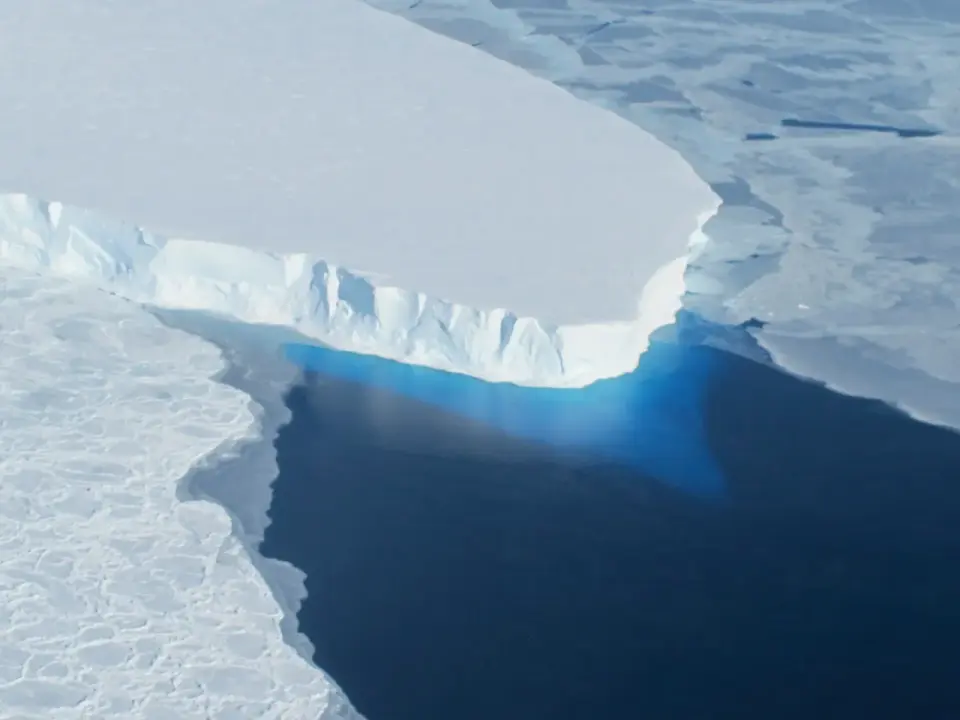
New research indicates that Thwaites Glacier, the world's largest, is losing mass twice as fast as previously estimated. This accelerated melting could add 1.2 inches to global sea levels by 2100, even without further warming, due to warm seawater penetrating under the ice.
Key points
- Thwaites Glacier, spanning 192,000 sq km, is losing 50 billion tonnes of ice annually.
- New models reveal a 'grounding zone' where tidal pumping allows warm water to melt the ice core.
- The glacier has a 60% chance of detaching from the stabilizing Mouginot Ridge by 2100.
- Even if ocean warming stopped, Thwaites would continue losing ice for at least 150 years.
- Total collapse of the West Antarctic ice sheet could raise sea levels by up to 5 meters.
Background
Thwaites Glacier, often called the 'Doomsday Glacier,' has been monitored since the 1980s due to its rapid retreat. It currently contributes 4% to global sea-level rise. Previous studies, including a 2019 NASA discovery of a large underwater cavity, highlighted the glacier's vulnerability. Recent archive data shows polar ice sheets have shed 11.3 trillion tonnes of ice since 1979, with glaciers flowing faster into the ocean being the primary driver.
How outlets are covering it
Al Jazeera and CNN emphasize the new 'grounding zone' model, which doubles sea-level projections to 1.2 inches by 2100. CNN highlights the potential for 10 feet of rise if the West Antarctic ice sheet collapses. New Scientist focuses on a separate study showing that Thwaites will continue losing ice for 150 years even if ocean warming stops, attributing this to the glacier's 'long memory' of past destabilization. While Al Jazeera and CNN focus on the accelerated melting rate, New Scientist stresses the inevitability of future loss regardless of mitigation efforts.
Why it matters
The findings suggest that coastal flooding risks are significantly underestimated. Even with immediate emissions cuts, the glacier's momentum and current ocean temperatures will drive continued ice loss. This impacts global coastal cities, potentially submerging areas from Miami to Manila, and underscores the urgency of climate action to limit the rate of ice loss.
What to watch
Researchers plan to deploy instruments in 2028 to directly observe seawater flushing at Thwaites' grounding line. Further studies are needed to accurately predict ice loss volumes and understand the long-term stability of the West Antarctic ice sheet. Continued monitoring of ocean temperatures and glacier retreat will be crucial for updating sea-level rise forecasts.
- Senegal-sized Antarctic glacier melting faster than thought: Why it matters Al Jazeera
- Scientists knew the Doomsday Glacier was melting. They didn’t realize how ‘aggressively’ CNN
- Sea-level contribution from Thwaites Glacier doubles in an observation-constrained ice-sheet model Nature
- Antarctica’s ‘doomsday’ glacier will keep melting even if oceans cool New Scientist
- Thwaites Glacier could contribute twice as much sea-level rise as previously projected Phys.org
Want the full story? Read the original reporting
Read on Al Jazeera