
Tibetan Heat Spikes Linked to Record California Floods in New Study
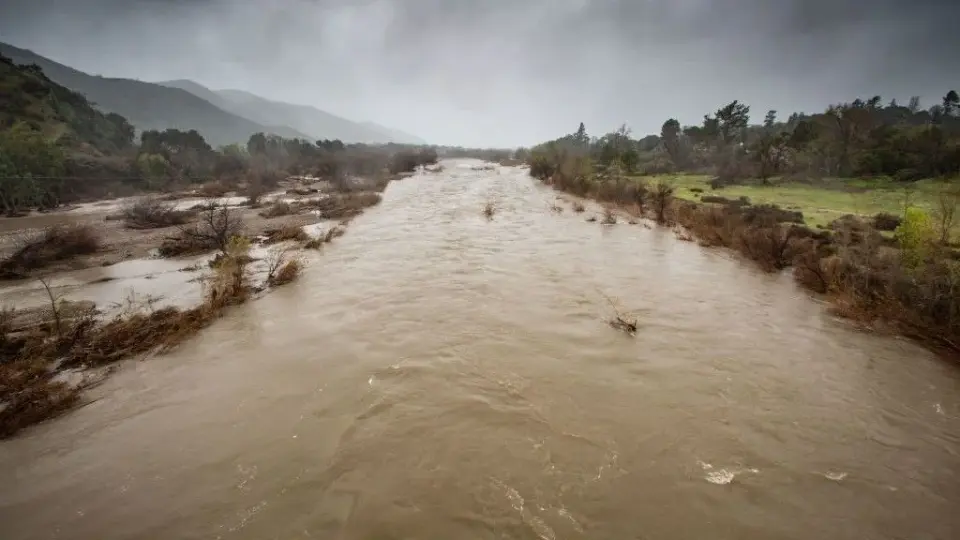
A new study in Science Advances links unusually warm temperatures on the Tibetan Plateau to record-breaking rainfall in California and neighboring western U.S. states in 2017 and 2023. This 'climate teleconnection' explains why extreme flooding occurred during La Niña years, which typically bring dry conditions to the region. The findings suggest that monitoring high-altitude land temperatures could improve early warning systems for extreme weather, potentially saving lives and reducing billions of dollars in damage.
Key points
- Unusually warm temperatures on the Tibetan Plateau in December 2016 and February 2023 preceded record-breaking precipitation in California, Nevada, Oregon, Utah, and Arizona roughly one month later.
- The 2017 and 2023 flooding events occurred during La Niña phases, which typically cause dry conditions in the western U.S., making the extreme rainfall difficult to predict using traditional ocean-based models.
- The study, led by UCLA professor Yongkang Xue, found that heat over the plateau created a temperature gradient that generated Rossby waves, which propagated eastward along the jet stream and intensified atmospheric rivers near the U.S. Pacific Coast.
- The two events caused approximately $6.6 billion in damage and killed at least nine people, according to the study.
- The Tibetan Plateau heat explained 56% of the rainfall anomaly in January 2017 and 30% of the anomaly in March 2023, according to New Scientist.
- The connection between Tibetan Plateau temperatures and California weather emerged only after 1980, suggesting a link to rapidly rising temperatures in mountainous regions due to climate change.
Background
Recent years have seen extreme weather events in the western U.S., including record-breaking heat waves in Southern California in 2026. Forecasters have struggled to predict these events using traditional models that rely heavily on ocean conditions like El Niño and La Niña. This study adds to growing scientific efforts to understand how high-elevation land temperatures influence global weather patterns, building on earlier research that identified similar teleconnections between other distant regions.
How outlets are covering it
Live Science and The Economic Times emphasize the potential for improved forecasting and early warning systems, highlighting the economic and human cost of the 2017 and 2023 floods. New Scientist provides specific quantitative data, noting that the Tibetan Plateau heat explained 56% of the 2017 rainfall anomaly and 30% of the 2023 anomaly. However, experts like Andries-Jan de Vries and Arun Kumar caution that the exact causal mechanisms require further study and that the findings need confirmation with fresh data before being used for forecasting. The Economic Times clarifies that the study does not imply China 'caused' the rain, but rather reveals how atmospheric changes in one region can influence weather far away.
Why it matters
This research could lead to more accurate weather forecasts and earlier warnings for extreme rainfall in the western U.S., potentially saving lives and reducing property damage. It also highlights the importance of monitoring high-elevation land temperatures in climate models, as these regions are warming rapidly and may have significant impacts on global weather patterns.
What to watch
Researchers will continue to study the causal mechanisms linking the Tibetan Plateau to California weather. Forecasters may begin to incorporate Tibetan Plateau temperature data into their models to improve predictions of extreme weather events in the western U.S. Further studies will be needed to confirm the findings and assess their practical utility for forecasting.
- Record-breaking rain in California was caused by abnormally high temperatures on the other side of the world, study finds Live Science
- Heat spikes over Tibet may help explain severe Californian flooding New Scientist
- How atmospheric events at the top of the world could have triggered two devastating California floods Phys.org
- Is China behind California’s 2017 catastrophic rain? New study finds a surprising 'climate teleconnection' The Economic Times
Want the full story? Read the original reporting
Read on Live Science