
Roman Telescope Exceeds Optical Targets by 30% After Precision Calibration
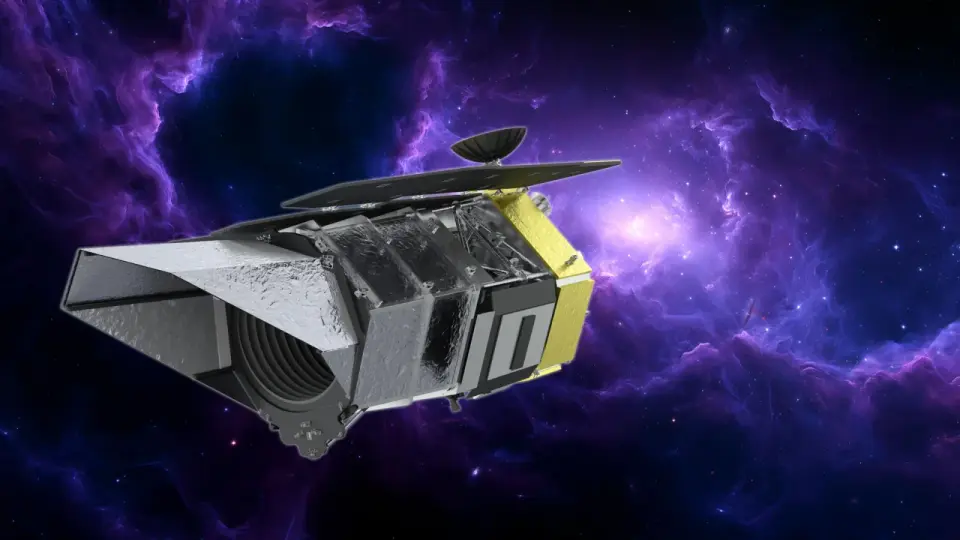
NASA’s Nancy Grace Roman Space Telescope has achieved optical performance 30% better than predicted, with its Wide Field Instrument measuring 63 nanometers RMS error against a 90-nanometer requirement. Engineers completed extensive testing of detectors, filters, and alignment mechanisms, confirming the observatory is ready for routine surveys of dark matter and dark energy.
Key points
- The Wide Field Instrument achieved an optical error of 63 nanometers RMS, significantly better than the 90-nanometer requirement, resulting in image quality 30% superior to predictions.
- Engineers tested 18 detectors, the element wheel, internal calibration LEDs, and thermal systems to ensure consistent performance across the instrument.
- The secondary mirror required a microscopic adjustment of one-sixteenth of a human hair diameter to achieve near-perfect alignment.
- The Coronagraph Instrument was also optimized, with engineers planning to test its light-blocking capabilities in the coming weeks.
- Roman launched on August 30, 2026, and is currently preparing for routine science operations, with first science images expected in early 2027.
Background
The Nancy Grace Roman Space Telescope launched on August 30, 2026, and has been undergoing commissioning tests since September. Earlier reports confirmed the telescope’s fuel efficiency, extending its operational life to 22 years, and its arrival at the Sun-Earth L2 point. The telescope is designed to complement the James Webb Space Telescope by surveying large areas of the sky, with a field of view 100 times larger than Webb’s. Its primary mission includes studying dark matter, dark energy, and exoplanets.
How outlets are covering it
ScienceDaily and NASA Science (.gov) provide detailed technical accounts of the calibration process, emphasizing the precision of the optical adjustments and the success of the Wide Field Instrument. Both sources highlight the 30% improvement in image quality and the microscopic mirror adjustments. Time Magazine focuses on the broader significance of the telescope, noting its ability to observe regions 100 times larger than Webb and peer 10 billion light-years away. While ScienceDaily and NASA Science emphasize the technical success of the calibration, Time Magazine frames the achievement as a major step toward solving cosmological mysteries like dark energy. All sources agree on the telescope’s exceptional performance and readiness for routine operations.
Why it matters
The Roman Space Telescope’s superior optical performance enhances its ability to conduct detailed surveys of the universe, potentially leading to breakthroughs in understanding dark matter, dark energy, and exoplanets. The 30% improvement in image quality ensures that the telescope will produce sharper images than anticipated, strengthening its scientific output. This success also validates the precision of ground-based testing and modeling, providing confidence for future space missions.
What to watch
Engineers will continue refining the Coronagraph Instrument’s camera settings and deformable mirrors, with plans to test its light-blocking capabilities in the coming weeks. The telescope is expected to begin routine science operations in early 2027, with first science images anticipated during that period. Ongoing calibration will ensure consistent performance across all instruments, supporting the telescope’s long-term mission objectives.
- NASA’s Roman Space Telescope exceeds expectations by nearly 30% Science Daily
- Astronomer leads global team on NASA mission to create unprecedented view of the early universe Phys.org
- NASA Roman Team Checks Out Main Instrument, Sharpens Telescope’s Focus NASA Science (.gov)
- NASA Nancy Grace Roman Space Telescope: The Best Inventions of 2026 Time Magazine
- Science consortium plots strategy to mine data from NASA’s newest space telescope EurekAlert!
Want the full story? Read the original reporting
Read on Science Daily