
Urinary Bacteria Found to Produce Testosterone, Raising New Questions for Prostate Cancer
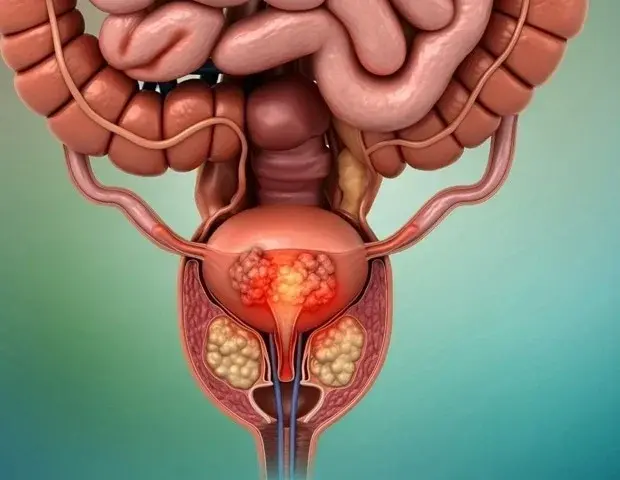
Researchers have discovered that a bacterium found in the human urinary tract, Actinobaculum massiliense, can convert the steroid precursor DHEA into testosterone. This finding, published in Nature Communications, reveals a previously unknown microbial route to androgen production. While the study does not prove that this bacterial activity causes prostate cancer or affects disease progression, it suggests that the urinary microbiome may influence the hormonal environment near the prostate. The research utilized computational simulations to explain how specific bacterial enzymes facilitate this chemical transformation.
Key points
- Actinobaculum massiliense, isolated from urine samples of men undergoing prostate biopsies, was identified as capable of producing testosterone from DHEA in laboratory conditions.
- The study identified two bacterial genes, dirA and dirB, responsible for this conversion. DirA was found to be versatile, allowing multiple steroid transformations, while DirB had narrower capabilities.
- Computational models from Auburn University revealed that DirA has a broad, open pocket allowing steroids to reposition for reaction, whereas DirB has a narrow tunnel that often leaves molecules misaligned.
- The discovery challenges the historical assumption that urine is sterile and highlights the functional capabilities of the urinary microbiome, or urobiome.
- The research does not confirm that bacterial testosterone production affects prostate cancer in humans, but it provides specific genes and enzymes for future investigation into microbial contributions to androgen signaling.
Background
This discovery adds to ongoing research into the urinary microbiome, which was not included in the original Human Microbiome Project. Previous studies have focused on identifying which microbes are present in urine and whether they differ between healthy and diseased individuals. This new study shifts the focus to what these microbes are capable of doing chemically. It also relates to broader discussions about testosterone regulation, including recent warnings about the side effects of testosterone replacement therapy and observational links between lifestyle factors like coffee consumption and testosterone levels.
Why it matters
Understanding microbial contributions to hormone production could reshape how scientists interpret urinary steroid profiles in medical diagnostics and drug testing. If bacterial metabolism influences androgen levels near the prostate, it may have implications for the development and progression of prostate cancer, which is heavily dependent on androgen signaling. This finding provides a new avenue for research into the interaction between the microbiome and cancer biology, potentially leading to new diagnostic markers or therapeutic targets.
What to watch
Researchers plan to investigate whether the dirA and dirB genes are common in human urinary microbiomes and whether their presence is associated with differences in urinary hormones or prostate conditions. Future studies will aim to determine if this bacterial pathway is active in the human body and if the produced testosterone reaches nearby tissues to influence prostate biology. The team also intends to explore the implications of microbial steroid metabolism for interpreting urinary steroid profiles in medical and forensic contexts.
Want the full story? Read the original reporting
Read on News-Medical