
Ketogenic Diet Targets Glioblastoma Stem Cells by Disrupting Fat Metabolism
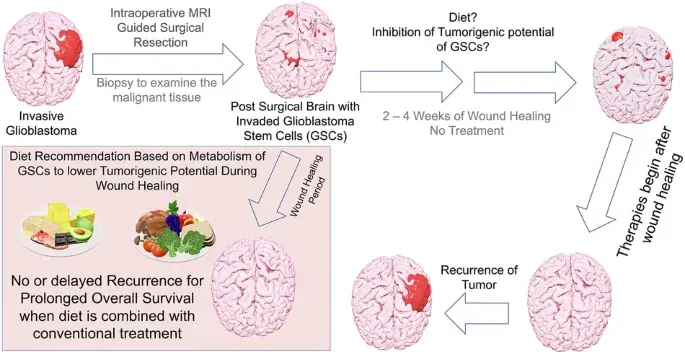
A new study in Communications Biology reveals that a low-carbohydrate, high-fat diet (LCHFD) can delay glioblastoma recurrence by restricting the metabolic flexibility of cancer stem cells. Researchers found that these cells rely heavily on fatty acid oxidation (FAO) for survival and therapy resistance. By altering lipid availability in the brain, the diet limits this metabolic pathway, offering a non-pharmacologic strategy to improve outcomes after surgery and before chemoradiation.
Key points
- Glioblastoma stem cells (GSCs) utilize fatty acid oxidation (FAO) as a key pathway to maintain tumorigenicity and resist treatment.
- Transcriptomic profiling of GSCs from recurrent and newly diagnosed patients showed an FAO-enriched signature compared to non-malignant astrocytes.
- In vivo studies demonstrated that a low-carbohydrate, high-fat diet (LCHFD) modulates lipid availability in the brain, thereby curbing tumor formation by GSCs.
- The diet influences the gut microbiome and circadian networks, which may contribute to its therapeutic effects.
- Implementing LCHFD in the postoperative period before chemoradiation offers a potential non-pharmacologic method to delay recurrence.
Background
This research builds on earlier findings regarding the role of lipids in cancer progression. For instance, a July 2026 study highlighted how lipids in ovarian cancer ascites disrupt T-cell activation, while June 2026 research identified specific stem cells driving age-related fat growth. These studies collectively underscore the complex interplay between lipid metabolism, cellular behavior, and disease progression, providing a broader context for understanding how dietary interventions might modulate cancer stem cell activity in glioblastoma.
Why it matters
Glioblastoma remains one of the most aggressive and difficult-to-treat brain cancers, with high recurrence rates due to the resilience of cancer stem cells. This study suggests that dietary manipulation could serve as a complementary therapy to standard treatments, potentially extending patient survival by targeting the metabolic vulnerabilities of these resistant cells. If validated in clinical trials, this approach could offer a non-invasive, cost-effective adjunct to current therapies, improving overall patient outcomes.
What to watch
Researchers will likely move toward clinical trials to test the efficacy and safety of LCHFD in glioblastoma patients. Further studies may explore the specific mechanisms by which the diet alters the gut microbiome and circadian rhythms to affect tumor growth. Additionally, investigations into combining dietary interventions with existing therapies like chemoradiation could reveal synergistic effects, potentially leading to new standard-of-care protocols for glioblastoma management.
Want the full story? Read the original reporting
Read on Nature