
The Gap Between AI Benchmarks and Clinical Reality
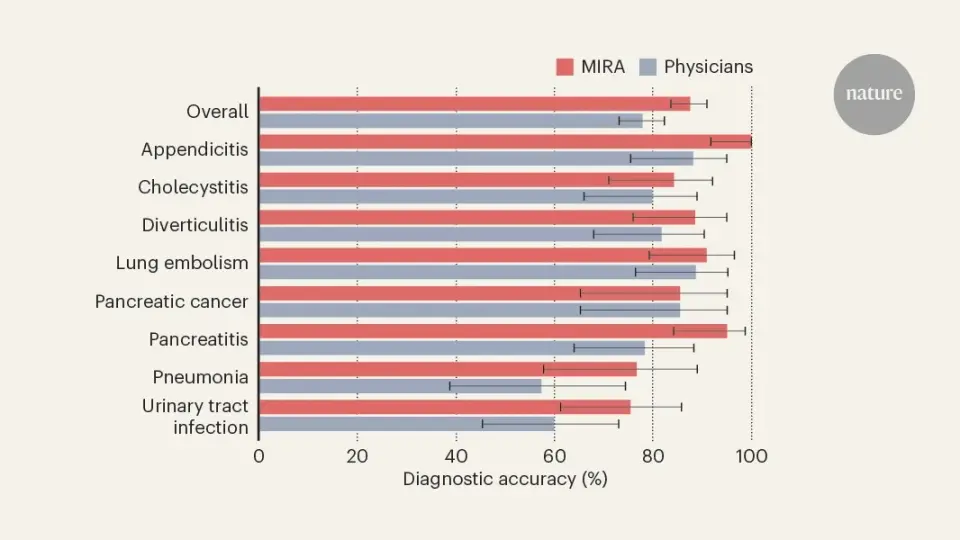
Medical AI systems are achieving high scores on standardized exams but failing in real-world clinical tasks, exposing a critical gap in evaluation methods. While FDA guidance remains incomplete, new frameworks and multi-agent architectures aim to address these validation deficiencies.
Key points
- Large language models score approximately 92% on medical licensing exams but only 44.8% on real-world clinical tasks, according to the BRIDGE benchmark.
- FDA’s January 2025 draft guidance lacks task-specific performance thresholds for AI tools used in clinical trial design and data integrity monitoring.
- A 2026 Nature Medicine paper proposes formal criteria for evaluating 'medical AI superintelligence' to bridge the gap between academic benchmarks and clinical utility.
- Outshift by Cisco is developing an 'Internet of Cognition' to enable multi-agent AI systems to share intent and context, aiming to improve coordinated decision-making.
- FDA issued a warning letter in April 2026 to Purolea Cosmetics Lab for using unvalidated AI outputs in regulated documents, establishing an enforcement precedent.
Background
The integration of AI into healthcare has accelerated, leading to concerns about the reliability of current evaluation metrics. Previous discussions highlighted the need for standardized benchmarks that reflect real-world clinical complexity rather than simplified exam questions. Regulatory bodies have struggled to keep pace with rapid technological advancements, resulting in a lack of clear guidelines for AI validation in clinical settings.
How outlets are covering it
Nature emphasizes the fundamental measurement problem, noting that current yardsticks for evaluating medical AI are often unreliable. The Clinical Trial Vanguard highlights the structural gap between FDA’s existing guidance and the performance claims of AI vendors, stressing the need for task-specific validation standards. MIT Technology Review focuses on the architectural challenges of multi-agent systems, arguing that horizontal scaling through shared intent and context is necessary for achieving distributed superintelligence. OncoDaily underscores the importance of evaluating AI on complex, guideline-deficient cases where expert judgment varies, rather than straightforward questions.
Why it matters
The discrepancy between high exam scores and low real-world performance poses significant risks to patient safety and clinical trial integrity. Without robust validation standards, AI tools may be deployed in critical decision-making processes without adequate oversight, potentially leading to erroneous outcomes. Establishing reliable benchmarks and regulatory frameworks is essential to ensure that AI advancements translate into improved patient care and trustworthy clinical applications.
What to watch
FDA is expected to finalize its January 2025 draft guidance, which may incorporate task-specific performance language for AI in drug and biological products. The development of open-source coordination layers like Mycelium and AGNTCY will likely continue, aiming to enhance multi-agent AI capabilities. Sponsors and CROs are advised to build comprehensive validation packages for AI tools, documenting training data provenance and human oversight decisions, to mitigate regulatory risks.
- Medical AI has a measurement problem Nature
- The path to artificial superintelligence MIT Technology Review
- Yan Leyfman: The Real Test for AI Begins Where Guidelines End Oncodaily
- Nature Medicine’s 2026 Medical AI Superintelligence Framework Signals What FDA Benchmarking Guidance Has Not Yet Addressed The Clinical Trial Vanguard
Want the full story? Read the original reporting
Read on Nature