
LHC Beam Glitches May Reveal Macroscopic Dark Matter
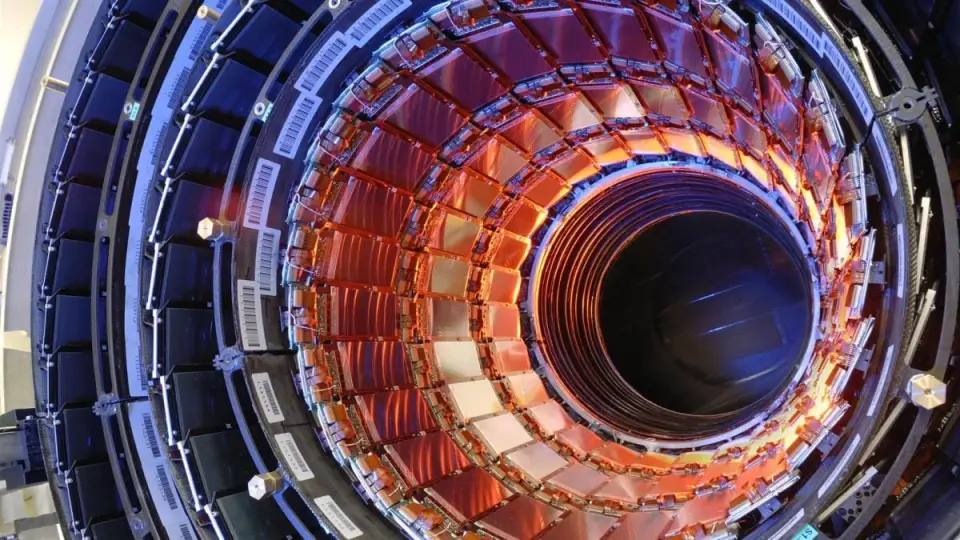
Physicists from the University of British Columbia propose that mysterious beam-loss events at the Large Hadron Collider (LHC) could be caused by axion quark nuggets (AQNs), a hypothetical form of macroscopic dark matter. These dense objects, potentially up to one kilogram in mass, might pass through Earth near the LHC, creating faint acoustic vibrations that dislodge microscopic dust into the proton beam. The researchers suggest that existing LHC monitoring systems could detect these events without hardware upgrades, looking for correlated glitches within two seconds along the 27-kilometer tunnel. This approach offers a new method to search for non-elementary dark matter candidates, potentially broadening the field beyond microscopic particle models.
Key points
- Xunyu Liang and Ariel Zhitnitsky suggest that 'unidentified falling objects' (UFOs) in LHC data may result from AQNs shaking dust into the beam.
- AQNs are hypothetical macroscopic dark matter objects with masses up to 1 kilogram that could interact with ordinary matter via acoustic shock waves.
- The proposed detection method requires no new hardware, utilizing existing beam-loss monitors to identify correlated UFO events within 2 seconds.
- The team has not yet analyzed existing data but aims to motivate a reanalysis of past LHC records to find potential AQN signatures.
- This research could expand dark matter searches to include macroscopic candidates, complementing current focus on elementary particles.
Background
The LHC is currently in a four-year Long Shutdown 3 for upgrades to the High-Luminosity LHC, with operations resuming in 2030. Recent DESI data has raised questions about the uniformity of the universe, potentially influencing dark matter models, while other studies have hinted at dark matter clustering around supermassive black holes. India’s partnership with CERN continues to support LHC upgrades and dark matter research efforts.
Why it matters
This proposal offers a novel, cost-effective method to detect dark matter using existing infrastructure, potentially uncovering macroscopic dark matter candidates that have been under-explored. If confirmed, it could significantly broaden the understanding of dark matter's nature and interactions with ordinary matter.
What to watch
The researchers plan to publish their findings in Physical Review D and encourage a reanalysis of past LHC data to identify potential AQN signatures. Future dedicated campaigns may be launched to search for these correlated beam-loss events, and other large particle accelerators could potentially be adapted for similar detections.
Want the full story? Read the original reporting
Read on ScienceAlert