
Indian 11-Year-Old Atharv Sood Credited with Three Preliminary Asteroid Detections
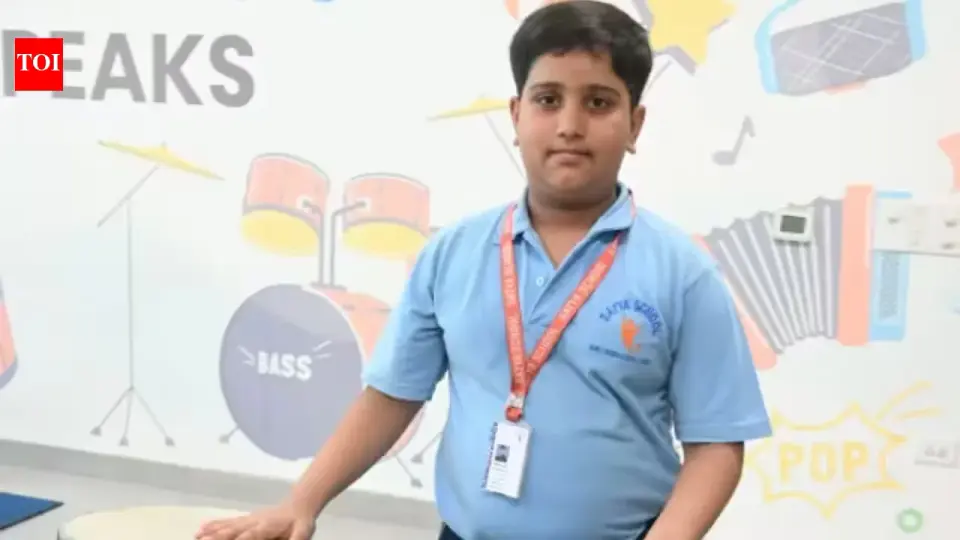
Eleven-year-old Atharv Sood from India has been credited with three preliminary asteroid detections after participating in the All-India Asteroid Search Campaign (AIASC) 2026. His involvement stems from a birthday telescope gift that sparked a deep interest in astronomy, leading him to join Satya School’s Young Scientist Program. Through training with SPACE India and the International Astronomical Search Collaboration (IASC), he learned to use Astrometrica software to identify moving objects in astronomical images. Sood was listed as a member of Team SPACE Scanners 1, marking a significant milestone in his early scientific journey.
Key points
- Atharv Sood, an 11-year-old student in India, was credited with three preliminary asteroid detections during Phase I of the All-India Asteroid Search Campaign (AIASC) 2026.
- His participation was facilitated through Satya School’s Young Scientist Program and Space Lab, which provide students with access to astronomical research tools.
- Sood received training from SPACE India in collaboration with the International Astronomical Search Collaboration (IASC) on how to use Astrometrica software to analyze astronomical images.
- The detection process involved comparing images taken at different times to identify objects that shifted position, distinguishing them from static stars.
- Sood was officially recognized as a member of Team SPACE Scanners 1 by the IASC, validating his contributions to the campaign.
- His interest in astronomy began with a telescope gifted by his parents, which encouraged him to observe celestial bodies like the Moon and Jupiter directly.
Background
This story highlights the growing integration of young students into global astronomical research efforts. Recent developments in planetary defense, such as China’s planned space-ground early-warning system for sunward asteroids and studies on long-term bombardment from asteroid breakups, underscore the importance of continuous sky monitoring. While professional agencies like NASA and ESA focus on large-scale missions, initiatives like the AIASC 2026 aim to democratize data analysis, allowing students to contribute to the detection of near-Earth objects. This aligns with broader trends in science education that emphasize hands-on experience with real scientific data, moving beyond classroom theory to practical application in fields like astrometry.
Why it matters
The achievement of an 11-year-old in identifying potential asteroids demonstrates the effectiveness of early science education programs in India. It highlights how accessible technology and structured training can empower young students to contribute to critical scientific fields like planetary defense. This success story may inspire similar initiatives in other schools, fostering a new generation of astronomers and scientists who are engaged with real-world data from a young age.
What to watch
Atharv Sood is expected to continue his involvement in astronomical activities, including a planned visit to the Indian Space Research Organisation (ISRO) to observe facilities and learn about space technology. He may further develop his skills in using telescopes and analyzing astronomical data, potentially leading to more detections or participation in future phases of the AIASC. His growing interest in topics like black holes and galaxy evolution suggests he may pursue advanced studies in astrophysics in the future.
Want the full story? Read the original reporting
Read on The Times of India