
Iceberg A-84 Calving Reveals Thriving Deep-Sea Ecosystem in Antarctic Waters
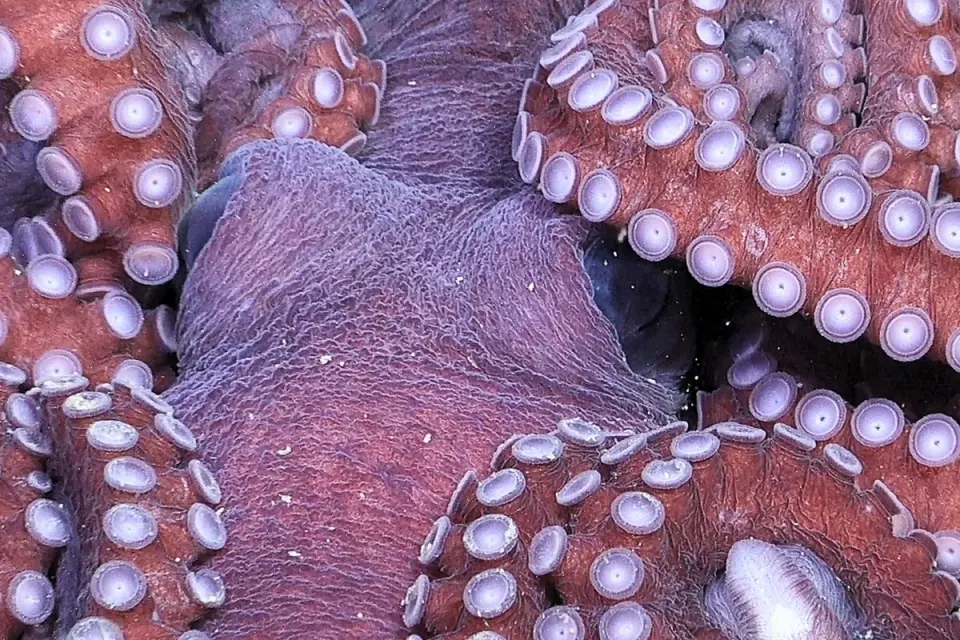
The calving of iceberg A-84 from the George VI Ice Shelf in January 2025 exposed a previously inaccessible seafloor, revealing a vibrant, long-established ecosystem. Scientists documented diverse marine life, including giant phantom jellies and octopuses, at depths up to 1,300 meters. The discovery challenges assumptions about life in lightless, ice-covered environments and provides critical data for modeling future ice loss and sea-level rise.
Key points
- Iceberg A-84, measuring 510 square kilometers, broke away from the George VI Ice Shelf on January 13, 2025, exposing the seafloor beneath.
- A team from the Schmidt Ocean Institute conducted an eight-day survey using the ROV SuBastian, reaching depths of 1,300 meters.
- Researchers observed a thriving ecosystem including icefish, sea spiders, octopuses, and a giant phantom jelly with arms exceeding 10 meters in length.
- The ecosystem had been isolated beneath 150 meters of ice for centuries, suggesting it persisted without surface-derived organic matter.
- The expedition also deployed autonomous gliders to measure meltwater impacts on ocean chemistry and biological productivity.
Background
This discovery aligns with recent findings regarding life in extreme polar environments, such as the microbial ecosystems in subglacial Lake Vostok and the ancient marine brine beneath Taylor Glacier. These prior studies highlighted the resilience of life in isolated, lightless conditions, providing a framework for understanding how the newly discovered Antarctic seafloor community may have sustained itself for centuries.
Why it matters
The findings offer crucial insights into the biological resilience of deep-sea ecosystems in isolated environments, challenging existing models of nutrient transport. Additionally, the geological and chemical data collected will improve projections of Antarctic ice loss, which is a major driver of global sea-level rise, thereby informing climate policy and adaptation strategies.
What to watch
Scientists are continuing to analyze the data collected from the expedition to identify potential new species and refine models of ocean chemistry. The team expects to make further discoveries as they process the information from the autonomous underwater gliders and ROV footage, aiming to better understand the long-term impacts of ice retreat on marine habitats.
Want the full story? Read the original reporting
Read on BBC Wildlife Magazine