
ZFP36L2 Identified as Key Molecular Switch Linking Stress Response to Cancer Metastasis
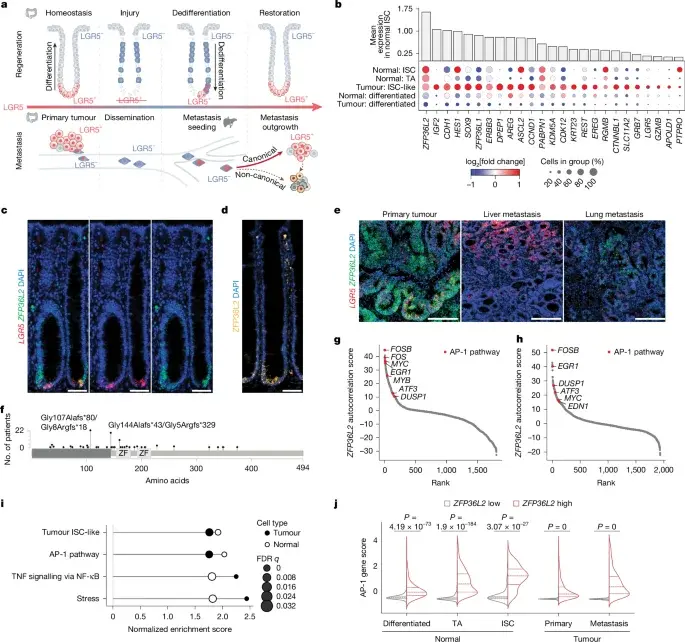
Researchers at Memorial Sloan Kettering Cancer Center (MSK) have identified ZFP36L2 as a critical molecular switch that regulates cellular plasticity in both normal intestinal repair and colorectal cancer (CRC) metastasis. Published in Nature, the study reveals that ZFP36L2 acts as a stress sensor that terminates stress responses, allowing differentiated cells to dedifferentiate into stem cell states. In healthy tissue, this enables wound healing; in cancer, it facilitates metastatic seeding. Loss of ZFP36L2 function prevents metastasis but promotes aggressive, non-canonical tumor states associated with poor clinical outcomes.
Key points
- ZFP36L2 is an RNA-binding protein mutated in 5–10% of colorectal cancer cases, acting as a pivotal orchestrator of stress-adaptive plasticity.
- In mouse models, ablating ZFP36L2 inhibits dedifferentiation and impairs intestinal regeneration by failing to terminate stress responses.
- In human CRC, loss of ZFP36L2 function abrogates metastatic seeding but promotes lineage plasticity into non-canonical states (e.g., squamous or neuroendocrine-like), which are linked to worse patient outcomes.
- Mechanistically, ZFP36L2 binds to AU-rich 3′ untranslated regions of stress-associated mRNAs, forming biomolecular condensates that degrade these transcripts to resolve stress signals.
- The findings suggest ZFP36L2 could be a therapeutic target; disrupting it rapidly may cause cancer cells to self-destruct by overwhelming their stress management capabilities.
Background
This discovery builds on earlier research into cellular plasticity, such as the August 2026 findings on TRF2 in muscle regeneration, which highlighted how proteins maintain stem cell identity during repair. While TRF2 focuses on muscle, ZFP36L2 addresses the broader paradigm of stress-induced reprogramming in epithelial tissues, linking normal homeostasis to malignant progression in the gut.
How outlets are covering it
The primary source, Nature, provides a detailed mechanistic analysis, emphasizing ZFP36L2's role in forming biomolecular condensates to degrade stress mRNAs. It highlights the dual nature of ZFP36L2 mutations: they hinder metastatic seeding but drive the emergence of aggressive, non-canonical tumor states. The secondary source from MSK Cancer Center frames ZFP36L2 as a 'molecular switch' and focuses on the clinical implications, noting that while ZFP loss disrupts metastasis, it can lead to treatment-resistant phenotypes. MSK emphasizes the potential for therapeutic strategies that rapidly disrupt ZFP36L2 to force cancer cells into self-destruction, a nuance less detailed in the primary abstract but central to the press release's outlook on future treatments.
Why it matters
Understanding ZFP36L2's function offers a new avenue for treating colorectal cancer by targeting the mechanism of metastasis and therapy resistance. It also provides a biomarker for identifying high-risk patients whose tumors may develop aggressive, non-canonical phenotypes. This insight could lead to therapies that exploit cancer cells' dependence on stress-response pathways, potentially preventing metastasis or overcoming treatment resistance.
What to watch
Researchers are actively pursuing strategies to rapidly disrupt ZFP36L2 in metastatic cancer cells to induce self-destruction. Additionally, the findings may lead to earlier identification of high-risk patients through standard tumor sequencing, allowing for closer monitoring of those with ZFP36L2 mutations. Further investigation into the context-dependent regulation of ZFP36L2 could pave the way for new cancer treatments targeting cellular plasticity.
- ZFP36L2 orchestrates stress-adaptive plasticity in regeneration and cancer Nature
- MSK Scientists Find the 'Molecular Switch' That Heals the Gut — And That Colorectal Cancer Hijacks To Spread Memorial Sloan Kettering Cancer Center
Want the full story? Read the original reporting
Read on Nature