
Drone Filmmaker Alerts California Swimmer to Nearby Great White Shark
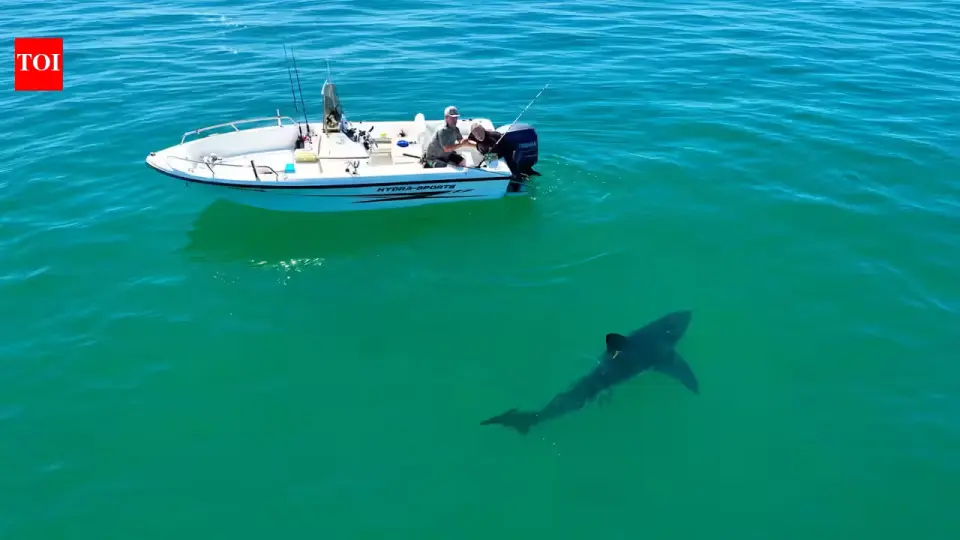
A California drone operator spotted a large great white shark approaching a fisherman swimming near his boat and used the drone to warn the man, who returned to the vessel. The incident, captured by filmmaker Carlos Gauna, highlights how aerial technology can mitigate risks in the ocean, particularly when live catch attracts predators. Experts note that while shark proximity does not always indicate aggression, the presence of struggling fish increases danger.
Key points
- Carlos Gauna, known as The Malibu Artist, operated a drone from a beach nearly two miles away from a fishing boat off the Southern California coast.
- Gauna observed a juvenile great white shark, estimated to be 10 to 11 feet long, swimming close to a fisherman who had jumped into the water beside his boat.
- Two live fish were hanging from a stringer on the boat, which likely attracted the shark through chemical signals and vibrations.
- Gauna used the drone to signal the swimmer, prompting him to climb back onto the boat before any direct contact occurred.
- The fisherman later gave a thumbs-up to acknowledge the warning, as seen in footage shared by Gauna.
Background
This incident follows a series of notable shark encounters along the California coast in late 2026. In October, a great white breached near Marina State Beach, prompting a state advisory, and another shark splashed a surfer off Oceano. Gauna has previously released a 13-minute compilation of shark footage aimed at shifting public perception regarding shark safety. Our archive from November 21 also covered this specific incident, noting that while sharks may investigate prey-like movements, humans generally do not trigger predatory attacks unless specific conditions are present.
How outlets are covering it
All three sources agree on the core facts: Gauna spotted the shark, warned the swimmer, and the man returned to the boat safely. However, they differ in emphasis. The Times of India and FlipItMoney focus heavily on the role of the live fish hanging from the boat as a primary attractant, citing expert opinions on how struggling catch releases signals that draw predators. PetaPixel emphasizes the technical aspect of drone usage and includes a direct quote from Gauna stating that proximity does not automatically mean aggression. While The Times of India and FlipItMoney cite Dr. Chris Lowe from California State University’s Shark Lab to contextualize the behavior, PetaPixel references the California Department of Fish and Wildlife to note that shark bites are extremely rare. All sources agree that the incident was not an attack but a close encounter averted by technology.
Why it matters
The incident illustrates the growing role of drone technology in enhancing safety for individuals in marine environments. It highlights a specific risk factor for boaters: leaving live catch in the water can inadvertently attract large predators. While shark attacks on humans are rare, the combination of a large juvenile shark, close proximity, and the presence of struggling fish creates a high-risk scenario. The event underscores the importance of situational awareness and the potential for aerial surveillance to provide critical warnings that are not visible from the water's surface.
What to watch
Gauna continues to document shark behavior along the California coast, aiming to educate the public about shark habits and reduce fear through factual observation. Authorities continue to advise swimmers and boaters to remain aware of their surroundings and changing conditions. There is no indication of further regulatory changes or advisories resulting from this specific incident, as it was a non-attack encounter. Gauna may release additional footage from this encounter, as he has done with previous viral shark sightings.
- A California drone operator filming sharks from nearly two miles away spotted a large great white approac The Times of India
- 11-Foot Great White Stalks California Fisherman Before Drone Pilot’s Life-Saving Warning (Video) SURFER Magazine
- Photographer Uses Drone to Warn Fisherman of Great White Shark Closing in on Him PetaPixel
- California fisherman was swimming when someone two miles away saw everything https://latination.com/
- Drone operator in California warns fisherman of great white near swimmer FlipItMoney
Want the full story? Read the original reporting
Read on The Times of India