
G2 Solar Storm and New Moon Create Rare Aurora Australis Viewing Window Across Australia
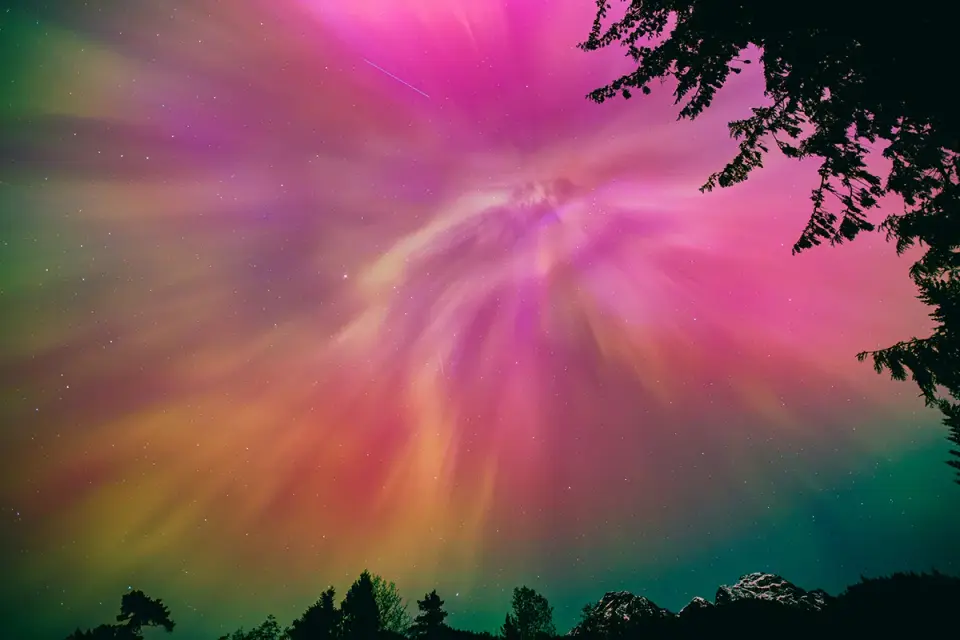
A G2-class geomagnetic storm, triggered by recent solar flares, is expected to produce visible aurora australis displays across southern Australia on October 11 and 12. The event coincides with a new moon, providing optimal dark-sky conditions for observation in Tasmania, Victoria, and parts of New South Wales, South Australia, and Western Australia.
Key points
- NOAA and the Bureau of Meteorology forecast a G2-level geomagnetic storm for October 11–12, 2026.
- The storm follows an M6.7-class solar flare and coronal mass ejections launched on October 8.
- A new moon on October 11 eliminates moonlight pollution, lowering the hemispheric power threshold needed for visibility.
- Prime viewing windows are between 10:00 PM and 2:00 AM local time, with best visibility in dark-sky locations south of major cities.
- Auroras are expected to appear in green, violet, and teal hues, though visibility may be faint in urban areas.
Background
Australia experienced significant aurora activity in January 2026, with displays captured in suburban areas. This current event follows a period of heightened solar activity in 2024–2025, though 2026 is generally considered a lower-activity phase in the solar cycle. Previous aurora alerts in September 2026 focused on the Northern Hemisphere, with NOAA predicting visibility in eight U.S. states.
How outlets are covering it
While all sources confirm the G2 storm and new moon timing, they differ in emphasis. ELLE Australia provides detailed state-by-state viewing guides and technical explanations of hemispheric power, citing experts like Dr. Laura Driessen. PerthNow focuses on Western Australia, noting that visibility is rare for this time in the solar cycle and recommending specific locations like Esperance and Albany. Yahoo News Australia highlights the broad alert for millions of Australians. RUSSH’s content was inaccessible due to technical errors, so no perspective could be extracted from that source.
Why it matters
This event offers a rare opportunity for residents in the Southern Hemisphere to witness aurora australis without traveling to remote polar regions. The combination of a strong geomagnetic storm and a new moon creates ideal conditions for both naked-eye observation and photography, making it a significant astronomical event for the region.
What to watch
Observers should monitor live space weather data from NOAA or the Bureau of Meteorology for real-time updates on geomagnetic activity. If conditions remain favorable, auroras may be visible in bursts throughout the night of October 11 and into October 12. Future solar activity will depend on the ongoing solar cycle, but additional storms are possible in the coming weeks.
- How to see the aurora australis tonight RUSSH
- Major Aurora Australis alert for millions as rare phenomenon sparked by geomagnetic storm Yahoo News Australia
- Aurora australis could light up parts of Australia tonight. Here's how to get the best view SBS
- Aurora Australis Australia Tonight: When & Where To See The Southern Lights ELLE Australia
- How to see rare Aurora Australis in WA tonight PerthNow
Want the full story? Read the original reporting
Read on RUSSH