Tag

Solar Flare

All articles tagged with #solar flare

Sun unleashes massive flare as Earth faces CME and potential Northern Lights displays
space15 days ago

Sun unleashes massive flare as Earth faces CME and potential Northern Lights displays

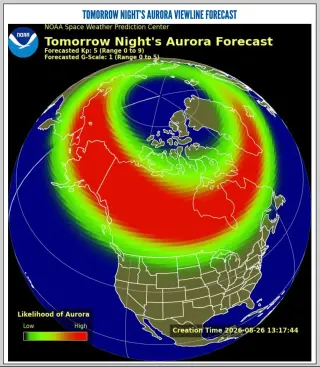
A massive solar flare produced a coronal mass ejection (CME) traveling toward Earth at roughly 650 km/s. The CME is expected to pass by Earth, possibly with a glancing impact late on May 12–13 UTC, potentially triggering auroral displays and light shows across northern latitudes. Met Office and NOAA are monitoring the situation, noting patchy UK cloud but the chance of Northern Lights across northern Scotland and similar latitudes.

Sun Erupts M5.7 Flare; Auroras Expected Across High Latitudes This Week
space15 days ago

Sun Erupts M5.7 Flare; Auroras Expected Across High Latitudes This Week

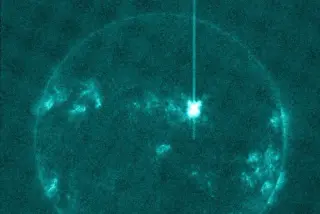
A powerful M5.7 solar flare on May 10 released a CME that mostly misses Earth but could graze our planet, raising the chance of northern lights across high latitudes in the coming days. NOAA and the UK Met Office forecast a weak geomagnetic storm around May 13 as sunspot regions AR4436 and AR4432 evolve, with potential for more activity and even X-class flares in the near term.

Twin X-class solar blasts knock out Earth radio signals
space1 month ago

Twin X-class solar blasts knock out Earth radio signals

Two X2.5 solar flares erupted from sunspot AR4419 on the Sun’s western limb within seven hours, triggering radio blackouts on Earth’s dayside. The flares were the strongest in about 78 days; while a direct CME impact is unlikely, forecasters warn a glancing blow could spark geomagnetic activity and auroras. A preceding “sympathetic” flare involved eruptions from two sunspot regions on opposite sides of the Sun.

Sunstorm Won’t Delay Artemis 2 Moon Mission, NASA Says
space1 month ago

Sunstorm Won’t Delay Artemis 2 Moon Mission, NASA Says

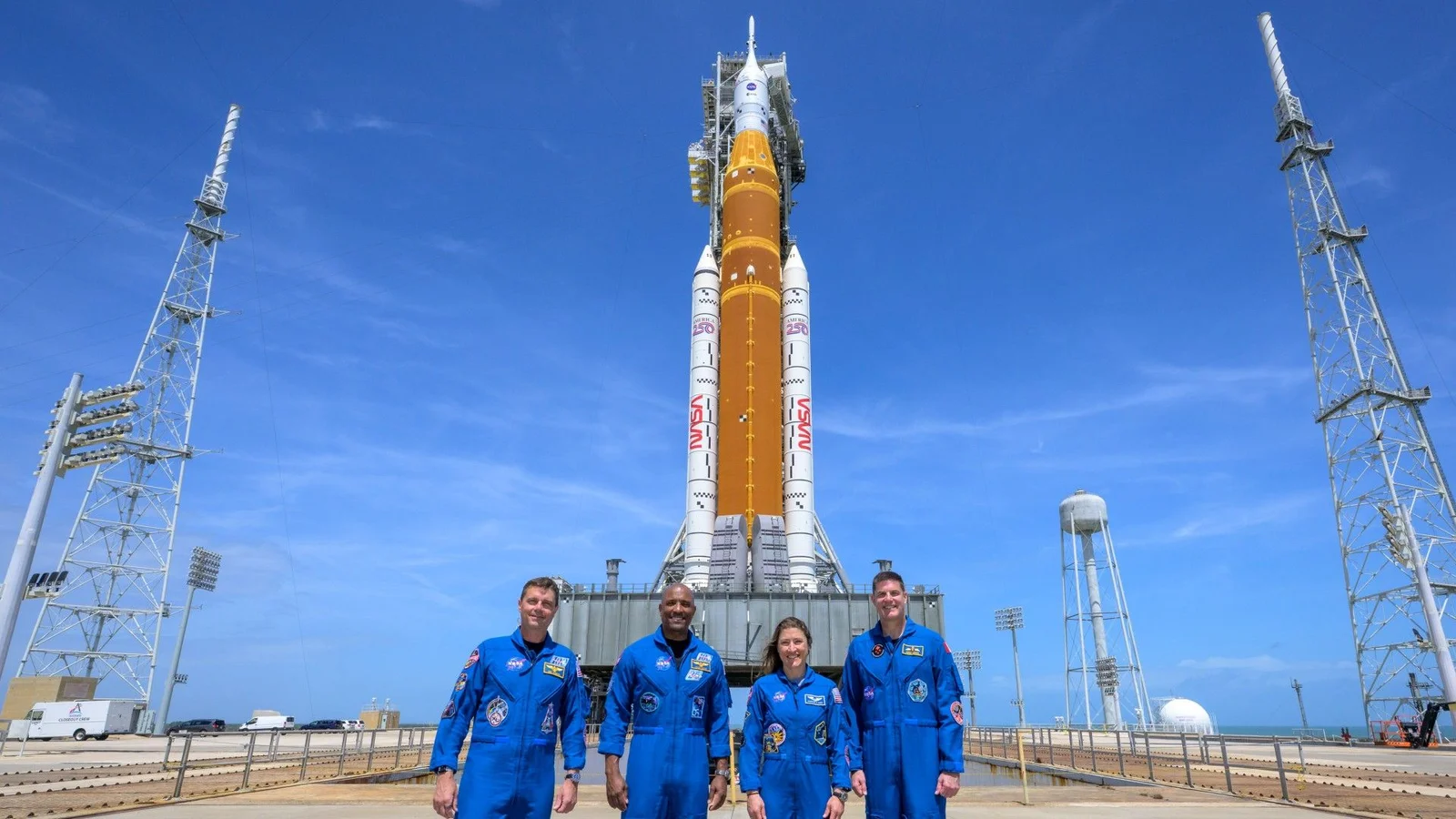
NASA says the X1.4 solar flare and its CME pose no threat to Artemis 2’s April 1 launch to the Moon; officials expect no CME effects and note a radiation shelter will be used if needed. Artemis 2 will carry four astronauts on a roughly 10-day lunar flyby aboard SLS/Orion, with liftoff at 6:24 p.m. EDT and about 80% favorable weather; the crew arrived at Kennedy Space Center March 27 and is in prelaunch quarantine.

X1.4 Solar Flare Knocks Out Radio Ahead of Artemis 2 Moon Mission
space1 month ago

X1.4 Solar Flare Knocks Out Radio Ahead of Artemis 2 Moon Mission

A powerful X1.4 solar flare from sunspot region 4405 caused radio blackouts on Earth’s sunlit side and launched a fast CME, with NOAA warning of a possible Earth-directed component and a moderate G2 geomagnetic storm watch. NASA’s Artemis 2 moon mission is planned no earlier than April 1, but space weather could disrupt launch communications and early maneuvers; if the CME impacts Earth, auroras could appear at unusually low latitudes in the United States.

Earth-Directed Sunspot 4366 Prompts Possible Auroras
space3 months ago

Earth-Directed Sunspot 4366 Prompts Possible Auroras

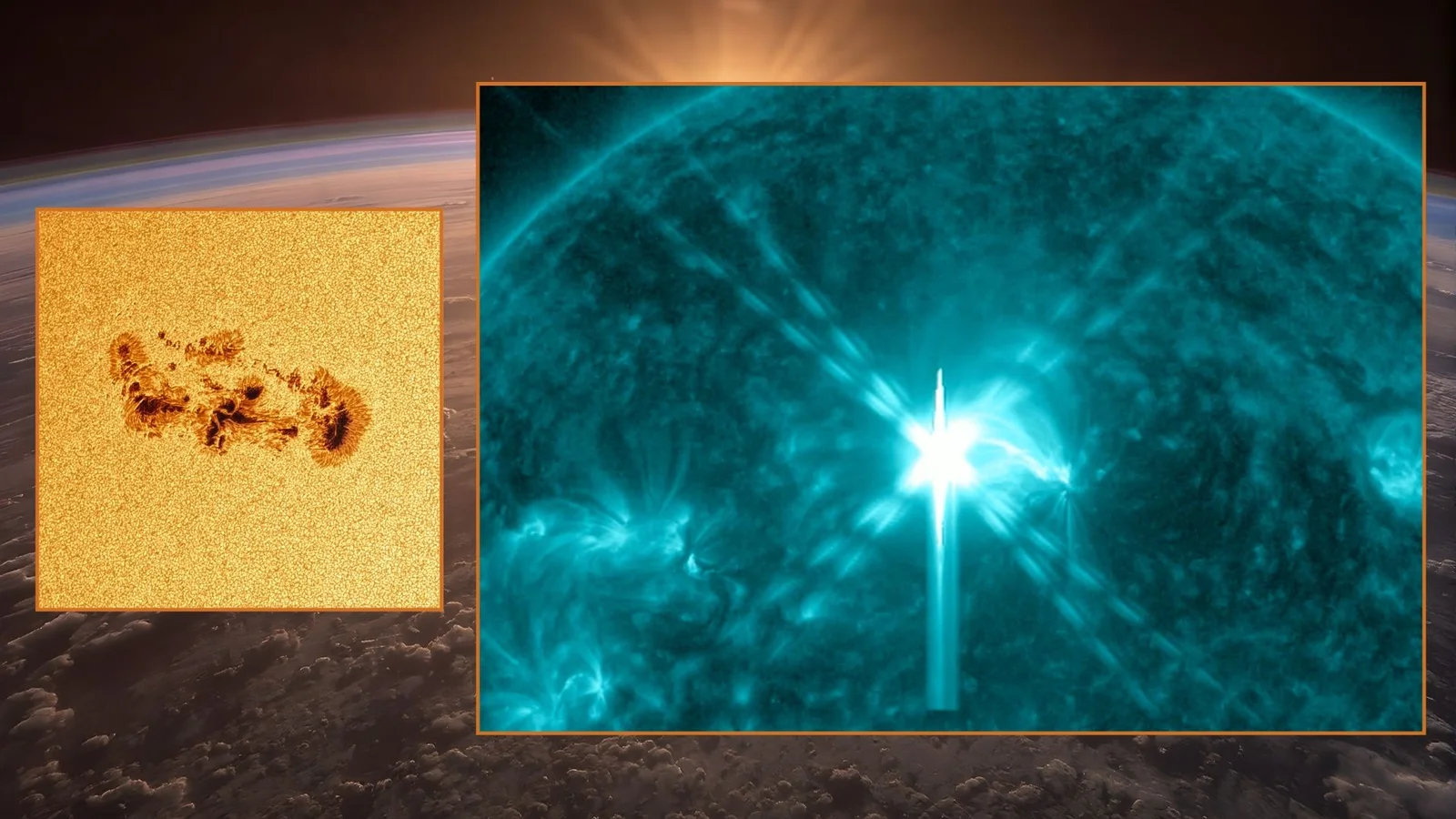
Sunspot region 4366 has unleashed dozens of solar flares in 24 hours, including multiple M-class and X-class eruptions—the strongest since 2024—making it the most active sunspot in years. NOAA's SWPC says a coronal mass ejection is headed toward Earth but is likely to miss or only graze it, potentially sparking auroras at unusually low latitudes later this week.

science3 months ago

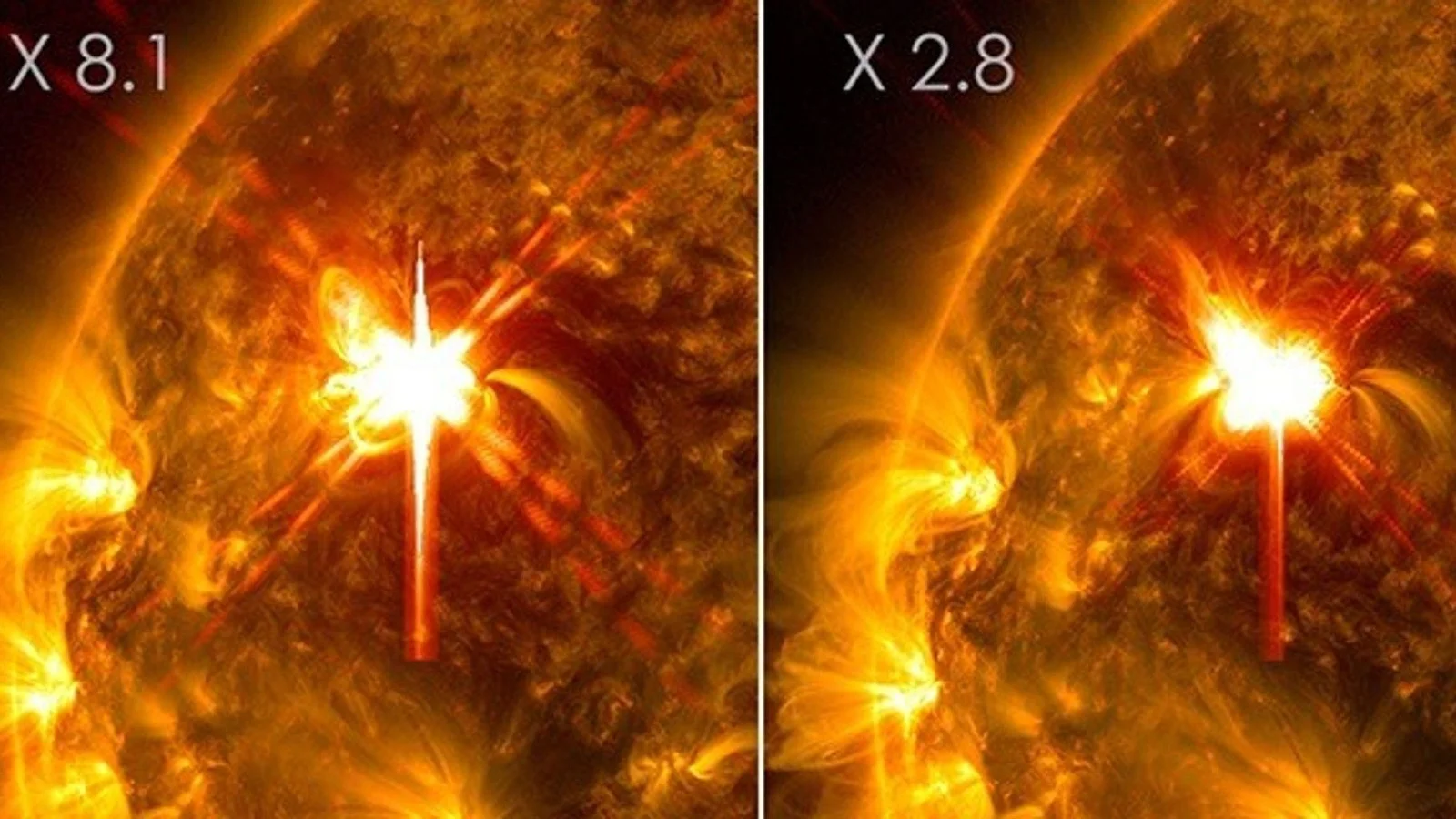
Sun Unleashes Strong X8.1 Flare From Active Region 4366—Glancing CME Expected Earthward

NOAA reports an X8.1 flare from active region 4366, with CME modeling indicating much of the ejected material will pass by Earth to the north and east late Feb 5 UTC, potentially delivering glancing effects. The region remains highly active with ongoing M and X-class flares, and forecasters expect more activity in the coming days.

Sun erupts in powerful flare barrage as volatile sunspot turns Earthward
astronomy3 months ago

Sun erupts in powerful flare barrage as volatile sunspot turns Earthward

Over a 24-hour period the Sun released a barrage of flares from sunspot AR4366, including at least 18 M-class and three X-class events (peaking at X8.3), triggering radio blackouts in parts of the South Pacific and eastern Australia/New Zealand. AR4366 is rapidly growing and could produce more eruptions; a CME is expected but likely to miss Earth or only glance Earth around Feb. 5, potentially elevating high-latitude aurora activity. Forecasters warn conditions remain uncertain as activity continues.

Sun’s Flares Revealed as Magnetic Avalanches, Solar Orbiter Finds
space4 months ago

Sun’s Flares Revealed as Magnetic Avalanches, Solar Orbiter Finds

ESA’s Solar Orbiter watched an avalanche of smaller magnetic disturbances cascade into a mid‑class solar flare, revealing how energy is released in the sun’s corona through a sequence of reconnection events. The multi‑instrument observations (EUI, SPICE, STIX, PHI) tracked rapid changes over about 40 minutes, with the findings published in Astronomy & Astrophysics. This work advances understanding of flare triggers and could improve forecasting of Earth‑impacting solar activity.

Magnetic Avalanches Trigger Solar Flares, New Solar Orbiter View Reveals
science4 months ago

Magnetic Avalanches Trigger Solar Flares, New Solar Orbiter View Reveals

ESA's Solar Orbiter captured high-cadence observations showing solar flares arise from avalanche-like magnetic reconnection: a weak disturbance spawns a cascade of twisted field strands that rapidly reconnect, creating bright ribbons, fast plasma outflows up to ~400 km/s, and continued plasma rain after the flare, implying energy moves from magnetic fields to solar plasma and this avalanche mechanism may be common across flares.