
Nature's Interactive Quiz Highlights the Persistent Gender Gap in Science Nobels
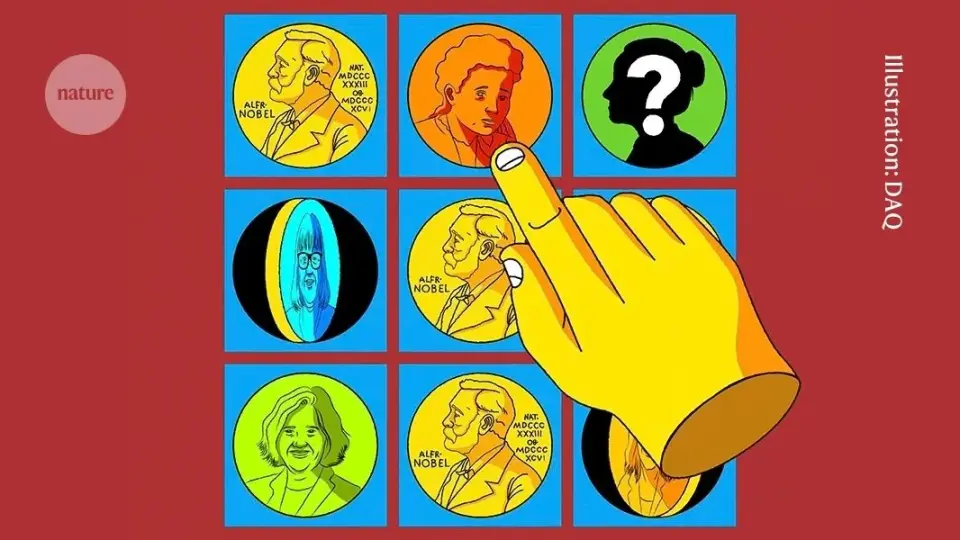
Nature has launched an interactive quiz to test readers' knowledge of women who have won science Nobel Prizes, highlighting that women remain significantly underrepresented in physics, chemistry, and physiology or medicine despite recent efforts by awarding academies to diversify nomination pools. The quiz covers data up to 2025, noting that Marie Skłodowska-Curie is the only woman to have won two science Nobels, and asks users to identify the proportion of female winners in the last decade and the field with the highest number of female laureates. While the academies have acknowledged the disparity and adjusted procedures to improve diversity, men continue to dominate the 125-year history of the awards, with women comprising a small percentage of total recipients in these categories.
Key points
- Nature released an interactive quiz on October 2, 2026, focusing on female Nobel laureates in physics, chemistry, and physiology or medicine, with data current through 2025.
- The quiz asks users to determine the percentage of science Nobel winners who are women, the proportion of female winners in the past ten years, and the scientific field where women have won the most prizes.
- Marie Skłodowska-Curie is identified as the only woman to have won two science Nobels, receiving the physics prize in 1903 for radiation research and the chemistry prize in 1911 for the discovery of radium and polonium.
- Nobel awarding academies have acknowledged that women are underrepresented among laureates and have modified nomination procedures to diversify the pool of candidates, though men still dominate the awards' history.
- The quiz includes a timed challenge where users must name as many female science Nobel laureates as possible, with citations provided for winners from 1935 through 2025, including fields such as radioimmunoassays, genetic elements, and mRNA vaccine development.
Background
This release follows broader discussions in 2026 about gender representation in scientific recognition, such as the Eureka Prize awarded to Helen Paterson for research on domestic violence survivors, which highlighted the importance of diverse perspectives in forensic science. While the Ig Nobel Prizes celebrated quirky research in 2026, the focus on serious gender disparities in major awards like the Nobel underscores ongoing efforts to address structural inequalities in science. Previous debates about the definition of computer science and public health advocacy also reflect the broader cultural conversation about how science is defined and who gets recognized within it.
Why it matters
The quiz serves as a public engagement tool to highlight the persistent gender gap in science Nobel Prizes, prompting readers to reflect on the historical underrepresentation of women in these fields. By providing specific data and citations for female laureates, Nature aims to educate the public about the contributions of women in science while acknowledging that progress has been slow. The interactive format encourages active participation, potentially increasing awareness of the need for continued efforts to diversify nomination pools and recognize women's achievements in physics, chemistry, and medicine.
What to watch
Nature plans to update the quiz with the 2026 Nobel Prize winners once they are announced. The academies will continue to monitor the impact of their revised nomination procedures on the diversity of laureates. Readers are encouraged to participate in the timed challenge to test their knowledge of female science Nobel laureates and learn about their contributions to fields such as radioimmunoassays, genetic elements, and mRNA vaccine development.
Want the full story? Read the original reporting
Read on Nature