
Japan Launches Historic Mission to Return Samples from Mars' Moon Phobos
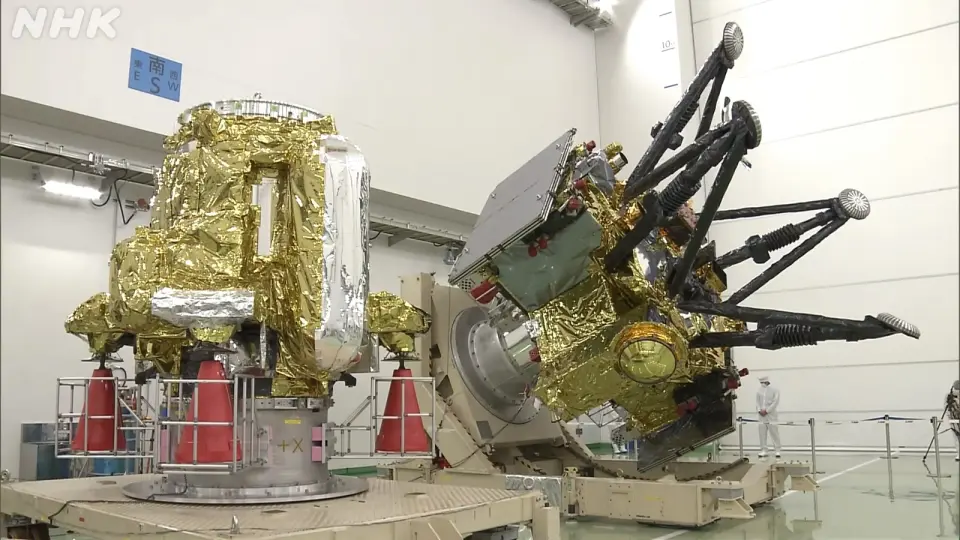
Japan’s MMX spacecraft launched from Tanegashima on October 19, 2026, aiming to become the first mission to land on Mars' moon Phobos, collect surface samples, and return them to Earth by 2031.
Key points
- The Martian Moons eXploration (MMX) mission launched on an H3 rocket from Tanegashima Space Center at 4:41 a.m. JST on October 20, 2026 (October 19 UTC).
- JAXA-led MMX will arrive at Mars in August 2027, enter a quasi-satellite orbit around Phobos, and deploy the 25-kg Idefix rover in early 2029.
- The mission will collect at least 10 grams of Phobos surface material using two methods: a pneumatic gas-blast sampler and a deep-core drill, with samples returning to Earth in 2031.
- NASA contributes the MEGANE spectrograph, a pneumatic sampler demonstration, Deep Space Network support, and will curate 15% of the returned samples at its Johnson Space Center.
- The total development cost for the three-module MMX mission is 55.3 billion yen (approx. $350 million), with international partners including ESA, CNES, and DLR.
Background
This launch follows recent NASA selections for lunar subsurface exploration, such as the GIMLI mission to probe lava tubes for future habitats, highlighting a broader trend in robotic sample-return and subsurface analysis. The MMX mission also complements ESA’s upcoming ExoMars Rosalind Franklin rover, which will analyze Mars subsurface samples, and builds on the long-standing scientific debate over the origins of Mars' moons.
How outlets are covering it
NHK World emphasizes the Japanese-led nature of the mission, its cost, and the technical challenges of landing on Phobos' ultra-low gravity surface. NASA Science highlights the scientific value of the samples for understanding Mars' history and the solar system's formation, stressing the importance of the NASA-JAXA sample curation partnership. New Scientist focuses on the unresolved scientific mystery of whether Phobos and Deimos are captured asteroids or impact debris, noting that the samples could also contain preserved Mars surface material. ESA underscores the international collaboration, the novelty of the quasi-satellite orbit, and the long-term scientific value of returning samples to Earth for future generations of researchers.
Why it matters
The MMX mission represents a critical step in understanding the origins of Mars' moons and the early solar system, with potential implications for future human exploration of Mars. The successful return of samples could resolve a century-old scientific debate and provide insights into the history of water and organic compounds in the inner solar system.
What to watch
MMX will arrive at Mars in August 2027, deploy the Idefix rover in early 2029, and land on Phobos in 2030 to collect samples. The return module is expected to deliver the samples to Earth in 2031, with the capsule landing in Australia before being transferred to Japan for analysis and distribution to international partners.
- Japan to launch Martian moon mission on Tuesday | NHK WORLD-JAPAN News NHKニュース
- NASA to Help Unlock Mysteries of Mars’ Moons in Upcoming Mission NASA Science (.gov)
- Japan is launching a mission to Mars’s largest moon Phobos New Scientist
- Mars moon lander set to launch on 19 October European Space Agency
- Japan’s MMX mission aims to swipe soil samples from Mars’ moon Phobos The Conversation
Want the full story? Read the original reporting
Read on NHKニュース