
Roman Telescope Launch Scheduled for August 30 from Kennedy Space Center
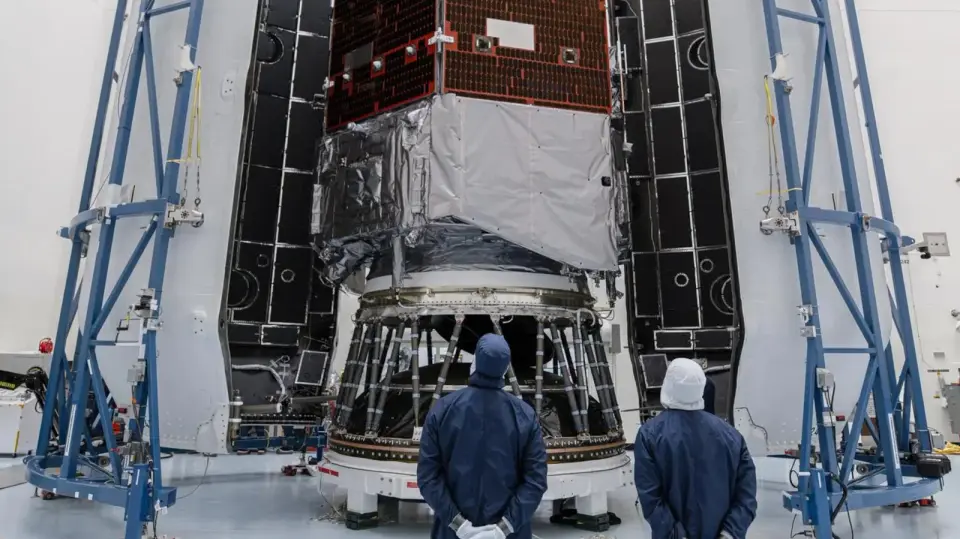
NASA and SpaceX have scheduled the launch of the Nancy Grace Roman Space Telescope for August 30, 2026, from Launch Complex 39A at Kennedy Space Center. The infrared observatory, which features a field of view 100 times larger than Hubble's, will travel to the Sun-Earth L2 point to study dark energy, map galaxies, and detect exoplanets. NASA has confirmed a backup launch window for August 31 and detailed a comprehensive broadcast schedule for the event.
Key points
- The Nancy Grace Roman Space Telescope is targeted for launch on August 30, 2026, no earlier than 7:26 AM Eastern Time, aboard a SpaceX Falcon Heavy rocket.
- The telescope is currently encapsulated in a payload fairing at NASA's Kennedy Space Center in Florida, with a backup launch window set for August 31 at 7:22 AM Eastern Time.
- NASA will broadcast live coverage starting at 6:20 AM Eastern Time on launch day, following a prelaunch news conference and science briefing scheduled for August 29.
- The observatory will travel to the second Sun-Earth Lagrange point, approximately one million miles from Earth, with a primary mission lifetime of five years and a goal of operating for ten years.
- The telescope is designed to study dark energy and dark matter, map billions of galaxies, and use a coronagraph to block starlight for better exoplanet detection.
Background
The Nancy Grace Roman Space Telescope, named after NASA's first chief astronomer, has been in development for several years. Previous reports indicated a September launch schedule, but NASA announced in early June 2026 that the mission would launch earlier. The telescope was completed in 2025 and underwent final inspections of its primary mirror in late May 2026 to ensure it had not been damaged during testing. The mission is managed by NASA Goddard Space Flight Center with participation from JPL, Caltech/IPAC, and the Space Telescope Science Institute, alongside international partners including ESA and JAXA.
How outlets are covering it
Engadget and NASA provide consistent details regarding the launch schedule, emphasizing the August 30 target date and the backup window on August 31. Both sources highlight the telescope's capabilities, including its 100x larger field of view compared to Hubble and its role in studying dark energy and exoplanets. NASA's official advisory provides a detailed breakdown of the broadcast schedule, including specific times for the science briefing, prelaunch news conference, and postlaunch news conference, as well as contact information for media. SpaceX's website confirms the use of the Falcon Heavy rocket and Launch Complex 39A at Kennedy Space Center, aligning with the information provided by NASA and Engadget. Space.com's coverage, while largely obscured by technical content, confirms the readiness of the Roman telescope for launch and the upcoming live updates from NASA.
Why it matters
The launch of the Nancy Grace Roman Space Telescope represents a significant advancement in astronomical observation, offering a field of view 100 times larger than Hubble's. This capability will enable scientists to study dark energy, map billions of galaxies, and detect exoplanets with greater precision. The mission's success could provide critical insights into the nature of dark matter and dark energy, potentially addressing key cosmological tensions. Additionally, the telescope's ability to block starlight using a coronagraph will enhance the detection and characterization of exoplanets, contributing to our understanding of habitability and the prevalence of solar systems similar to our own.
What to watch
NASA and SpaceX will proceed with the launch on August 30, 2026, with a backup window on August 31 if necessary. Following the launch, the telescope will travel to the Sun-Earth L2 point, approximately one million miles from Earth, where it will undergo a multi-month checkout before beginning its primary science operations. The mission is expected to operate for at least five years, with a goal of extending operations to ten years. NASA will continue to provide live coverage and updates through its website and social media platforms, including a postlaunch news conference on August 30 at 9:30 AM Eastern Time.
- How To Watch The Nancy Grace Roman Space Telescope's Launch Engadget
- NASA Sets Coverage for Roman Space Telescope Launch from Florida NASA (.gov)
- Roman Space Telescope Mission SpaceX
- Nancy Grace Roman Telescope live updates: NASA readies Roman for launch Space
- NASA is about to launch a powerful new eye on the universe Science Daily
Want the full story? Read the original reporting
Read on Engadget