Tag

Roman Space Telescope

All articles tagged with #roman space telescope

NASA's Roman Space Telescope set to chart a 100,000-planet census and rogue worlds
space2 days ago

NASA's Roman Space Telescope set to chart a 100,000-planet census and rogue worlds

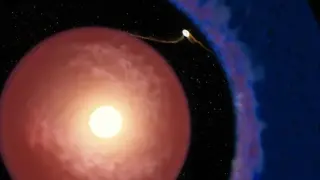
NASA’s Nancy Grace Roman Space Telescope, slated for launch by May 2027, will conduct a five-year survey that could detect about 100,000 transiting exoplanets and assemble the largest catalogue of rogue planets via gravitational microlensing, complemented by a coronagraphic program to image select giant planets. The mission combines a Wide Field Instrument for transit hunting with a Galactic Bulge Time-Domain Survey that observes six bulge fields in high cadence to capture microlensing events, enabling population-level statistics on planet occurrence—such as Earth-sized planets in habitable zones—and on rogue planets roaming the galaxy, far beyond the roughly 6,000 confirmed exoplanets today.

Exoplanet Archive Sees 6,000 Confirmed Worlds, Aims for 100,000 Soon
science3 days ago

Exoplanet Archive Sees 6,000 Confirmed Worlds, Aims for 100,000 Soon

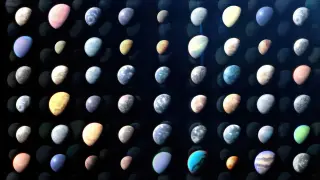
NASA’s Exoplanet Archive has surpassed 6,000 confirmed exoplanets, a milestone announced by JPL and maintained by Caltech’s IPAC; the figure is a lower bound on total planets and reflects detection biases toward certain methods. Growth has been uneven, driven largely by transit surveys from Kepler and TESS, but the next leap could reach ~100,000 planets within six to seven years thanks to Gaia’s upcoming astrometry data release and the Roman Space Telescope’s microlensing survey, starting around 2026–2027. The archive is being redesigned to ingest and link tens of thousands of candidates yearly, making the 100,000 figure a checkpoint for population statistics and atmospheric studies rather than a simple headcount of worlds.

Hubble Preps Roman for the Milky Way's Bulge Microlensing Hunt
science19 days ago

Hubble Preps Roman for the Milky Way's Bulge Microlensing Hunt

Hubble's precursor imaging of the Milky Way's galactic bulge will calibrate and guide NASA's Nancy Grace Roman Space Telescope’s upcoming Galactic Bulge Time-Domain Survey, enabling precise mass measurements and a census of microlensing events, rogue planets, and compact objects, with six 72‑day seasons and high-cadence observations ahead of Roman's 2026 launch.

Roman Space Telescope Could Weigh Hidden Neutron Stars via Gravitational Microlensing
science24 days ago

Roman Space Telescope Could Weigh Hidden Neutron Stars via Gravitational Microlensing

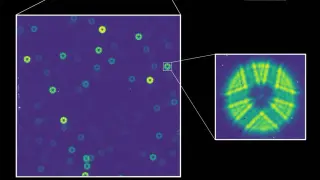
NASA’s Nancy Grace Roman Space Telescope could spot and weigh isolated neutron stars in the Milky Way using astrometric microlensing in its Galactic Bulge Time Domain Survey; by tracking tiny shifts in background starlight as a neutron star passes in front, Roman can directly measure the masses of otherwise invisible remnants, helping map the neutron star–black hole population and shedding light on neutron-star birth kicks, with even a few detections significantly advancing stellar evolution models.

NASA's Roman Space Telescope Finishes Construction Ahead of Schedule and Under Budget
space1 month ago

NASA's Roman Space Telescope Finishes Construction Ahead of Schedule and Under Budget

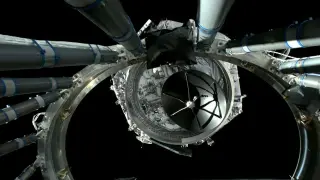
NASA has completed construction of the Nancy Grace Roman Space Telescope, finishing ahead of schedule and under budget, with a September launch aboard SpaceX Falcon Heavy to the L2 point. The telescope features a 7.9-foot primary mirror, a 300-megapixel Wide Field Instrument, and a Roman Coronagraph for exoplanet imaging; it will survey the sky 1,000x faster, observe 200x more of the sky per image, and process data 2,000x faster than Hubble, potentially discovering billions of galaxies and tens of billions of stars while expanding infrared astronomy and exoplanet discovery.

Roman Space Telescope Poised to Map the Cosmos
space1 month ago

Roman Space Telescope Poised to Map the Cosmos

NASA’s Nancy Grace Roman Space Telescope, built at Goddard and standing about 40 feet tall, is complete and designed to map the universe with sweeping wide-field surveys that aim to shed light on dark energy and dark matter while also hunting thousands of exoplanets; it carries a coronagraph to enable direct imaging of planets, will undergo months of commissioning after launch, and is headed to Kennedy Space Center for a potential September liftoff.

NASA's Nancy Grace Roman Space Telescope Launches Ahead of Schedule and Under Budget
science1 month ago

NASA's Nancy Grace Roman Space Telescope Launches Ahead of Schedule and Under Budget

NASA’s Nancy Grace Roman Space Telescope is fully built and ready for a September launch, eight months early and under budget, after repurposing surplus spy-satellite hardware. The observatory will perform a wide-field infrared survey with a two-instrument payload (a Wide Field Instrument with 18 detectors and a coronagraph for direct exoplanet imaging), enabling large-scale cosmic mapping, study of dark energy via baryon acoustic oscillations, and a microlensing survey that could reveal tens of thousands of exoplanets. Commissioning should take about 90 days, with the mission expected to operate for roughly a decade on its fuel supply.

NASA targets September 2026 launch for the Roman Space Telescope
space1 month ago

NASA targets September 2026 launch for the Roman Space Telescope

NASA aims to launch the Nancy Grace Roman Space Telescope in September 2026 aboard SpaceX’s Falcon Heavy, a wide-field observatory with a 300.8‑megapixel camera and a coronagraph to spot exoplanets and study dark energy; it will survey the sky about 100x larger than Hubble, operate from roughly 1 million miles from Earth, and work in concert with JWST and Chandra, with a latest possible launch date of May 2027.

NASA's Roman Telescope to map the universe and find new worlds
science1 month ago

NASA's Roman Telescope to map the universe and find new worlds

NASA unveiled the Roman Space Telescope, a 12-meter infrared observatory set to launch with SpaceX, capable of scanning vast regions of the cosmos to census tens of thousands of exoplanets, billions of galaxies, thousands of supernovae, and tens of billions of stars, while studying dark matter and dark energy. With a field of view about 100 times larger than Hubble and an expected data flow of 11 terabytes per day, Roman will complement other observatories like JWST and Euclid, helping build a new atlas of the universe and illuminate the evolution of cosmic structure.
NASA's Roman Space Telescope to map the cosmos with a wide sky survey
space1 month ago

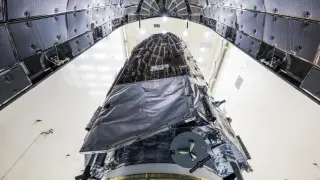
NASA's Roman Space Telescope to map the cosmos with a wide sky survey

NASA's Nancy Grace Roman Space Telescope has been fully assembled and will begin prelaunch work ahead of a fall 2026–May 2027 launch aboard SpaceX's Falcon Heavy from Kennedy Space Center. With an 8-foot mirror and a field of view about 100 times larger than Hubble's, Roman will survey the sky to study dark matter and dark energy while also hunting exoplanets through gravitational lensing in a Galactic Bulge Time-Domain Survey.

NASA's Roman Space Telescope Heads Toward Launch, Promising Wide-Field Skies
science1 month ago

NASA's Roman Space Telescope Heads Toward Launch, Promising Wide-Field Skies

NASA’s Nancy Grace Roman Space Telescope is finishing final tests at Goddard and is set to ship to Kennedy Space Center for a Falcon Heavy launch as early as this fall; designed for a wide-field infrared view, it will conduct three core surveys and complement JWST by mapping large sky areas, with robotic refueling planned for a 5–10 year mission and operations run from Goddard.

NASA’s Roman Space Telescope Nears Launch, Set to Search 100,000 Worlds
space4 months ago

NASA’s Roman Space Telescope Nears Launch, Set to Search 100,000 Worlds

NASA says the Nancy Grace Roman Space Telescope is fully built and ready for launch, likely on a SpaceX Falcon Heavy from Kennedy Space Center later this decade. With a 288‑megapixel Wide Field Instrument and a Coronagraph Instrument, Roman will map the Milky Way’s center, hunt for distant galaxies, and directly image exoplanets. Built since 2016 on a roughly $4.3 billion budget, it will operate at Sun‑Earth L2 about a million miles from Earth and is expected to return more than 20,000 terabytes of data over its first five years, potentially discovering more than 100,000 exoplanets alongside existing telescopes like Hubble and JWST.