
China Scraps Chang'e-7 Moon Launch, Pushing Lunar Water Race to 2027
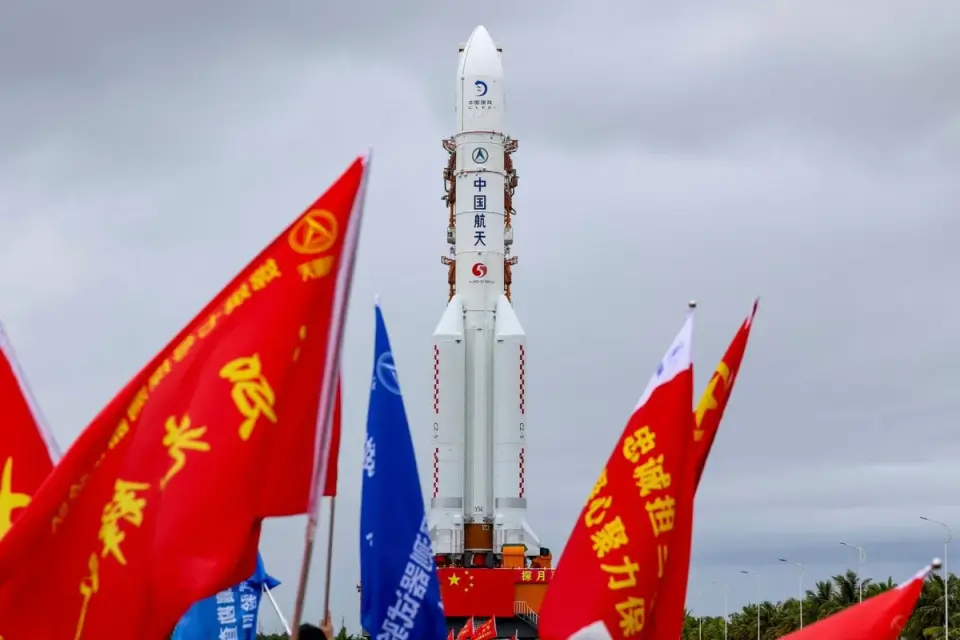
China has postponed its Chang'e-7 lunar mission, originally scheduled for August 2026, until at least 2027. The delay, attributed to poor weather and a mandate for 'absolute success,' disrupts Beijing's race to find water ice at the Moon's south pole, potentially allowing US competitors to reach the region first.
Key points
- China's Manned Space Agency (CMSA) canceled the Chang'e-7 launch on August 23, 2026, citing a lack of suitable conditions and a need for 'absolute success.'
- The mission, which includes an orbiter, lander, rover, and a hopping probe, was intended to search for water ice in Shackleton Crater near the lunar south pole.
- The delay is likely linked to Typhoon Narra, which caused poor weather at the Wenchang launch site in Hainan, and may push the next attempt to February or March 2027.
- The postponement intensifies the US-China space race, as NASA and private firms like Blue Origin also aim to establish a presence at the lunar south pole by 2028 and 2036, respectively.
Background
China's Chang'e program has a strong track record, with previous missions successfully landing on the Moon's far side. The current delay follows a series of setbacks, including the loss of a Long March 7A rocket in early 2026, which shares an engine with the Chang'e-7's Long March 5 carrier. The mission is a critical precursor to China's goal of landing humans on the Moon by 2030 and building a research station by 2031.
How outlets are covering it
While all sources agree on the delay, they differ on the primary cause. Scientific American and Ars Technica emphasize the role of Typhoon Narra and weather conditions, while the CMSA statement cited a broader 'comprehensive assessment' and the need for 'absolute success.' Ars Technica also notes a potential technical issue with the YF-100 engine, though it deems this unlikely. ABC News highlights the strategic implications, noting that the delay could allow NASA to reach the lunar south pole first, a goal NASA Administrator Jared Isaacman has described as a 'space race' where 'success or failure will be measured in months, not years.'
Why it matters
The delay of Chang'e-7 is a significant setback for China's lunar ambitions and could shift the balance of the US-China space race. The lunar south pole is a critical region for future human settlement due to its potential water ice resources, and the first nation to establish a presence there will have a strategic advantage. The delay also raises questions about the reliability of China's space program and its ability to meet its ambitious timelines.
What to watch
China is expected to attempt the Chang'e-7 launch again in February or March 2027, depending on weather and technical readiness. The US is also preparing its own missions to the lunar south pole, with Blue Origin's Blue Moon Mark 1 vehicle potentially launching in the first half of 2027. The outcome of this race will have significant implications for the future of human exploration and settlement on the Moon.
- China scraps ambitious launch of Chang’e-7 lunar mission due to need for ‘absolute success’ Yahoo
- China's bid for lunar water launches Sunday as the new space race heats up ABC News - Breaking News, Latest News and Videos
- China delays ambitious Chang’e 7 moon mission until 2027 Scientific American
- Due to need for "absolute success," China delays critical Moon launch to 2027 Ars Technica
- China Delays Mission to Find Water on Moon Until After This Year Bloomberg.com
Want the full story? Read the original reporting
Read on Yahoo