
Mars missions face severe physiological hurdles from gravity shifts, radiation, and confinement
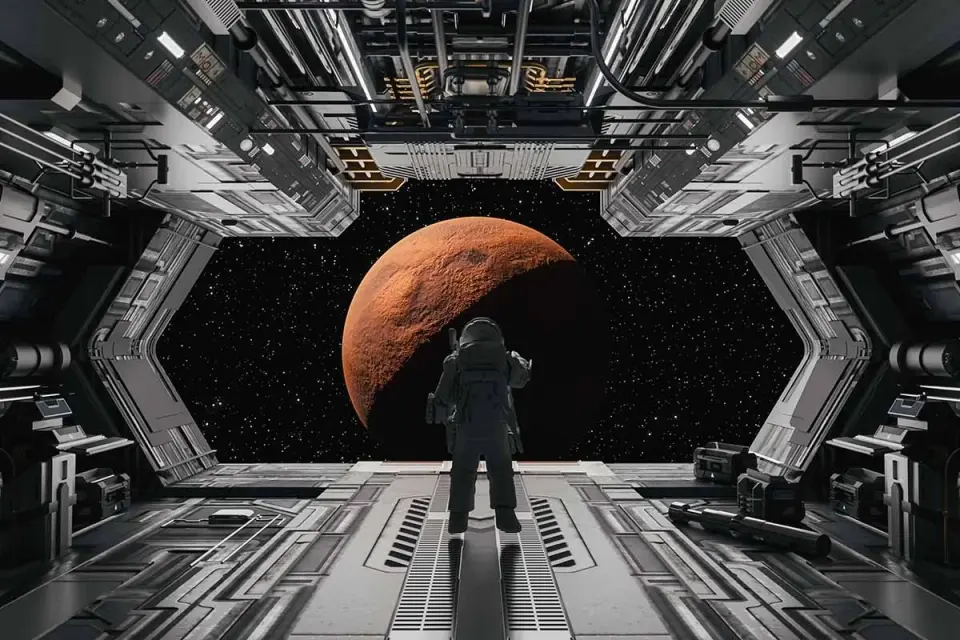
While private firms and NASA advance Mars plans, a round trip could take three years, far exceeding current spaceflight records. The journey poses severe risks from zero-gravity muscle and bone loss, intense cosmic radiation, and psychological stress in confined spaces. Current countermeasures like exercise and experimental shielding are insufficient for the duration and isolation required, making human survival on the Red Planet a significant scientific challenge.
Key points
- A Mars round trip could last up to three years, vastly exceeding the 437-day record set by Valeri Polyakov in the 1990s and the 371-day record by Frank Rubio in 2023.
- Astronauts face three distinct gravity phases: weightlessness during transit, one-third Earth gravity on Mars, and readjustment upon return, causing motion sickness and coordination issues.
- Zero gravity leads to rapid bone density loss, exceeding one percent per month, and fluid shifts that pressure the eyes, while muscles weaken due to lack of resistance.
- Mars missions involve radiation levels far higher than those on the ISS, as travelers leave Earth's protective magnetosphere for extended periods, increasing cancer and neurological risks.
- Confinement in small spaces for years can cause insomnia, depression, and immune suppression, as demonstrated by the 520-day Mars500 simulation where crew members suffered sleep disorders.
- NASA is researching hydrogenated boron nitride nanotubes for radiation shielding, but experts note that effective countermeasures for long-term exposure remain unknown.
Background
Recent discussions on Mars colonization have highlighted evolutionary risks, with biologist Scott Solomon suggesting that low gravity and high radiation could drive humans into a new lineage over generations. Additionally, China’s streamlined Tianwen-3 mission, aiming to return Mars samples by 2031, contrasts with NASA’s more complex plans, reflecting a competitive landscape where budget and technical feasibility are critical. Past failures, such as the Mars Climate Orbiter loss due to unit mix-ups, underscore the need for rigorous safety protocols in future deep-space missions.
Why it matters
Understanding these physiological and psychological barriers is essential for the viability of human Mars missions. Without effective solutions for radiation protection, bone density preservation, and mental health management in isolated environments, the risks to astronaut safety remain prohibitive. Addressing these challenges is a prerequisite for any realistic timeline for human presence on Mars, influencing both public funding and private investment in space exploration.
What to watch
NASA and other agencies will continue testing shielding materials like hydrogenated boron nitride nanotubes and refining exercise and nutritional protocols. Future missions will likely rely on data from long-duration ISS stays and simulations to develop better countermeasures for radiation and psychological stress, though definitive solutions for multi-year space travel remain elusive.
Want the full story? Read the original reporting
Read on BBC Sky at Night Magazine