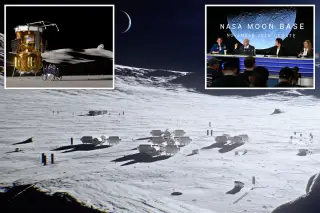
NASA has awarded approximately $1.3 billion in task orders to commercial providers for rockets and orbital transfer vehicles to support its Moon Base program. This move establishes a 'freight network' to deliver cargo to the lunar south pole, prioritizing readiness over specific mission payloads.
NASA announced a new $10 billion commercial framework for lunar delivery services, selecting eight companies including SpaceX and Blue Origin to build infrastructure for a permanent base at the Moon's south pole. The agency also awarded a specific $94 million contract to Blue Origin for a nuclear-powered rover, targeting a late-2028 launch to precede crewed missions.
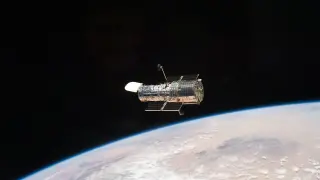
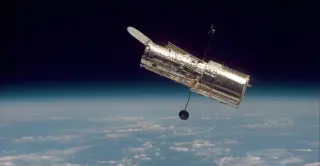
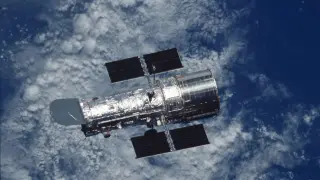
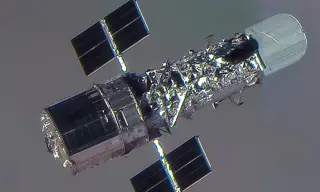
NASA has issued a Request for Information (RFI) to commercial firms seeking proposals to reboost, service, or safely dispose of the Hubble Space Telescope by 2032. The observatory, launched in 1990, is losing altitude due to atmospheric drag and is predicted to reenter Earth's atmosphere in 2033 or 2034. While no funding is currently allocated, the agency aims to assess industry capabilities and costs for a potential mission that could extend Hubble's life by at least 25 years. This move follows a failed 2022 attempt to secure a servicing mission and coincides with the recent, unsuccessful rescue attempt of the Swift telescope.
NASA has issued a Request for Information (RFI) to commercial firms for proposals to reboost, service, or safely dispose of the Hubble Space Telescope by 2032. Hubble, launched in 1990, is losing altitude and predicted to reenter the atmosphere in 2033-2034. The agency requires a target altitude of 600 km and notes no funding is currently allocated. Responses are due November 30.
NASA issued a Request for Information on October 29, seeking commercial proposals to reboost, service, or safely dispose of the Hubble Space Telescope by 2032. Hubble, launched in 1990, is losing altitude and predicted to reenter the atmosphere in 2033-2034. The agency requires a target altitude of 600 km and notes no funding is currently allocated. Responses are due November 30.
NASA has issued a Request for Information (RFI) to commercial firms for proposals to reboost, service, or control the reentry of the Hubble Space Telescope. Responses are due November 30, 2026. The agency aims to extend Hubble's life or ensure a safe disposal before its predicted uncontrolled reentry in 2033-2034. No funding is currently allocated, but NASA seeks to assess capabilities and costs for a mission by 2032.
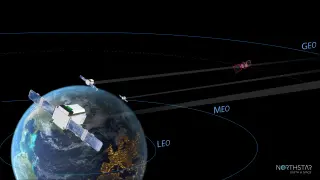
The U.S. Space Force has officially operationalized its Commercial Augmentation Space Reserve (CASR) by awarding six purchase agreements to commercial firms for Space Domain Awareness (SDA) surge capabilities. This move establishes a backup network of trusted commercial satellites to support military operations during crises, building on earlier pilot efforts and wargames. The initiative aims to enhance resilience by integrating commercial data with government systems, with initial focus on SDA before expanding to communications and other areas.
NASA is accelerating its moon base strategy with a series of robotic technology demonstrations, aiming for the first launch by December 2026. These missions, including the Griffin-1 lander, will deliver cargo and rovers to the lunar south pole to test infrastructure for future human habitation. While the agency faces significant environmental challenges, including radiation and dust, this push is part of a broader race against China to secure resources and strategic advantages on the Moon.
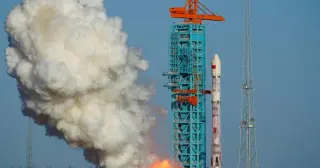
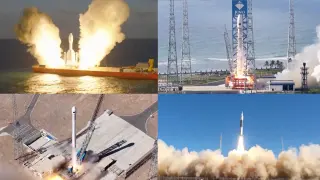
China has achieved its first land-based rocket booster recovery, signaling a major leap in reusable launch technology. While the US still leads in launch volume, Beijing’s rapid expansion of commercial and military space capabilities is eroding American dominance. Analysts warn that US over-reliance on SpaceX and satellite infrastructure creates critical vulnerabilities in a potential conflict, urging Washington to diversify its space architecture and strengthen allied cooperation.
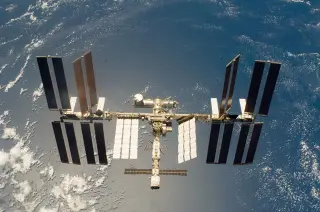
NASA has released a 360-page request for proposals (RFP) seeking private companies to build commercial space stations in low Earth orbit (LEO) to replace the retiring International Space Station (ISS). The agency aims to select two or more contractors by April 2027, with the first stations potentially operational by 2030. Phase 1 winners will receive at least $100 million, while later phases involve billions in funding for development, certification, and crewed missions. Key bidders include Axiom Space, Voyager Space, and Vast Space. NASA has eased transportation requirements, offering to broker flights via Boeing’s Starliner to reduce burdens on station builders, as SpaceX’s Crew Dragon is slated for retirement around 2030-2032.
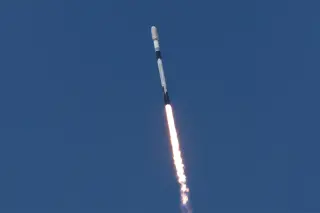
The era of cheap, shared rides for small satellites is concluding. SpaceX's Transporter-18 mission, launched on October 1, 2026, highlights a shift in the launch market. Small satellite operators now face a scarcity of affordable launch slots and must secure anchor customers to ensure their missions proceed. The industry is moving away from the 'rideshare' model that previously allowed small payloads to hitch a ride on larger launches, forcing a new strategy for small satellite deployment.
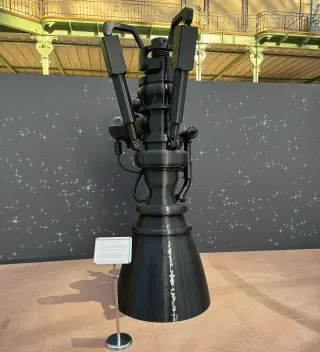
The Exploration Company is evaluating Middle Eastern locations for a new heavy-lift launch vehicle. The company, known for its Storm engine, is exploring these sites to support future operations. This move reflects a broader trend of commercial space firms seeking diverse launch capabilities. The decision could impact regional space infrastructure development. No specific countries or timelines were disclosed in the report.
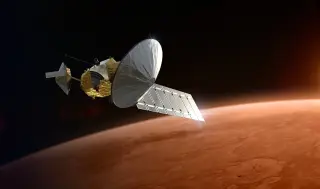
Rocket Lab is downplaying the significance of NASA contracts while simultaneously pursuing a GAO protest against the agency's $700 million Mars Telecommunications Network award to Blue Origin. The company argues the selection violates congressional eligibility criteria, but its public messaging suggests a strategic shift to reduce dependence on government funding.
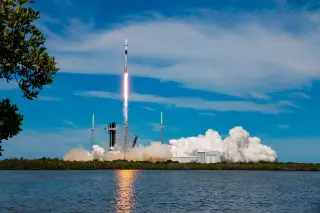
SpaceX is winding down commercial Falcon 9 operations, creating a temporary access-to-orbit gap for satellite operators. While the rocket has completed nearly 700 flights, new commercial bookings are increasingly difficult to secure. Industry leaders expect a critical transition period between 2029 and 2031 as SpaceX shifts focus to Starship and alternative providers struggle to match current launch cadences.
China achieved a 100% success rate with six orbital launches in six days, featuring four distinct rockets in 45 hours. This surge highlights the growing role of private companies like LandSpace and Orienspace in deploying the Qianfan mega-constellation, while new satellites test integrated 5G and AI capabilities in orbit.