
Perseverance Rover Breaks Martian Distance Record via Autonomous Navigation
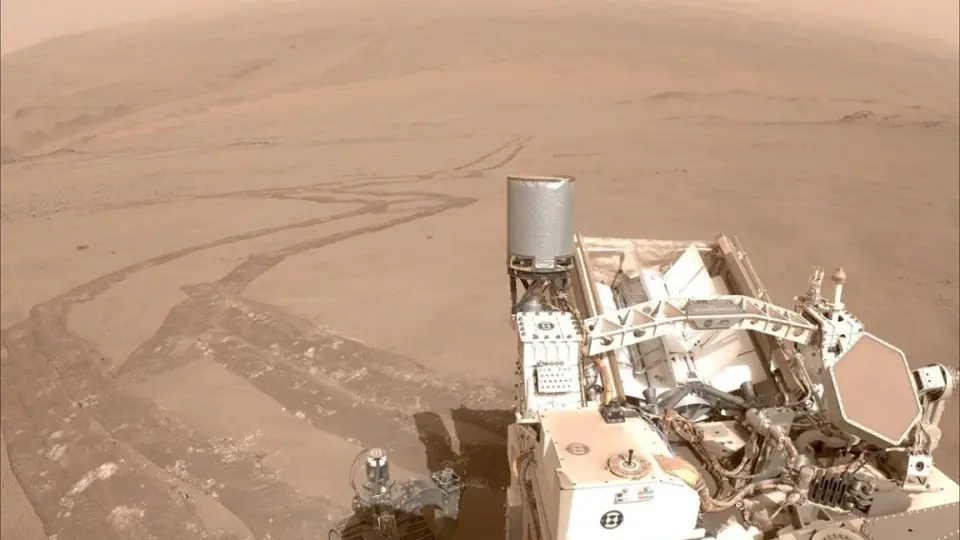
NASA’s Perseverance rover is set to surpass the distance record for any vehicle on another planet, driven by a highly autonomous navigation system. While its twin, Curiosity, relies on Earth-based commands for most travel, Perseverance processes terrain data onboard to drive itself, allowing it to cover more ground in less time. This autonomy has enabled the rover to explore ancient rocks in Jezero Crater more efficiently, though minor concerns remain regarding wheel actuator longevity.
Key points
- Perseverance is approaching a total distance of 45.16 km, surpassing the record held by the Opportunity rover, which ceased operations in 2018.
- Approximately 90 percent of Perseverance's driving is autonomous, compared to only 10 percent for the Curiosity rover, due to a more modern Vision Compute Element.
- The rover's onboard cameras and algorithms allow it to calculate safe routes in real-time, eliminating the need to stop for navigation commands from Earth.
- This autonomy has allowed Perseverance to reach scientific sites ahead of schedule, expanding the scope of its mission in Jezero Crater.
- The rover is studying rocks dating back 4 billion years to understand ancient Martian environments and potential habitability.
- While the wheels show no significant wear, NASA is certifying the wheel actuators for at least 100 km of driving, up from their initial 20 km life-test.
Background
This development follows earlier coverage of autonomous vehicle challenges on Earth, such as the NTSB investigation into a Tesla crash in Texas and the operational issues faced by Zoox robotaxis in Las Vegas and San Francisco. While terrestrial self-driving cars face complex traffic and human error, Perseverance operates in a controlled environment with no other traffic, though it must navigate hazards like boulders and sandy slopes. The success of Perseverance's autonomous system highlights the potential for advanced onboard computing in space exploration, contrasting with the slower, more manual approach of the Curiosity rover, which has driven 38.6 km over 15 years.
Why it matters
The success of Perseverance's autonomous navigation system demonstrates a significant leap in space exploration efficiency. By reducing reliance on Earth-based commands, the rover can maximize scientific return and explore more sites in less time. This capability is crucial for future missions, as it allows for more dynamic and responsive exploration of extraterrestrial environments. Additionally, the rover's ability to study ancient rocks in Jezero Crater provides valuable data on the potential for past life on Mars, contributing to our understanding of planetary habitability.
What to watch
NASA is in the process of certifying the wheel actuators for at least 100 km of driving, which could extend the rover's operational life. The rover is expected to continue its exploration of Jezero Crater, gathering more data on ancient Martian rocks and environments. Future missions may benefit from the lessons learned from Perseverance's autonomous navigation system, potentially leading to more efficient and extensive exploration of other planets and moons.
Want the full story? Read the original reporting
Read on Ars Technica