
Fermi Explorer Mission Seeks $15M to Launch 80,000-Year Journey to Alpha Centauri
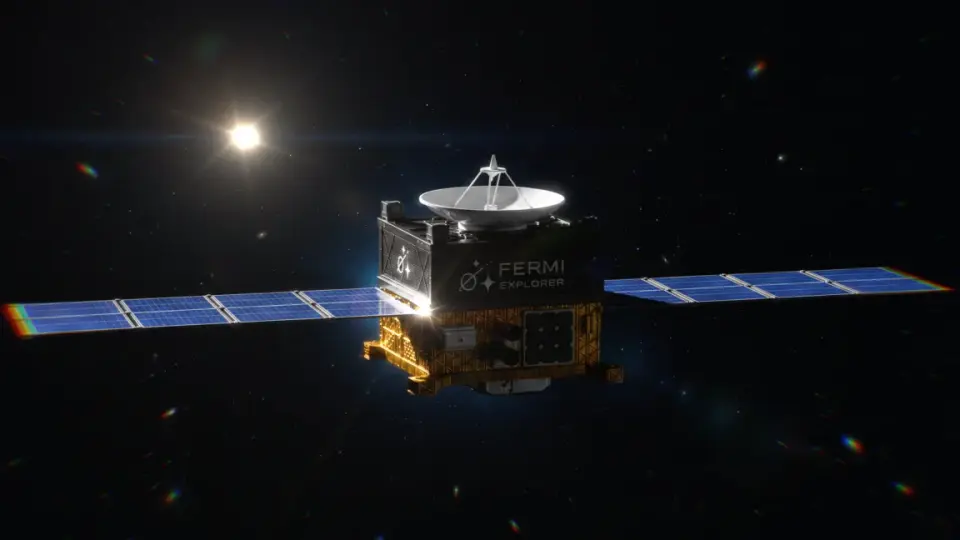
A nonprofit group led by Philip Johnston has announced the Fermi Explorer, a low-cost mission to launch a 1 kg spacecraft toward Alpha Centauri by 2029. The project aims to spend $15 million to achieve an 80,000-year journey using existing solar-electric propulsion, rather than developing new technology. The mission seeks to resolve the Fermi paradox by proving that interstellar travel is technically feasible, even if arrival occurs far in the future.
Key points
- The Fermi Explorer Mission is a nonprofit initiative seeking $15 million to launch a small spacecraft to Alpha Centauri by 2029.
- The probe will carry at least 1 kg of payload, including a copy of the Golden Record, and will travel for approximately 80,000 years.
- The mission uses a novel trajectory discovered by an AI system from Physical Superintelligence, involving close solar passes to boost velocity.
- The goal is to eliminate two potential 'filters' in the Fermi paradox: the unwillingness or inability of civilizations to send probes to other stars.
- The project is distinct from the Breakthrough Starshot initiative, which has not launched a probe in a decade, by focusing on immediate feasibility with current technology.
Background
The Fermi Explorer concept was first detailed in early September 2026, following earlier discussions about the Fermi paradox. Previous archive entries noted that the mission was unfunded and presented as a long-term exploratory concept. The project aims to be the first to launch an interstellar probe, though it acknowledges that future technology may result in faster arrivals. The mission is distinct from the 2016 Breakthrough Starshot proposal, which aimed for a 20-year journey using laser propulsion but has not yet launched.
How outlets are covering it
Ars Technica emphasizes the philosophical implications of the mission, highlighting Johnston's concern that the Fermi paradox might indicate a 'great filter' that destroys advanced civilizations. MIT Technology Review focuses on the technical breakthrough, detailing how an AI system developed by Physical Superintelligence discovered the novel trajectory after the human team failed to find a solution. Space.com provides a more neutral overview, noting the nonprofit's status and the long travel time, while acknowledging the mission's symbolic value. All sources agree on the $15 million budget and 2029 launch target, but differ in their emphasis on the scientific versus philosophical motivations.
Why it matters
The Fermi Explorer mission represents a significant step in addressing the Fermi paradox by demonstrating that interstellar travel is technically feasible with current technology. If successful, it could eliminate two potential 'filters' that might explain the absence of extraterrestrial civilizations, leading to more unsettling conclusions about the rarity or self-destructive nature of intelligent life. The mission also highlights the potential of AI in solving complex scientific problems, as the trajectory was discovered by an AI system after human experts failed to find a solution.
What to watch
The Fermi Explorer Mission is currently seeking $15 million in funding from private donors. If funded, the spacecraft is expected to launch by 2029 on a rideshare mission. The probe will spend about 12 years in a series of close solar passes to build up velocity before entering a ballistic coast to Alpha Centauri. The mission will have contact with the spacecraft for about 18 months, after which it will be tracked by ground-based telescopes until it reaches Jupiter. The probe is expected to arrive at Alpha Centauri in approximately 80,000 years.
- Private group wants to launch "cheapest possible" mission to Alpha Centauri Ars Technica
- How AI plotted an interstellar journey to Alpha Centauri MIT Technology Review
- Fermi Explorer: Sending A Spacecraft On A 55,000-Mile-Per-Hour Mission To Alpha Centauri To Tackle The Fermi Paradox IFLScience
- If space data centers feel far-fetched, why not interstellar travel? techcrunch.com
- Nonprofit wants to launch 80,000-year mission to Alpha Centauri in 2029 (video) Space
Want the full story? Read the original reporting
Read on Ars Technica