
NASA’s PUNCH Mission Achieves 30-Minute Solar Storm Prediction Accuracy
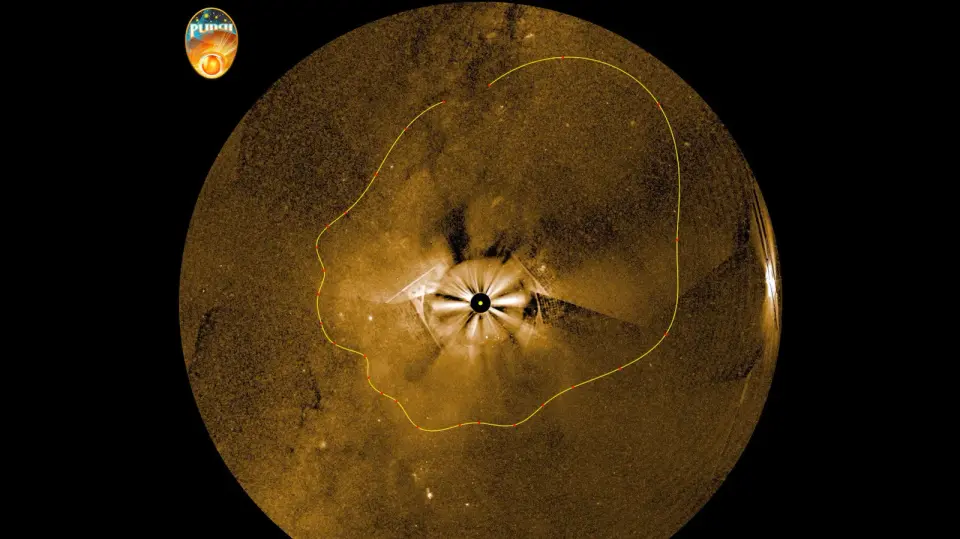
NASA’s PUNCH mission has demonstrated the ability to predict solar storm arrival times with an accuracy of 30 minutes, a tenfold improvement over current methods. By tracking coronal mass ejections (CMEs) continuously from the Sun to Earth, the mission provides critical lead time for infrastructure protection.
Key points
- PUNCH uses four microsatellites in low Earth orbit to track CMEs continuously, capturing images every four minutes.
- A test using a May 31, 2025 CME predicted arrival within 30 minutes, compared to a 5-hour error margin for current methods.
- The mission provides approximately eight hours of warning, allowing time to protect power grids and satellites.
- Results were presented at the COSPAR conference and are under review for the journal Space Weather.
- The achievement does not yet solve the 'Bz problem,' which determines storm severity and requires direct measurement at Earth.
Background
Previous space weather forecasting relied on instruments that could only track CMEs for the first one-fifth of their journey to Earth, resulting in significant uncertainty. Recent studies have highlighted the severe potential impacts of extreme solar storms on global infrastructure, emphasizing the need for more accurate predictive models. This development follows earlier incidents, such as the 2022 loss of Starlink satellites, which underscored the vulnerability of orbital assets to geomagnetic disturbances.
How outlets are covering it
Engadget and NASA Science highlight the technological leap, with principal investigator Craig DeForest comparing the improvement to moving from a steam engine to an internal combustion engine. Tech Times emphasizes the operational benefits for grid operators and airlines, noting that eight hours of warning is sufficient for protective actions. Chosun.com offers a more cautious perspective, stressing that the result is based on a post-analysis of a single event and requires further validation for real-time forecasting. While all sources agree on the 30-minute accuracy, Tech Times explicitly notes that PUNCH does not resolve the 'Bz problem,' which limits the ability to predict storm severity until the CME reaches Earth.
Why it matters
Accurate solar storm forecasting is critical for mitigating damage to power grids, satellites, and communication systems. The eight-hour warning window provided by PUNCH allows operators to isolate vulnerable transformers and adjust satellite orbits, potentially preventing widespread outages and data loss. This advancement represents a significant step toward operational space weather resilience.
What to watch
Scientists plan to stress-test the method using data from dozens of CMEs captured since the mission's launch. A prototype product called QuickPUNCH is currently being tested to determine if the high accuracy can be maintained in near-real-time operations. Future models may refine arrival time predictions further, though resolving the Bz problem remains a separate, ongoing challenge for the space weather community.
- NASA's PUNCH Mission Can Now Accurately Predict When Solar Storms Will Hit Earth Engadget
- NASA’s PUNCH Sharpens Solar Storm Forecasting in First Test NASA Science (.gov)
- PUNCH Shrinks Solar Storm Arrival Window Tenfold, Giving Grid Operators 8 Hours to Act Tech Times
- NASA's PUNCH Mission Predicts Solar Storms Within 30 Minutes chosun.com
- ‘Like going from steam to combustion engine’: NASA’s PUNCH mission stuns scientists with solar storm prediction starlust.org
Want the full story? Read the original reporting
Read on Engadget