Tag

Coronal Mass Ejections

All articles tagged with #coronal mass ejections

Sun's 19-Day Radio Burst Sets New Record, Tracked Across the Solar System
space12 days ago

Sun's 19-Day Radio Burst Sets New Record, Tracked Across the Solar System

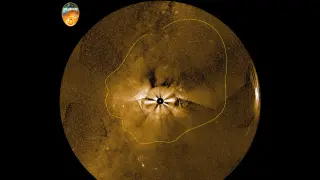
NASA and international spacecraft tracked a 19-day Type IV solar radio burst—the longest ever observed—originating from a helmet streamer in the Sun's outer atmosphere. The event, likely powered by a sequence of three coronal mass ejections, kept electrons trapped and replenished, extending radio emissions well beyond typical durations. Observations from Parker Solar Probe, Solar Orbiter, STEREO, and Wind allowed near-continuous monitoring as the Sun rotated, offering new insights for forecasting space weather and understanding large-scale solar magnetic structures.

Twin X-class solar flares trigger radio blackouts on Earth, NASA says
science1 month ago

Twin X-class solar flares trigger radio blackouts on Earth, NASA says

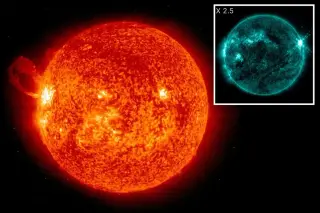
NASA reports two X-class solar flares within seven hours—X2.4 on April 23 and X2.5 on April 24—that knocked out radio signals on Earth’s dayside and likely accompanied by CMEs. While the sunspot’s position makes a direct Earth impact unlikely, forecasters say a glancing CME could bring geomagnetic activity and possibly auroras as paths are monitored.

Sun Unleashes Quartet of Flares, Foreshadowing a Wild Week for Space Weather
science3 months ago

Sun Unleashes Quartet of Flares, Foreshadowing a Wild Week for Space Weather

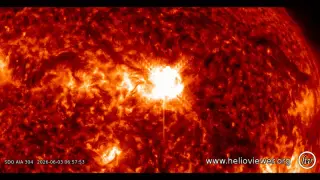
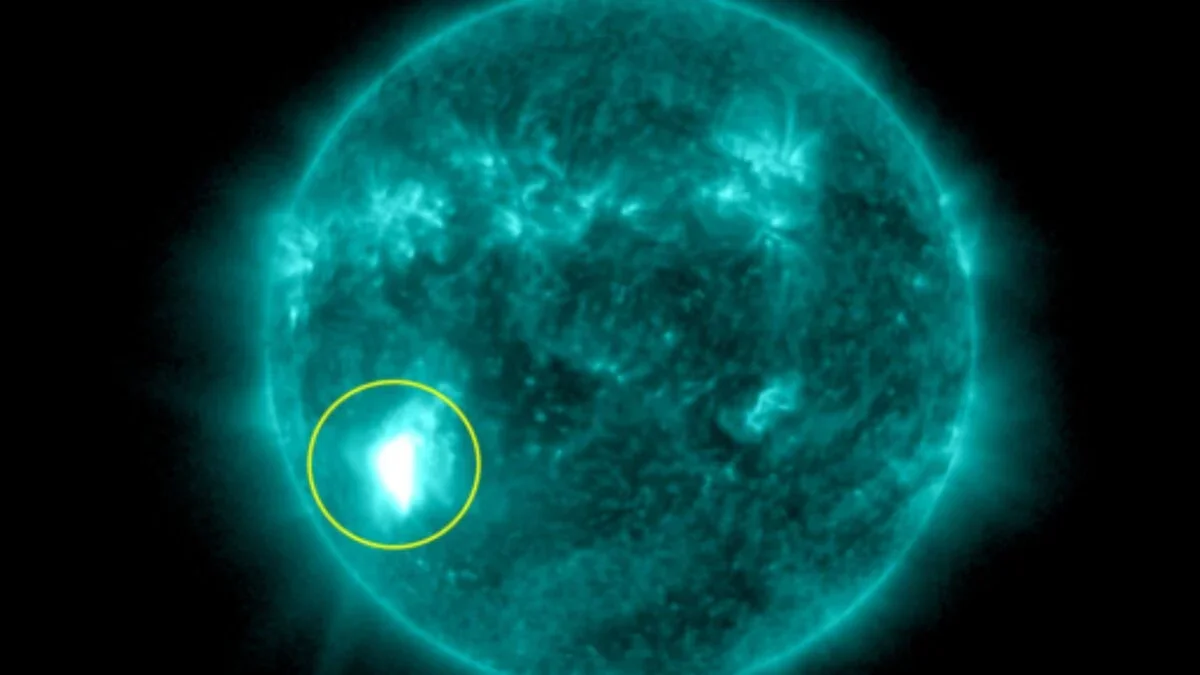
The Sun erupted four strong X-class flares from sunspot cluster RGN 4366, including an X8.1—the most powerful since October 2024—potentially boosting energetic particle events and coronal mass ejections. CMEs can illuminate auroras but also disrupt satellites, power grids, and communications. Forecasters say more “exciting activity” could be on the way as the Sun remains unusually active during its 11‑year cycle, even though overall activity is expected to wind down later this decade.

science3 months ago

Growing Sunspot 4366 Sparks Flares, CME Watch Continues

NOAA reports that sunspot group RGN 4366 has grown into a complex region capable of producing flares from M1 to X1, but no coronal mass ejections (CMEs) have been observed yet. The region remains the primary feature to watch during the week of 1–7 February 2026. Current NOAA space weather scales show minor radio blackout risks (R1) with HF radio degradation on the sunlit side.

NASA's Parker Solar Probe Captures Record-Breaking Close-Up Images of the Sun
science10 months ago

NASA's Parker Solar Probe Captures Record-Breaking Close-Up Images of the Sun

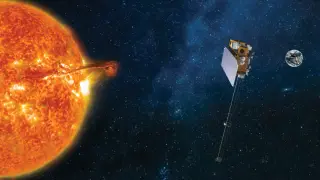
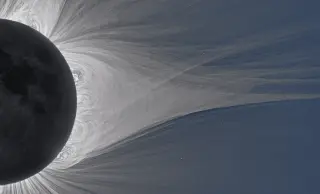
NASA's Parker Solar Probe captured the closest images of the Sun, revealing detailed views of solar winds and coronal mass ejections, which are crucial for understanding space weather and its impact on Earth. The probe's data helps improve predictions of space weather events that can affect technology and astronauts, with future passes planned to further study the Sun's outer atmosphere.

NASA’s Parker Solar Probe Captures Record-Breaking Close-Up Images of the Sun
science10 months ago

NASA’s Parker Solar Probe Captures Record-Breaking Close-Up Images of the Sun

NASA's Parker Solar Probe captured the closest-ever images of the sun, revealing details about the solar wind and coronal mass ejections, which are crucial for understanding space weather and its impact on Earth. The probe's data helps scientists study the origins of different types of solar wind and their behavior near the sun, advancing our knowledge of solar phenomena.

"The Sun's Unprecedented Outburst: Understanding the Impact of Three Massive Solar Flares in 24 Hours"
space-and-astronomy2 years ago

"The Sun's Unprecedented Outburst: Understanding the Impact of Three Massive Solar Flares in 24 Hours"

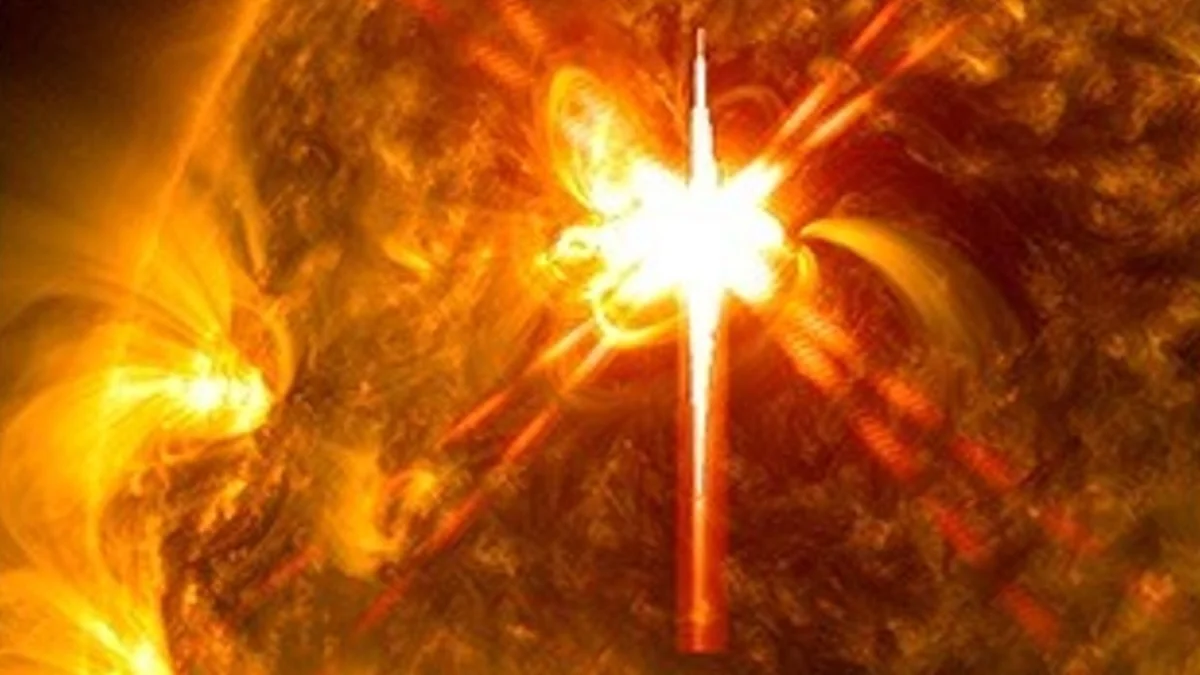
The sun recently emitted three powerful X-class solar flares within 24 hours, disrupting high-frequency radio communications on Earth and potentially causing radio blackouts over the Pacific and Indian oceans. While the first two flares did not release coronal mass ejections (CMEs), the impact of the third flare is still being assessed. Despite speculation, the solar flares are unlikely to have caused the recent AT&T cellular network outage. Skywatchers may miss out on northern lights displays due to the absence of CMEs, but there are still chances for more solar flares and CMEs as the active sunspot region continues to be active.

science-and-technology2 years ago

"Record-Breaking Solar Flare Promises Spectacular Northern Lights Display"

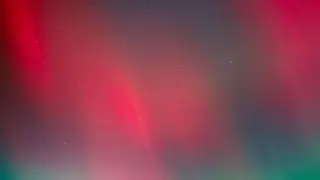
A surge in solar activity in mid-December 2023 resulted in vibrant auroras across the northern latitudes of Earth. The auroras were captured by the VIIRS on the NOAA-NASA Suomi NPP satellite, which detects nighttime light in various wavelengths. These auroras were likely caused by coronal mass ejections observed a few days earlier, which interact with Earth's upper atmosphere to produce colorful displays. The Sun's activity is increasing as it approaches the peak of solar cycle 25, expected in July 2025. Solar flares and coronal mass ejections are monitored to track solar activity and their potential impact on Earth.