
Space Debris Re-entries Surge to Weekly Tons as Launch Activity Peaks
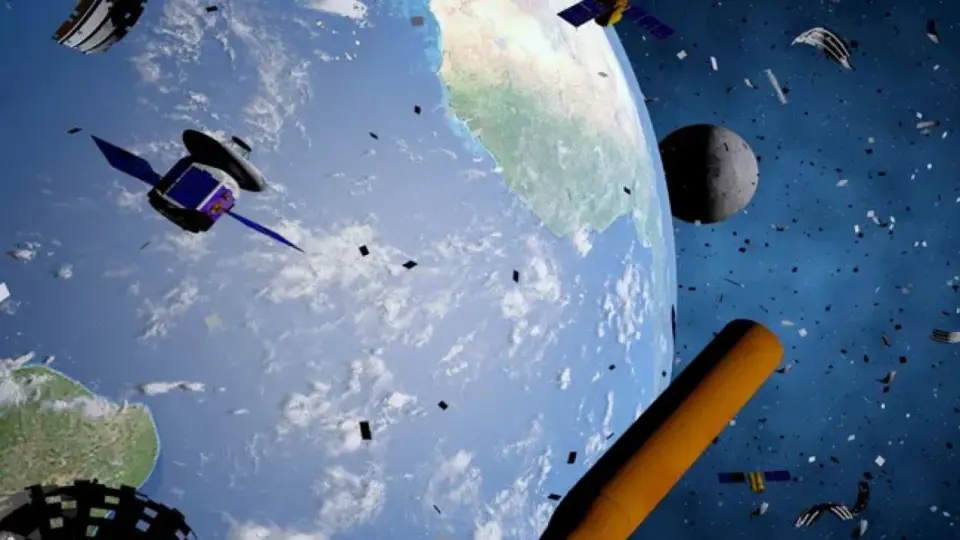
The volume of space debris re-entering Earth’s atmosphere has escalated significantly, with large objects now falling back to the planet approximately once a week. This surge correlates with a sharp increase in rocket launches and satellite deployments, leading to a higher frequency of uncontrolled re-entries. While most debris burns up or lands in oceans, larger components are increasingly surviving descent and impacting populated areas. Current international regulations remain non-binding and outdated, leaving gaps in liability and safety standards as the number of orbital objects continues to grow.
Key points
- Approximately one metric ton of space debris re-enters Earth’s atmosphere weekly, according to Mariusz Slonina of the Polish Space Agency.
- The US Space Force issued nearly 820 re-entry alerts in 2025, a sevenfold increase from the 110 alerts recorded a decade earlier.
- Recent incidents include a rocket component crashing into farmland in Kenya, debris from the International Space Station landing in Florida, and parts of a SpaceX rocket falling in Poland.
- A US Federal Aviation Administration study estimates that debris from SpaceX satellites alone could cause an injury or fatality once every two years by 2035.
- Current UN treaties governing space debris liability are described as limited in scope and non-binding, with no mandatory regulations requiring materials to fully disintegrate during re-entry.
Background
This development follows a trend of increasing orbital activity noted in earlier reports, such as SpaceX’s 600th flight-proven booster launch in July 2026 and the accumulation of over 10,800 Starlink satellites in orbit. Previous incidents, including metal spheres washing ashore in Australia in July 2026, highlighted the growing challenge of tracking and managing space debris. The current surge in re-entries reflects the cumulative effect of these high launch rates and the long orbital lifespans of some debris, such as a rocket component that remained in orbit for over 16 years before crashing in Kenya.
Why it matters
The rising frequency of space debris re-entries poses growing risks to ground safety and infrastructure, as uncontrolled objects can land in populated areas with little warning. The inability to accurately predict landing zones, with errors of just one minute potentially shifting impact sites by nearly 300 miles, complicates emergency response and liability. Outdated and non-binding international regulations leave gaps in accountability, potentially leaving affected communities without clear recourse for damages. As launch activity continues to rise, the lack of mandatory safety standards for re-entry materials could exacerbate the threat to public safety and orbital sustainability.
What to watch
Governments and space agencies are expected to intensify calls for binding regulations requiring spacecraft to use materials that fully disintegrate during re-entry. The US Space Force and other tracking bodies may increase monitoring and alert systems to manage the growing number of re-entries. International discussions may revisit outdated UN treaties to address liability and compensation for damage caused by space debris. Companies like SpaceX and other launch providers may face pressure to adopt safer re-entry designs to mitigate risks to ground populations.
- A Ton Of Space Junk Returns To Earth Weekly As Rocket Launches Rise: Report NDTV
- A Ton of Space Junk Tumbles Unpredictably to Earth Every Week The New York Times
- Unpredictable Space Junk Defies Safety Regulators newser.com
- Selam Gebrekidan Sun Sentinel
- School yourself on space junk McKinsey & Company
Want the full story? Read the original reporting
Read on NDTV