
Titan Wider Than Mercury, Second‑Largest Moon After Ganymede
TL;DR
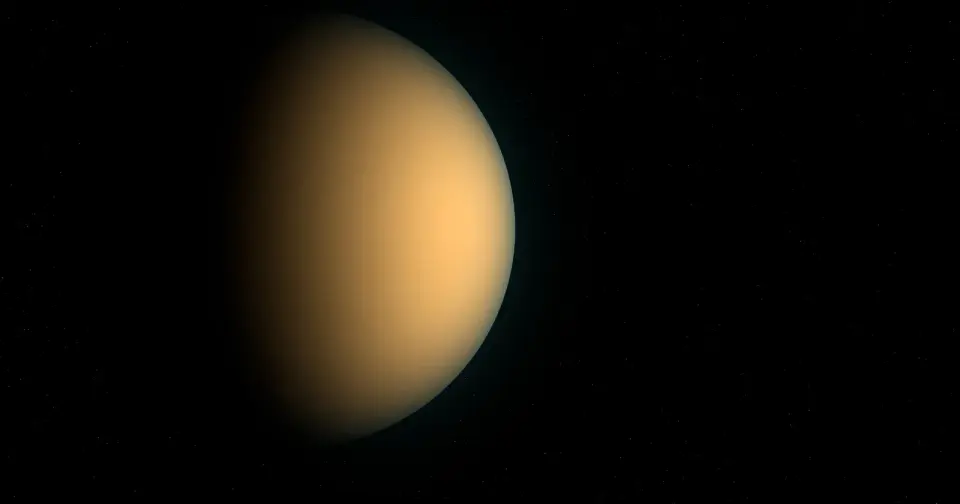
Saturn’s moon Titan, about 5,150 km across, is wider than Mercury and is the Solar System’s second-biggest moon after Jupiter’s Ganymede, though its mass is only about 40% of Mercury’s due to its icy composition. Titan also boasts a thick nitrogen atmosphere and stable surface liquids (methane/ethane) with Earth-like features such as rivers and lakes, highlighting how size and nature can diverge: a world that looks planet-like but remains a moon. The distinction is orbital, not dimensional, and missions like Cassini–Huygens and the future Dragonfly continue to study Titan’s unique geology and weather.
- Saturn's moon Titan is so large it outsizes the planet Mercury, making it the second-biggest moon in the solar system after Jupiter's Ganymede Space Daily
- Titan has rivers, rainfall, lakes and a slow hydrological cycle exactly like Earth's, except that every drop of it is liquid methane and the rock the rivers run over is water ice spacewar.com
- There is a moon of Saturn where the rain is essentially liquid natural gas, the mountains are made of water frozen so hard it behaves like rock, and the lakes at the north pole contain more combustible fuel than every proven oil and gas reserve on Earth combin ScienceBlog.com
- Saturn's moon Titan has rivers, lakes and rainfall without a single drop of water, and scientists know why The Times of India
- On Saturn's moon Titan, molecules that chemistry says should never mix are mixing — NASA and Chalmers University researchers found that at minus 183 degrees Celsius, substances as incompatible as water and oil can dissolve into each other Space Daily
Want the full story? Read the original reporting
Read on Space Daily