Tag

Science Space

All articles tagged with #science space

Nereid: Neptune’s lone survivor of an ancient moon-wide chaos
science-space6 days ago

Nereid: Neptune’s lone survivor of an ancient moon-wide chaos

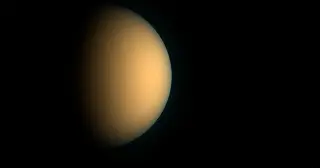
JWST data suggest Neptune’s moon Nereid may be the only intact remnant of Neptune’s primordial moon system, surviving the disruptive arrival of Triton over 4 billion years ago. Its surface composition is more like regular satellites than Kuiper Belt objects, challenging the idea that it was captured. Computer simulations indicate a roughly 25% chance that some moons could survive the Triton encounter, and further JWST observations or a future Neptune mission could confirm this scenario.

Moon's gradual drift will erase future total solar eclipses
science-space8 days ago

Moon's gradual drift will erase future total solar eclipses

The Moon is receding from Earth at about 3.8 cm per year due to tidal interactions, a rate precisely measured by lunar laser ranging using Apollo and Lunokhod reflectors. As the Moon moves farther away, its apparent size will eventually be too small to fully cover the Sun, ending total solar eclipses within roughly 500–800 million years. Until then, upcoming total eclipses seen from Earth occur within this narrow, finite window, making the current era temporarily unique in cosmic terms.

Curiosity detects diverse organics on Mars, hinting at ancient habitability
science-space1 month ago

Curiosity detects diverse organics on Mars, hinting at ancient habitability

NASA’s Curiosity rover, via a wet-chemistry experiment on a Mary Anning rock at Gale Crater, uncovered 21 carbon-containing molecules, including seven not previously detected on Mars. The organics could be preserved for about 3.5 billion years, reinforcing the idea that ancient Mars was habitable, though the findings do not prove life. Researchers say definitive answers require returning samples to Earth, and future missions with similar chemistry experiments (e.g., ExoMars Rosalind Franklin, Dragonfly) will continue probing Mars’ organic past.

DART Achieves First Solar-Orbit Change After Asteroid Impact
science-space1 month ago

DART Achieves First Solar-Orbit Change After Asteroid Impact

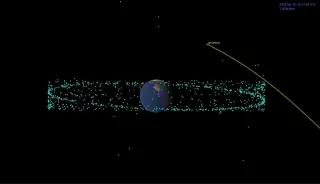
NASA’s DART mission confirmed that crashing into the small asteroid Dimorphos shortened its orbit around the larger Didymos by about 32 minutes, and new analysis shows the impact also nudged the binary system’s solar trajectory by roughly 1.7 inches (4.3 cm) per hour—the first measured change in an object’s path around the Sun—demonstrating humanity’s ability to steer asteroids if needed.

Japan builds ultra-precise X-ray telescope that spots a 3.5 mm dot from 1 km
science-space1 month ago

Japan builds ultra-precise X-ray telescope that spots a 3.5 mm dot from 1 km

A Japanese collaboration from Nagoya University and the SPring-8 facility has developed a high-resolution X-ray telescope with nanometer-precision, seamless nickel mirrors capable of resolving a 3.5 mm object at 1 km. Ground tests used a 10‑micrometer X-ray source about 900 meters away to simulate distant starlight, and the instrument flew on the FOXSI-4 sounding rocket in 2024 to observe a solar flare, validating its performance in space. The team plans a refined version for FOXSI-5 in 2026 and aims to miniaturize the optics for CubeSats to broaden access to high-resolution X-ray observations.

March's Worm Moon Sparks Global Blood Moon Eclipse
science-space2 months ago

March's Worm Moon Sparks Global Blood Moon Eclipse

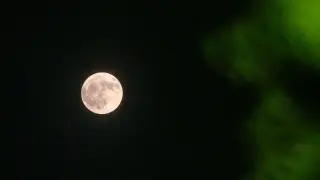
March’s full Moon, the Worm Moon, peaks at 11:38am on March 3 and will appear full around that time. For parts of North and South America, East Asia and Australia, the Moon will pass through Earth’s shadow in a total lunar eclipse, turning a blood-red color (the Blood Moon). The UK won’t see the eclipse as the Moon will be below the horizon during the eclipse. The piece also notes that many cultures assign names to full Moons (e.g., Worm Moon, Crust Moon) to reflect seasonal events.

Snow Moon Shines High: 6 Reasons to Watch February’s Winter Full Moon
science-space3 months ago

Snow Moon Shines High: 6 Reasons to Watch February’s Winter Full Moon

February’s Snow Moon—the last winter full Moon—will rise in the east and climb high, offering one of the year’s best lunar views. It sits near bright stars and Jupiter, with a potential occultation by Regulus visible from North America; the guide also explains the Moon illusion, highlights its beginner-friendly nature for families, notes lunar rays near Tycho and Copernicus, and invites readers to send in photos.

Moon–Earth telescope network eyed to image dozens of black hole shadows
science-space4 months ago

Moon–Earth telescope network eyed to image dozens of black hole shadows

Researchers propose a Moon–Earth radio telescope network that could reach sub‑microarcsecond resolution, enabling direct shadows of dozens of supermassive black holes. Six strong targets are identified (including M104 and NGC 1052); a 100‑meter lunar dish paired with Earth baselines could detect all 31 candidates, with far‑side sites offering radio‑quiet observations. The approach relies on visibility data rather than traditional images and remains a decades‑long pursuit, but could greatly advance tests of general relativity and black hole imaging beyond current capabilities.

Wake of a Hidden Stellar Partner Reveals Betelgeuse's Secret Neighbor
science-space4 months ago

Wake of a Hidden Stellar Partner Reveals Betelgeuse's Secret Neighbor

Astronomers using the Hubble Space Telescope and ground-based observatories have found direct evidence of a hidden companion star to Betelgeuse, Siwarha, whose orbital wake through the red supergiant’s atmosphere explains Betelgeuse’s six-year brightness cycle and other variability, with the wake matching predictions from an orbiter that completes a six-year orbit and potentially merging with Betelgeuse in the distant future; findings are published in the Astrophysical Journal.

Proba-3’s Eye on the Sun Reveals Inner Corona and Eruptions
science-space4 months ago

Proba-3’s Eye on the Sun Reveals Inner Corona and Eruptions

ESA’s Proba-3 uses two formation-flying spacecraft and the ASPIICS coronagraph to image the Sun’s inner corona, showing the hot, faint yellow halo and three helium-emission prominence eruptions observed during a five-hour window on Sept. 21, 2025. The animation combines ASPIICS data with NASA’s SDO/AIA imagery to illustrate how artificial eclipses let scientists study the corona’s dynamics, including prominences (cooler plasma) erupting into space and the corona’s light from scattered sunlight and helium emission.