Tag

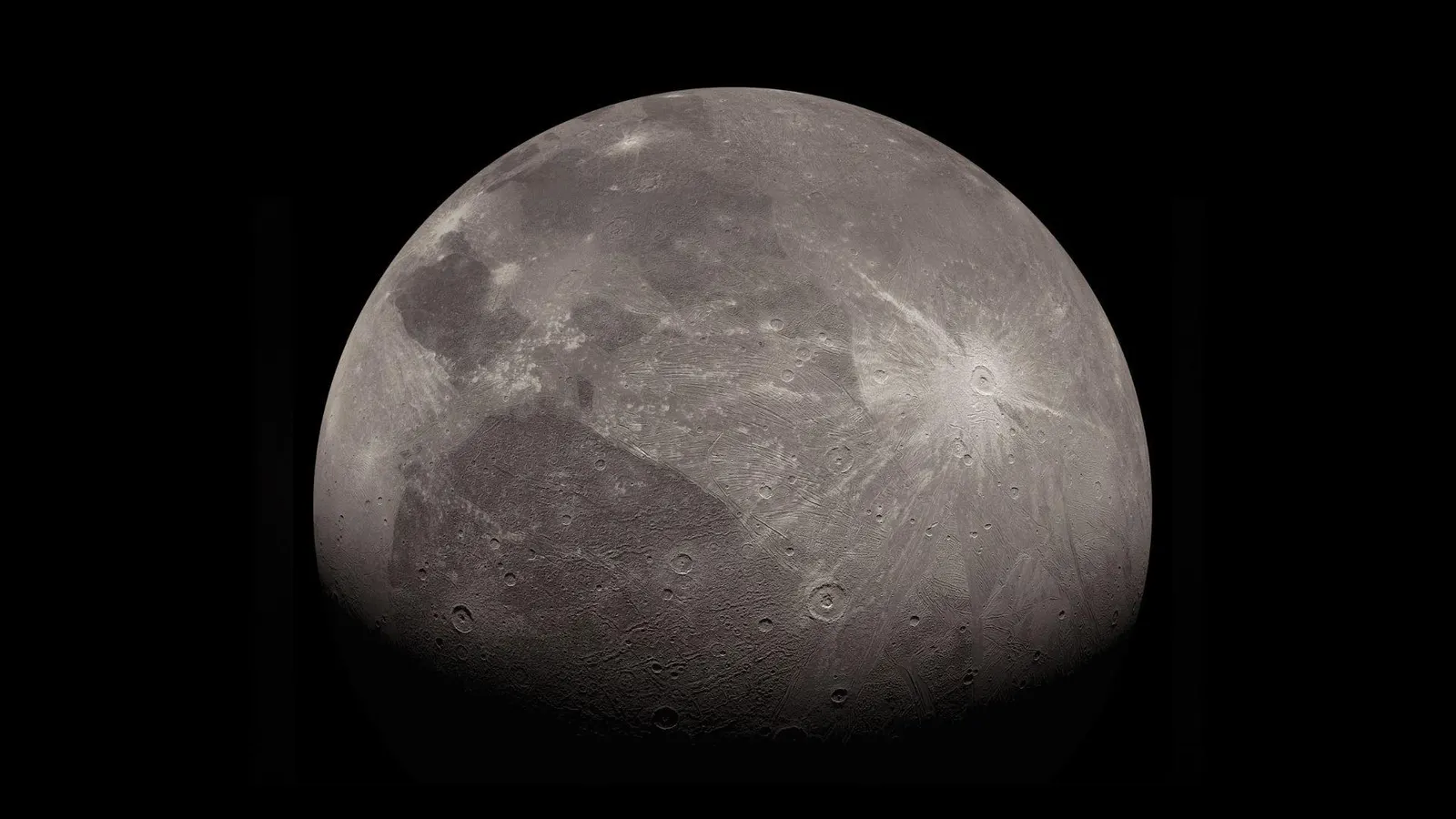
Ganymede

All articles tagged with #ganymede

Ganymede’s Forming Core Sparks a New Dynamo Theory
space-and-spaceflight4 hours ago

Ganymede’s Forming Core Sparks a New Dynamo Theory

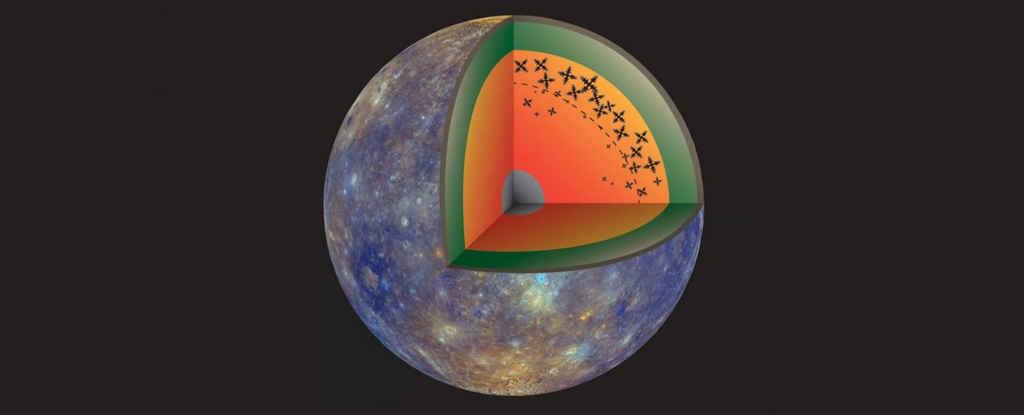
A Science Advances study suggests Ganymede’s metallic core is still forming today, and that ongoing convection in this migrating, hot iron core powers its long-unique magnetic field via a ‘cold-start’ dynamo; the results don’t fully overturn older theories, but they offer a new mechanism to explain why Ganymede’s dynamo persists while Callisto shows no obvious one, with implications for Europa and future data from Europa Clipper and Juice.

Ganymede’s hidden heat may power a late-forming magnetic dynamo
space1 day ago

Ganymede’s hidden heat may power a late-forming magnetic dynamo

New Science Advances study suggests Jupiter’s moon Ganymede could have formed a metal core later than previously thought and still sustain a magnetic field via a warming-driven dynamo powered by protracted core formation, radioactive heating, and tidal forces. This challenges the idea that dynamos always originate early and cool over time, and implies Ganymede’s magnetism—potentially active today—arises from a “warm start” process that could influence how we think about magnetic fields on other worlds, including exoplanets.

Ganymede’s secret core may still be forming after billions of years
space14 days ago

Ganymede’s secret core may still be forming after billions of years

A new study suggests Jupiter’s moon Ganymede could still be differentiating its metallic core billions of years after formation, with iron–sulfur melt slowly feeding a protocore that powers a long‑lived magnetic dynamo and likely an ocean beneath its ice. If correct, this ongoing core growth could explain why Ganymede remains magnetically active while other moons fade, and future missions like JUICE may test the idea.

"Iron Snowstorms Inside Ganymede May Unlock Secrets of Its Magnetic Mysteries"
science-and-technology2 years ago

"Iron Snowstorms Inside Ganymede May Unlock Secrets of Its Magnetic Mysteries"

Researchers have conducted an experimental study to understand Ganymede's strong magnetic field, testing the 'iron snow' theory which suggests iron crystallizes and falls within the moon's core, similar to a snowglobe. The laboratory experiment used water ice to simulate iron snow crystals and found that crystallization occurs in sporadic bursts when the liquid reaches a supercooled state. This process could explain the dynamic nature of Ganymede's magnetic field and may also apply to other small planetary bodies in the solar system. Earth's core, however, operates differently due to its powerful gravity and material composition.

"Unveiling the Secrets of Ganymede's Mysterious Ocean"
space2 years ago

"Unveiling the Secrets of Ganymede's Mysterious Ocean"

NASA's Juno mission has detected salts and organic compounds on Jupiter's moon Ganymede, providing strong evidence of a subsurface ocean beneath its icy crust. The salts and organics suggest an endogenic origin, possibly rising from the depths of Ganymede through cracks in the surface. While the presence of organics does not guarantee the presence of life, it raises the possibility of Ganymede's potential to support life. Further research is needed to determine the exact origin of the compounds and the extent of Ganymede's ocean.

Juno's Discovery: Organic Compounds and Potential Alien Life on Ganymede
space2 years ago

Juno's Discovery: Organic Compounds and Potential Alien Life on Ganymede

NASA's Juno spacecraft, during its flyby of Jupiter's moon Ganymede in 2021, has discovered the presence of mineral salts and organic compounds on the moon's surface. The high-resolution spectroscopic observations made by Juno's Jovian Infrared Auroral Mapper (JIRAM) spectrometer revealed the presence of hydrated sodium chloride, ammonium chloride, sodium bicarbonate, and possibly aliphatic aldehyde. These findings provide insights into Ganymede's formation and the composition of its deep subsurface ocean. The localized distribution of these compounds suggests that Ganymede's magnetic field shields them from surrounding radiation. Further investigations by upcoming missions like ESA's JUICE and NASA's Europa Clipper will provide more detailed observations of Ganymede and other icy moons in Jupiter's system.

Juno Mission Uncovers Organics and Salts on Jupiter's Moon Ganymede
space2 years ago

Juno Mission Uncovers Organics and Salts on Jupiter's Moon Ganymede

NASA's Juno mission has discovered mineral salts and organic compounds on Jupiter's moon Ganymede. Data collected by the Jovian InfraRed Auroral Mapper (JIRAM) spectrometer during a close flyby revealed the presence of hydrated sodium chloride, ammonium chloride, sodium bicarbonate, and possibly aliphatic aldehydes. These findings provide insights into the composition of Ganymede's deep ocean and its formation process. The discovery was made possible by Juno's unprecedented spatial resolution for infrared spectroscopy, offering a closer look at the moon's surface. Ganymede, the largest moon of Jupiter, has long been of interest due to its hidden internal ocean of water beneath its icy crust.

Ganymede's Salty Surface Reveals Organics, Confirms NASA
space2 years ago

Ganymede's Salty Surface Reveals Organics, Confirms NASA

NASA's Juno spacecraft has discovered mineral salts and organic compounds on Jupiter's moon Ganymede, providing insights into the moon's origin and composition. The data suggests the presence of a deep ocean brine that reached the moon's surface. Ganymede, the largest moon in the solar system, has a magnetic field and an underground sea beneath its icy shell. The findings could aid in understanding other distant moons and dwarf planets in the solar system and beyond.

Juno's Discovery: Salts and Organics Found on Ganymede's Surface
space2 years ago

Juno's Discovery: Salts and Organics Found on Ganymede's Surface

NASA's Juno mission has discovered mineral salts and organic compounds on the surface of Jupiter's moon Ganymede. The JIRAM spectrometer aboard the spacecraft collected data during a close flyby, revealing the presence of hydrated sodium chloride, ammonium chloride, sodium bicarbonate, and possibly aliphatic aldehydes. These findings provide insights into the moon's composition and its briny past, shedding light on the origin of Ganymede and its deep ocean.

Juno Discovers Salts and Organics on Ganymede's Surface
space2 years ago

Juno Discovers Salts and Organics on Ganymede's Surface

NASA's Juno mission has discovered mineral salts and organic compounds on the surface of Jupiter's moon Ganymede. The Jovian InfraRed Auroral Mapper (JIRAM) spectrometer aboard the spacecraft collected data during a close flyby, revealing the presence of hydrated sodium chloride, ammonium chloride, sodium bicarbonate, and possibly aliphatic aldehydes. These findings provide insights into the composition of Ganymede's deep ocean and its formation process. The spatial resolution of the JIRAM data was unprecedented, allowing scientists to analyze the unique spectral features of non-water-ice materials. Ganymede, the largest moon of Jupiter, has long been of interest due to its hidden internal ocean of water beneath its icy crust.

JWST's Close-up of Ganymede: Unveiling Jupiter's Largest Moon
space2 years ago

JWST's Close-up of Ganymede: Unveiling Jupiter's Largest Moon

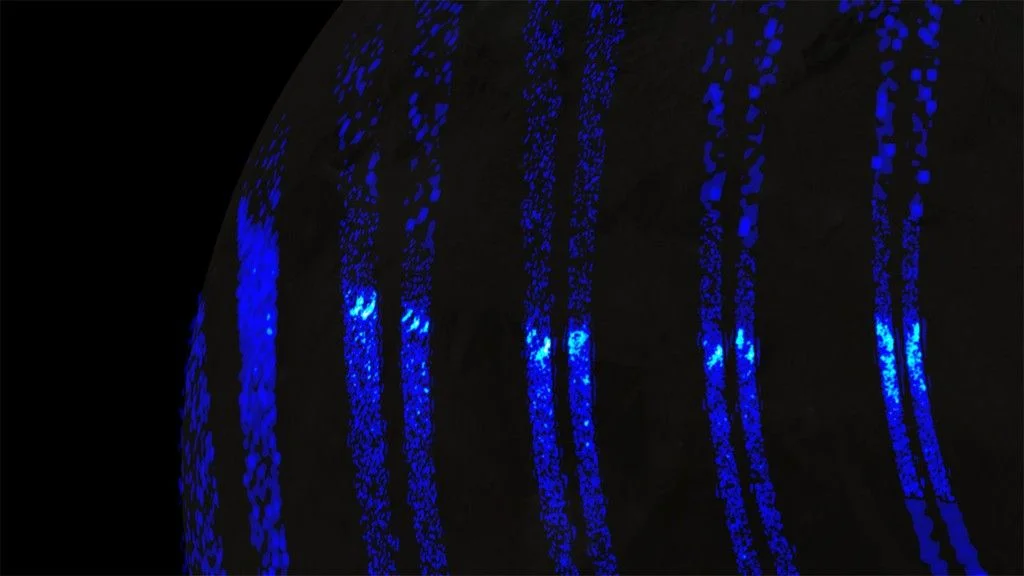
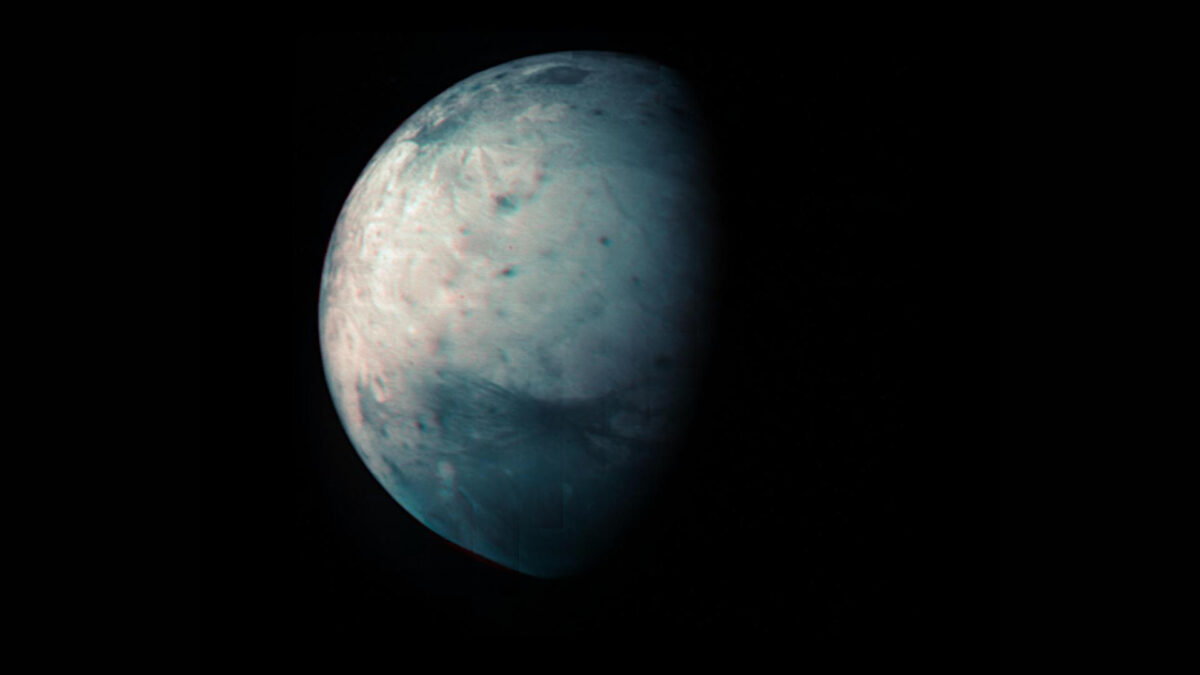
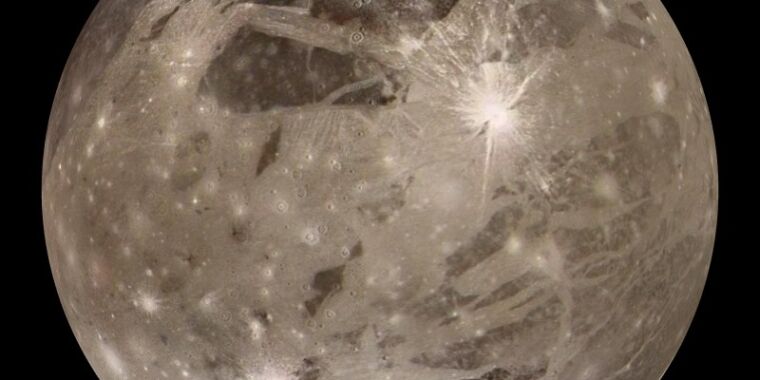
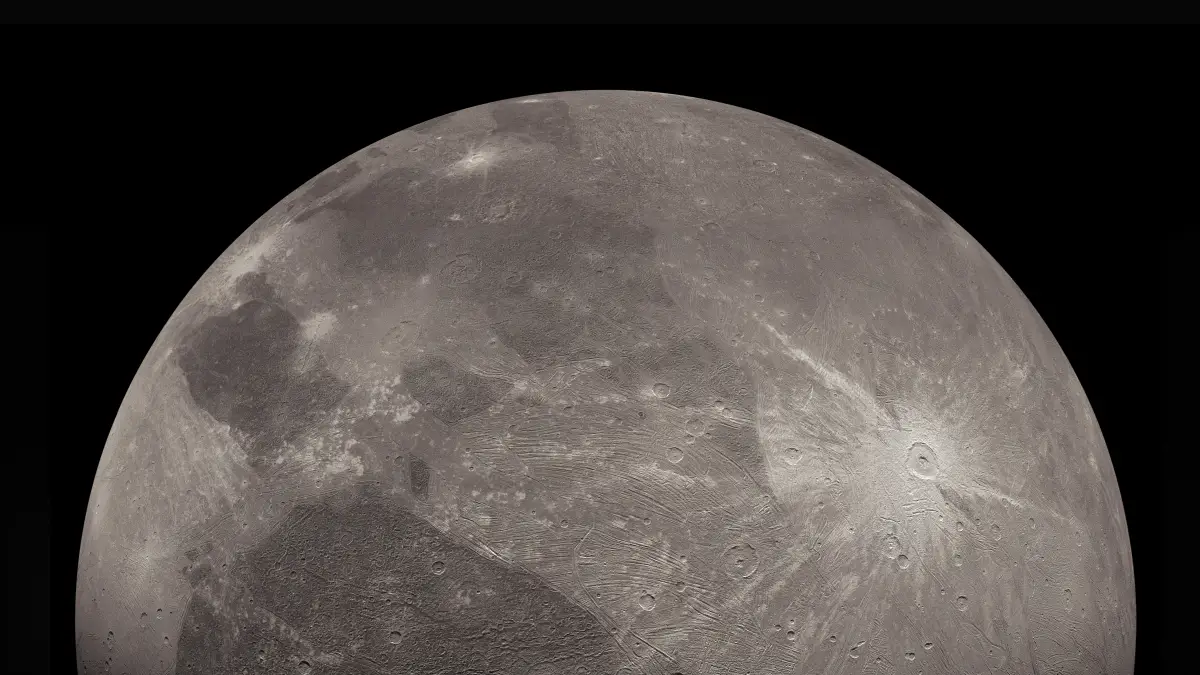
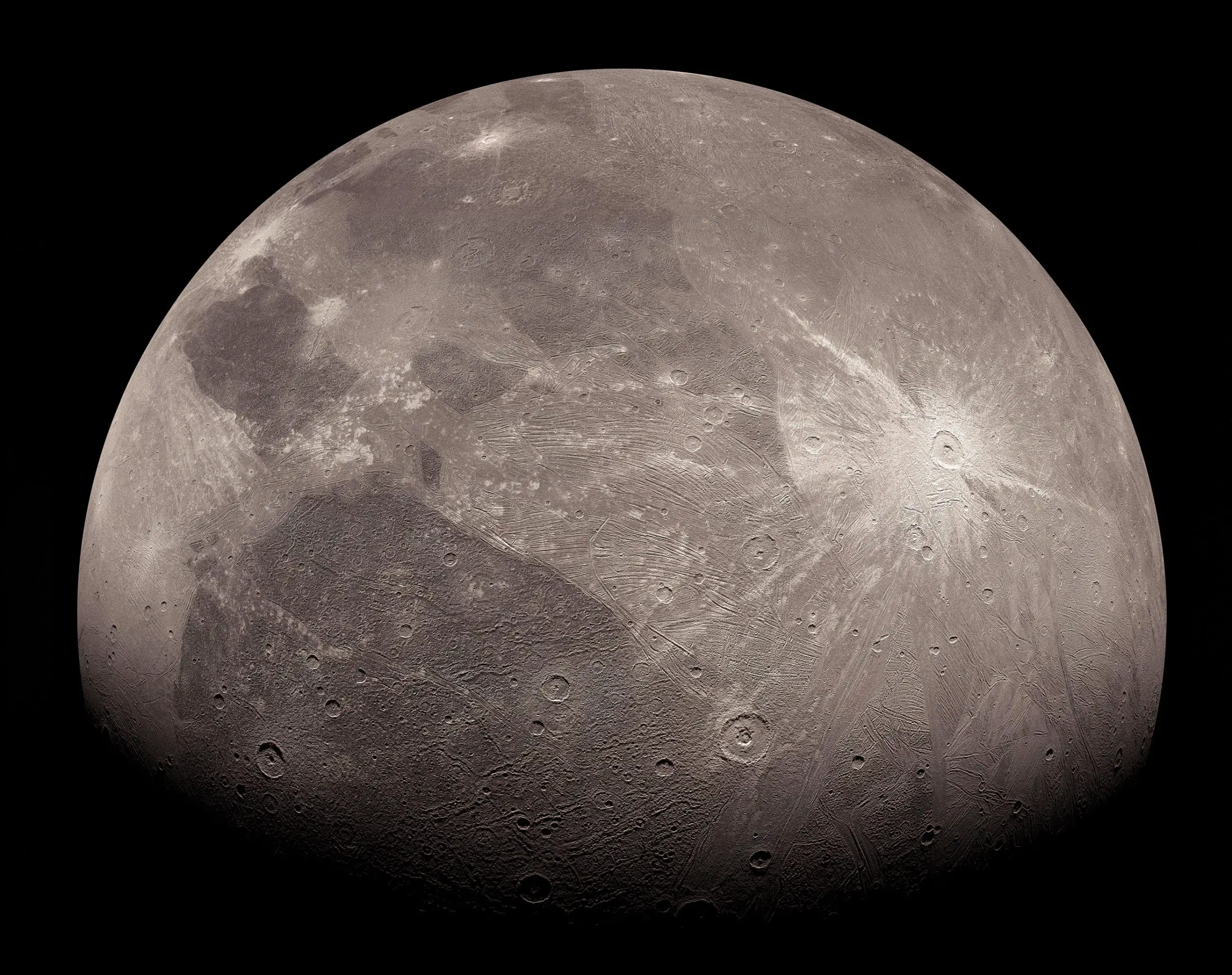
The James Webb Space Telescope (JWST) has provided detailed observations of Jupiter's moon Ganymede, revealing its complex surface composition. Ganymede, the largest moon in the solar system, has a differentiated internal structure, including a molten core, silicon mantle, and icy crust with a subsurface ocean. The JWST's observations show that Ganymede's surface is dominated by bright, icy terrains with grooves, as well as darker, highly cratered regions. The presence of CO2 trapped in other molecules and the distribution of water ice at the polar regions were also examined. These findings will inform future missions, such as the ESA's JUICE mission, which will further explore Ganymede.