
Ancient Martian Meteorite Found in Sahara Reveals Early Water Cycle
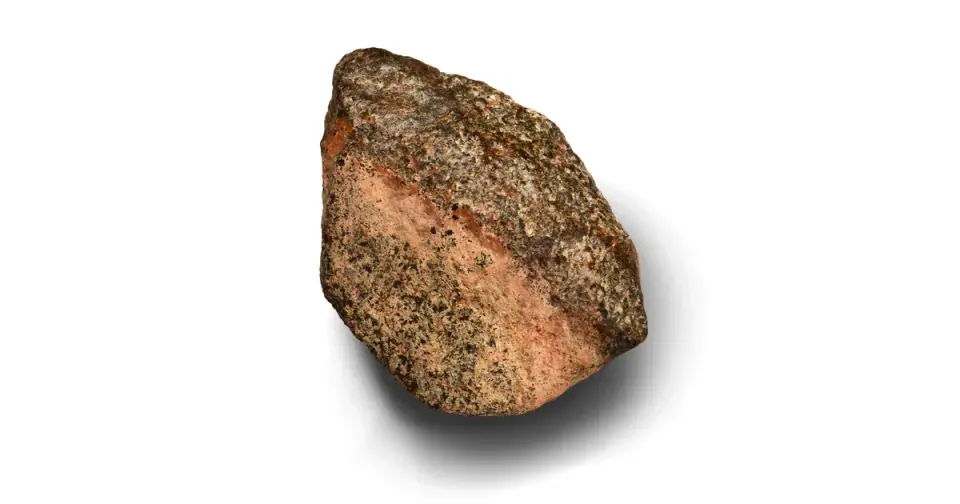
A rose-colored meteorite found in the Sahara in 2022 has been identified as a 4.1-billion-year-old fragment of Mars. Named Teghaza 001, the rock offers a rare look at the planet's ancient crust and early water activity, making it one of the oldest Martian samples ever found on Earth.
Key points
- The nearly 2-pound meteorite, named Teghaza 001, was discovered in a salt plain in Mali in 2022.
- NASA scientists determined the rock is approximately 4.1 billion years old, making it one of the three most ancient Martian meteorites found on Earth.
- Analysis revealed the rock formed from cooling magma and was later altered by liquid water, suggesting a more dynamic water cycle on early Mars than previously believed.
- The meteorite’s mineral composition matches samples observed by the Mars Reconnaissance Orbiter in the planet's southern highlands.
- Researchers used a novel age-dating method on a sample smaller than a fingernail to preserve the rare material for future study.
Background
This discovery adds to ongoing efforts to understand Mars's geological history through meteorite analysis. Recent studies have also focused on comparing Martian geology with Earth's ancient rocks to refine biosignature detection methods for future sample return missions.
How outlets are covering it
CBS News and NASA emphasize the meteorite's age and its significance as a 'Rosetta Stone' for understanding Mars's crust formation. Scientific American highlights the implications for understanding Mars's water cycle and atmospheric loss, noting that the rock predates the oldest known Earth rocks. All sources agree on the meteorite's uniqueness but differ in emphasis: NASA focuses on the technical age-dating method, while Scientific American stresses the broader planetary comparison and the need for direct sample return missions.
Why it matters
Teghaza 001 provides a rare, direct sample of Mars's ancient crust, offering insights into the planet's early geological and hydrological history. This helps scientists understand how planetary environments evolve and informs future exploration and sample return missions.
What to watch
Further research on Teghaza 001 is expected, with scientists aiming to analyze its remaining minerals and chemical signatures. The findings may guide future missions to Mars, including sample return efforts, to better understand the planet's habitability and geological evolution.
- Rose-colored meteorite found in the Sahara Desert turns out to be 4.1 billion-year-old piece of Mars CBS News
- NASA-funded Study Details One of Oldest Mars Meteorites Ever Found NASA (.gov)
- Martian meteorite found in the Sahara is 4.1 billion years old Reuters
- The oldest known piece of Mars may help solve mysteries of life on Earth Scientific American
- Rare 4.1-billion-year-old Martian meteorite reveals clues to planet's ancient past Phys.org
Want the full story? Read the original reporting
Read on CBS News