
Aug. 12 Eclipse: NASA Aircraft and Citizen Scientists Target Solar Corona
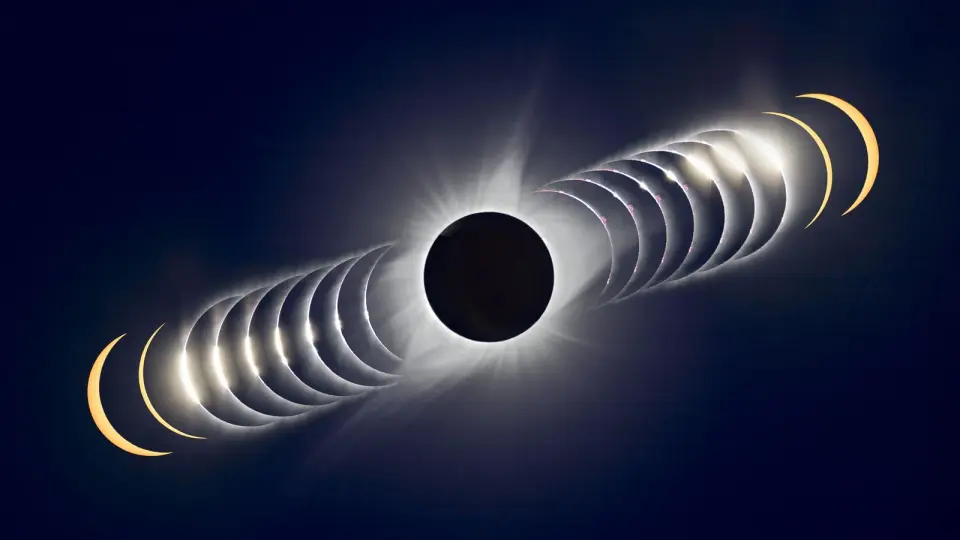
On August 12, 2026, a total solar eclipse will sweep across the Arctic, Greenland, Iceland, and northern Spain. NASA is deploying a WB-57 aircraft to study the solar corona, while the Dynamic Eclipse Broadcast Initiative coordinates citizen scientists to capture data and live views. The event coincides with a six-planet alignment and the Perseid meteor shower, creating a rare astronomical trifecta for observers.
Key points
- The total solar eclipse on August 12, 2026, will have a path of totality crossing the Arctic, Greenland, Iceland, and northern Spain, with a maximum duration of approximately two minutes and 18 seconds.
- NASA is utilizing a WB-57 aircraft, equipped with the SAMI spectral camera system, to fly at 15,000 meters and capture high-resolution images of the solar corona, bypassing atmospheric interference.
- The Dynamic Eclipse Broadcast Initiative (DEB), coordinated by Southern Illinois University Carbondale and funded by NASA and the National Science Foundation, is deploying volunteer teams with portable telescopes to monitor the sun's atmosphere.
- The eclipse date coincides with a six-planet alignment before sunrise and the peak of the Perseid meteor shower, offering a rare triple-header of celestial events for skywatchers.
- Citizen science efforts, such as the DEB, aim to democratize solar research by using affordable, portable equipment to gather data on solar prominences and coronal mass ejections during totality.
Background
This event follows previous coverage of the August 12, 2026, eclipse, which highlighted its path across the Northern Hemisphere and the concurrent astronomical events. Earlier reports noted that while the total path is narrow, partial views will be visible across much of Europe and North America. The upcoming August 2, 2027, eclipse, which will last up to six minutes, is also being tracked, but the 2026 event is significant for its accessibility in Europe and the coordinated scientific efforts surrounding it.
How outlets are covering it
Space.com emphasizes the role of citizen science through the Dynamic Eclipse Broadcast Initiative, highlighting the use of affordable, portable telescopes to engage volunteers in data collection. noticiasambientales.com focuses on NASA's high-altitude aircraft approach, detailing the technical specifications of the WB-57 and its ability to observe the solar corona without atmospheric distortion. The Straits Times provides a human-interest perspective, profiling a family that has chased 14 eclipses and is preparing for the 2026 event, illustrating the cultural and personal impact of such celestial occurrences. Yahoo's source was an error page and provided no relevant information on the eclipse.
Why it matters
The August 12, 2026, eclipse offers a unique opportunity to study the solar corona, which is critical for understanding space weather and its impact on Earth's satellites and astronauts. The combination of NASA's advanced aircraft and citizen science initiatives allows for comprehensive data collection that is not possible from ground-based observatories alone. Additionally, the event's timing with other astronomical phenomena makes it a significant moment for both scientific research and public engagement with astronomy.
What to watch
Observers and scientists will monitor the August 12, 2026, eclipse for data on the solar corona and space weather. NASA will analyze the images captured by the WB-57 aircraft to improve models of solar activity. Citizen scientists will share their data and live views with the public, contributing to a broader understanding of the sun's atmosphere. Future eclipses, such as the August 2, 2027, event, will also be tracked for their potential to provide longer durations of totality and new scientific insights.
- When a total solar eclipse darkens the sky on Aug. 12, these citizen scientists will be watching Space
- Total eclipse gives scientists chance to probe Sun's mysteries Yahoo
- NASA will use the WB-57 aircraft to capture unprecedented images of the solar corona during the August 12 eclipse noticiasambientales.com
- Total eclipse of the heart: Family channels passion for chasing eclipses around the world into book The Straits Times
- CT students travel to Spain to document total solar eclipse for NASA Connecticut Public
Want the full story? Read the original reporting
Read on Space