
Record-Breaking Gamma Ray Burst from Distant Star Detected in Earth’s Ionosphere
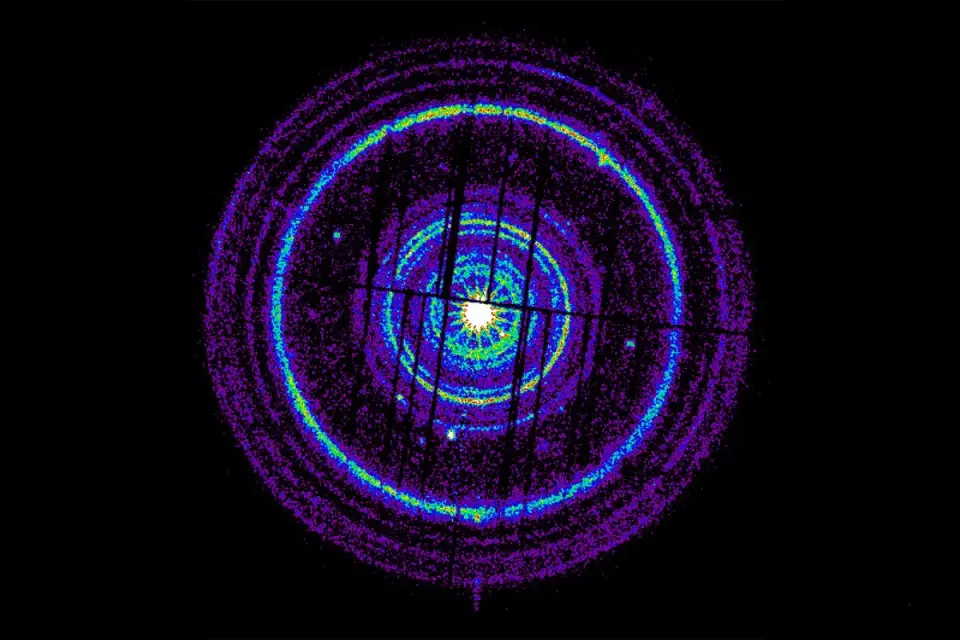
A gamma-ray burst from a star 2 billion light-years away, designated GRB 221009A, struck Earth in October 2022. Detected by ESA’s Integral satellite and China’s CSES, it was the strongest ever measured, causing measurable disturbances in Earth’s ionosphere comparable to major solar flares. Researchers suggest such events may have contributed to past mass extinctions by damaging the ozone layer.
Key points
- GRB 221009A, originating 2 billion light-years away, was detected on 9 October 2022 by ESA’s Integral satellite and other high-energy observatories.
- The burst lasted 800 seconds and was the brightest gamma-ray event recorded since measurements began in the 1960s.
- China’s CSES satellite detected significant electric field variations in Earth’s ionosphere, an effect not seen in previous gamma-ray burst events.
- The disturbance reached the lowest layers of the ionosphere, tens of kilometers above Earth’s surface, mimicking the impact of a major solar flare.
- Scientists are analyzing historical CSES data to correlate past gamma-ray bursts with ionospheric changes, aiming to understand potential links to mass extinction events.
Background
This event builds on earlier discussions about GRB 221009A, including theories about high-energy photons surviving long-distance travel via axion-like particles and Lorez-invariance violations. It also follows recent studies on how supernovae forge elements like titanium-44, though this specific focus is on the atmospheric impact of the burst rather than nucleosynthesis. The current finding provides empirical evidence for the atmospheric effects of cosmic gamma-ray bursts, a topic previously theorized but not directly observed in Earth’s ionosphere.
Why it matters
The detection of GRB 221009A’s impact on Earth’s ionosphere provides the first direct evidence that gamma-ray bursts from distant stars can cause measurable atmospheric disturbances. This challenges previous assumptions that only solar activity could produce such effects and opens a new avenue for investigating whether cosmic gamma-ray bursts contributed to historical mass extinctions by depleting the ozone layer. The findings validate the use of ionospheric monitoring satellites like CSES for detecting extraterrestrial high-energy events.
What to watch
Researchers are analyzing older CSES data to identify ionospheric signatures from previous gamma-ray bursts detected by Integral. A follow-up mission has been planned to further study the atmospheric effects of gamma-ray bursts, aiming to establish a clearer link between cosmic events and Earth’s environmental history.
Want the full story? Read the original reporting
Read on BBC Sky at Night Magazine