
Earth’s temporary mini-moon 2026 QQ8 confirmed as natural asteroid after months of observation
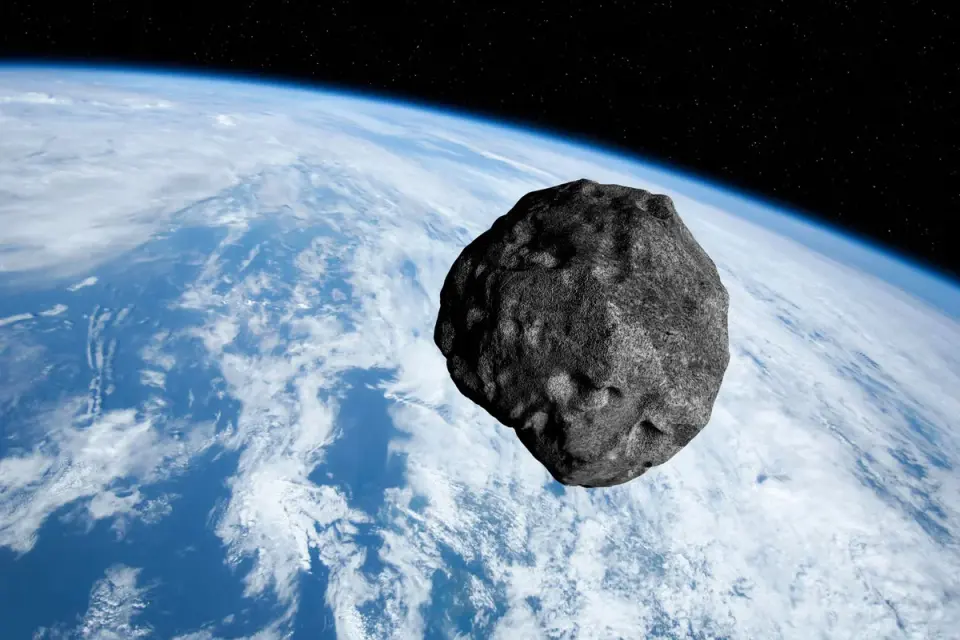
Astronomers have confirmed that a small space rock, designated 2026 QQ8, is a natural asteroid temporarily captured by Earth’s gravity. First observed in August 2026, the object entered Earth’s gravitational sphere in April and will remain in orbit until December before escaping in 2027. Initially mistaken for space debris, follow-up observations using the University of Hawaii 2.2-meter telescope and the Lowell Discovery Telescope verified its natural origin. The asteroid, roughly 1 to 2 meters in diameter, poses no collision risk as its closest approach is 568,000 kilometers from Earth, about 1.5 times the distance to the Moon. This temporary capture is part of a recurring pattern, with 2026 QQ8 approaching Earth approximately every decade, though previous passes in 1965 and a future pass in 2058 did not result in capture.
Key points
- Hungarian astronomer Krisztián Sárneczky first observed 2026 QQ8 in August 2026, but the object had already entered Earth’s gravitational influence in April.
- The Minor Planet Center officially reported the discovery on October 29, 2026, after confirming the object is a natural asteroid rather than space debris.
- 2026 QQ8 will remain a temporary satellite until December 2026, completing approximately 1.5 orbits before escaping Earth’s gravity in 2027.
- The asteroid’s closest approach to Earth is 568,000 kilometers, which is 1.5 times the average distance to the Moon, ensuring no impact risk.
- Orbital analysis shows 2026 QQ8 approaches Earth every 10 years, but only this pass resulted in temporary capture due to specific gravitational conditions.
Background
Earth has previously captured temporary mini-moons, such as 2020 CD3 and 2024 PT5. A 2025 study in the journal Icarus suggested Earth could have up to six lunar-origin mini-moons at any time, often lasting around nine months. The 2016 discovery of Kamoʻoalewa, a quasi-satellite with a lunar origin, highlighted how impacts on the Moon can scatter fragments into Earth’s orbit. Recent research at the Europlanet Science Congress in 2026 indicated that the largest typical mini-moon is about 75 centimeters across, making 2026 QQ8’s 1–2 meter size relatively large for such temporary satellites.
How outlets are covering it
All four sources agree on the core facts: 2026 QQ8 is a natural asteroid, first observed in August, captured in April, and will escape in 2027. The Independent emphasizes the 'lilliputian' nature of the moon and its 359-day solar orbit. EarthSky focuses on the initial uncertainty about whether the object was space junk, resolved by telescope observations, and details the Hill sphere concept. The Times of India provides a comprehensive timeline, noting the object’s 359-day solar orbit and its previous close approaches in 1965 and 2058. Space.com highlights the object’s size relative to the average mini-moon (75 cm) and notes that a 3-meter object could stay for 10–20 years, contrasting with QQ8’s shorter stay. No significant disagreements exist, but each outlet emphasizes different aspects: The Independent on the discovery process, EarthSky on the confirmation of natural origin, The Times of India on orbital history, and Space.com on comparative size and duration.
Why it matters
The confirmation of 2026 QQ8 as a natural mini-moon reinforces the understanding that Earth regularly captures small asteroids, some potentially originating from lunar impacts. This event provides a rare opportunity to study the dynamics of temporary satellite capture and the prevalence of such objects in Earth’s vicinity. The distinction between mini-moons (gravitationally bound) and quasi-moons (sharing an orbit) is crucial for understanding near-Earth object populations and their potential hazards. The temporary nature of these captures also highlights the dynamic and transient nature of Earth’s gravitational environment, offering insights into the formation and evolution of planetary satellites.
What to watch
2026 QQ8 will remain in Earth’s gravitational influence until December 2026, after which it will escape and resume its independent orbit around the Sun. Astronomers will continue to monitor its trajectory to confirm its escape and track its return to its 359-day solar orbit. Future close approaches in 2058 are not expected to result in capture, but ongoing surveys may identify other temporary mini-moons. The Rubin telescope and other improved survey tools are expected to detect more of these transient objects, enhancing our understanding of the small body population in Earth’s vicinity.
- Earth has captured a new mini moon The Independent
- A new mini-moon for Earth! Meet 2026 QQ8 EarthSky
- Earth has a new mini-moon: a 1-metre space rock named 2026 QQ8 was pulled into orbit around our planet in April, was spotted in August, and will stay until about December before drifting off on its own path in 2027 The Times of India
- Earth has captured a new mini moon — but it won't stick around for long Space
- Earth Has A Tiny New Mini-Moon. It's So Small, At First We Thought It Was Just A Piece Of Junk IFLScience
Want the full story? Read the original reporting
Read on The Independent