Tag

Asteroids

All articles tagged with #asteroids

Earth Faces a Spike in Daytime Fireballs in 2026
space14 days ago

Earth Faces a Spike in Daytime Fireballs in 2026

Earth is experiencing an unusual surge of large daytime fireballs in early 2026, with 2,046 fireball events in Q1 and several bright, high‑energy events visible from multiple continents, including a 3,229‑report Western Europe daytime bolide and a 7‑ton asteroid over Ohio/Pennsylvania. Trajectories cluster around the Anthelion direction and high‑declination radiants, suggesting debris from multiple inner‑solar‑system sources rather than a single shower or alien activity. Recovered meteorites are eucrites/diogenites (achondrites) from differentiated asteroids, implying a possible recent breakup of a large parent body. Scientists emphasize gaps in current monitoring and call for expanded automated all‑sky cameras and cross‑referencing with radar and infrasound to improve near‑Earth defense.

Car-Sized Asteroid Flies By Earth, No Risk Detected
science15 days ago

Car-Sized Asteroid Flies By Earth, No Risk Detected

A car-sized asteroid, roughly 4–8 meters wide and known as 2026FM3, passed about 147,000 miles from Earth (closer than the Moon) on March 24–25. NASA tracked the object after its discovery just days earlier and confirmed it posed no threat. Such small near-Earth objects frequently fly by, and studying these close approaches helps scientists refine detection and planetary defense for larger objects in the future.

Asteroids Harbor All Five Nucleobases, Advancing Space Chemistry Clues to Life’s Origins
science21 days ago

Asteroids Harbor All Five Nucleobases, Advancing Space Chemistry Clues to Life’s Origins

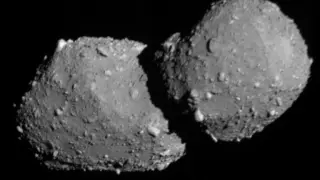
New high-sensitivity analyses of asteroid samples confirm all five nucleobases (A, C, G, T, U) in Ryugu, adding to prior Bennu detections and resolving earlier Ryugu results. The finding reinforces the idea that space-based chemistry can produce nucleotides and informs potential prebiotic pathways, though it does not imply life, and contamination concerns are addressed. The study also notes a correlation between purine/pyrimidine levels and ammonia across asteroids, offering clues about the reactions that could occur in space and feed theories on how Earth's life's building blocks arrived.

Blue Origin Unveils NEO Hunter Plan to Deflect Asteroids
space-and-spaceflight23 days ago

Blue Origin Unveils NEO Hunter Plan to Deflect Asteroids

Blue Origin, in collaboration with NASA's JPL and Caltech, introduced the NEO Hunter mission concept to defend Earth from hazardous near-Earth objects, leveraging the Blue Ring platform. The plan envisions a two-phase approach: first deploying cubesats to study and characterize the target asteroid to guide deflection, including an ion-beam method; if needed, a second phase would perform a robust direct kinetic disruption (inspired by NASA’s DART) with a Slamcam to document the impact. The mission is planned to launch its first phase in spring 2026.

NASA's DART Nudge Shifts Dimorphos' Orbit, Demonstrating Planetary Defense Feasibility
science26 days ago

NASA's DART Nudge Shifts Dimorphos' Orbit, Demonstrating Planetary Defense Feasibility

NASA's DART spacecraft slammed into the Didymos system’s moon Dimorphos in 2022, creating ejecta that boosted momentum and slowed the system’s orbit by about two inches per hour, shortening its solar orbit by roughly 0.15 seconds over 770 days. The result shows we can alter an asteroid’s path, but a much larger or multiple impacts would likely be needed to deflect a real threat; the event provides essential data for improving planetary defense as near-Earth objects remain a vulnerability.

MIT’s JWST-Powered Detect-and-Track System Aims to Shield Space Infrastructure
space28 days ago

MIT’s JWST-Powered Detect-and-Track System Aims to Shield Space Infrastructure

MIT researchers unveil a JWST-based method to detect and track decameter-scale asteroids that are too faint for ground-based telescopes, enabling earlier threat assessment to protect satellites and space infrastructure; the approach, demonstrated with asteroid 2024 YR4, is part of a broader planetary-defense effort that leverages collaborations with observatories like Vera Rubin and MIT facilities to accelerate detection-to-mitigation.

Rocky hitchhikers: hardy microbes may shuttle life between planets
space-exploration1 month ago

Rocky hitchhikers: hardy microbes may shuttle life between planets

A Johns Hopkins-led study shows the bacterium Deinococcus radiodurans can survive pressures up to about 1.4–2.4 gigapascals from simulated asteroid impacts, lending support to lithopanspermia—the idea that microbes could hitchhike on rock fragments between planets. While not proof that life transferred from Mars to Earth or vice versa, the findings suggest microbes could endure interplanetary transfer, potentially prompting reevaluation of planetary-protection rules.

DART impact nudges asteroid’s solar orbit, study finds
science1 month ago

DART impact nudges asteroid’s solar orbit, study finds

NASA's DART mission collided with the asteroid Dimorphos in 2022 to test planetary defense; a new study finds the impact not only altered the asteroid’s orbit around its binary partner but also subtly shifted the Didymos-Dimorphos system's orbit around the Sun, demonstrating a potential method for steering a threatening asteroid away from Earth.

DART Impact Nudges Dimorphos Orbit, Extending Its Reach to the Sun
space-and-spaceflight1 month ago

DART Impact Nudges Dimorphos Orbit, Extending Its Reach to the Sun

New analysis of NASA’s DART results shows the kinetic impact not only altered Dimorphos’s orbit around Didymos but also shifted the binary system’s path around the Sun, slowing Dimorphos by about 11.7 micrometers per second and shortening the solar orbit by roughly 360 meters (about 0.15 seconds per year). The tiny change, inferred from radar and stellar occultations, provides the strongest evidence yet that kinetic impact can alter an asteroid’s solar trajectory, with ESA’s Hera mission expected to map the bodies to tighten measurements and improve planning for planetary defense.

Tiny Life Survives Asteroid-Scale Shock in Lithopanspermia Test
space-and-spaceflight1 month ago

Tiny Life Survives Asteroid-Scale Shock in Lithopanspermia Test

Johns Hopkins researchers simulated the harsh journey life might take on a rock traveling between planets, blasting Deinococcus radiodurans between metal plates at speeds up to 300 mph to mimic asteroid ejection from Mars. The microbes withstood 1–3 gigapascals of pressure, with only some internal damage, while the steel plates failed. The study lends support to the lithopanspermia idea that life could hitch rides on asteroids, but it remains unproven and limited in scope, and it underscores the need for planetary protection and further testing on other extremophiles.

Undetected City-Killer Asteroids Threaten Cities, NASA Warns
space1 month ago

Undetected City-Killer Asteroids Threaten Cities, NASA Warns

NASA experts warn that thousands of mid-sized near-Earth asteroids (roughly 140 meters and larger) could strike regional cities, but most remain undetected; scientists estimate up to 25,000 such objects exist near Earth, with only about 40% identified so far, highlighting gaps in detection and defense, despite progress like the Near-Earth Object Surveyor telescope and lessons from the DART mission, with experts urging more funding and planning to prevent regional catastrophes.

China Ramps Up Space Mining Drive with Robotic Miner and Helium-3 Prospects
space2 months ago

China Ramps Up Space Mining Drive with Robotic Miner and Helium-3 Prospects

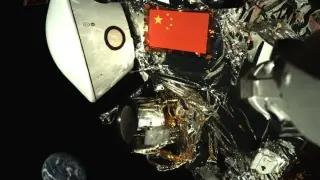
China is accelerating its space-resource program, aiming to survey and extract materials from asteroids and other minor bodies. Researchers are developing a six-legged, wheel-and-claw robot capable of operating in microgravity, with energy storage leveraging local resources, as part of a broader plan to tap metals and helium-3. The Tianwen-2 mission, launched in 2025, will sample near-Earth asteroid 2016 HO3 and study a main-belt comet to lay groundwork for future mining.