
NASA Rovers Capture New Clues on Mars' Ancient Past and Volcanic History
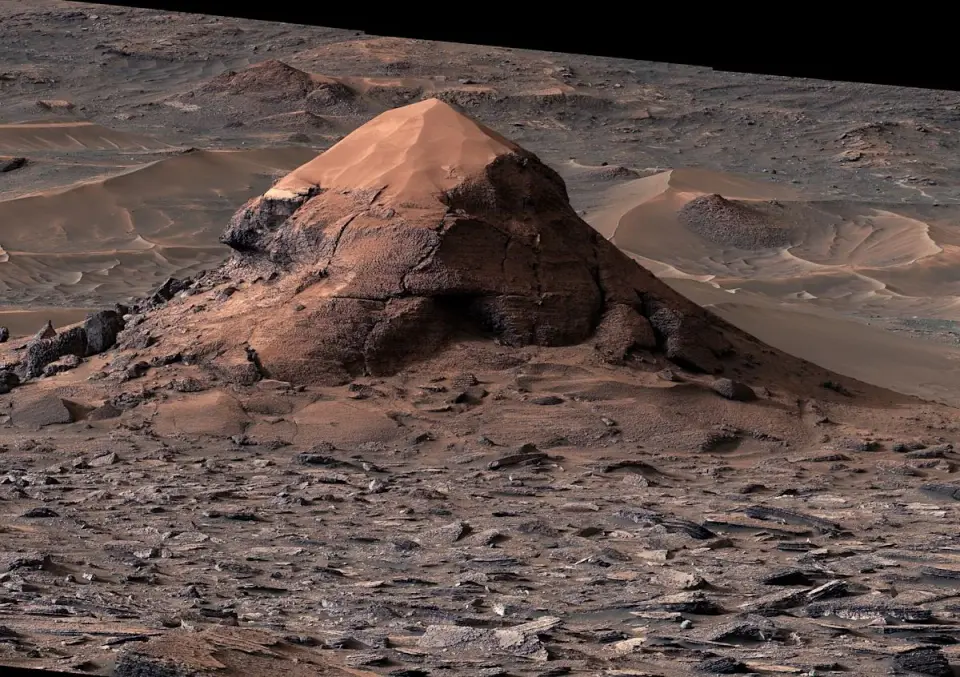
NASA’s Perseverance and Curiosity rovers, along with orbiters, have released new images revealing Mars' geological history, including ancient rock formations, volcanic features, and potential biosignatures, supporting the search for past life and informing future human missions.
Key points
- Perseverance captured a selfie in March 2026 during its deepest westward push beyond Jezero Crater, assembled from 61 images.
- Curiosity documented a sand-capped butte nicknamed 'Miraflores' in June 2026, estimated at 20 feet tall, formed by erosion over time.
- Perseverance identified a 245-foot-thick rock formation called the 'Broom Point member,' likely over 3.9 billion years old, among the oldest terrain examined by a rover.
- Curiosity found extensive polygonal surface features in June 2026, with shapes ranging from 2 to 4 inches in diameter, a concentration not previously observed in one location.
- NASA’s Mars Reconnaissance Orbiter captured its 100,000th image of Syrtis Major, highlighting ongoing surface changes on Mars.
Background
NASA has maintained a sustained presence on Mars with two active rovers and two orbiters, building on decades of robotic exploration. Previous missions have revealed evidence of ancient water, volcanic activity, and potential biosignatures, such as a 2025 discovery in a rock sample that was the closest scientists had come to confirming past life. These new images extend that legacy, providing fresh data on Mars' geological evolution and habitability.
Why it matters
These images deepen our understanding of Mars' past environment, offering critical insights into whether the planet once supported life. This knowledge informs future human missions, including NASA's Artemis program, and helps scientists interpret Earth's own origins and place in the cosmos.
What to watch
NASA will continue to analyze data from Perseverance and Curiosity, focusing on rock samples and surface features to identify biosignatures. The agency is also planning the first human missions to Mars, with these findings guiding mission design and scientific priorities.
Want the full story? Read the original reporting
Read on ca.news.yahoo.com