Tag

Curiosity

All articles tagged with #curiosity

Living on Mars time: NASA engineers bend their days to a 24h39m sol
space6 days ago

Living on Mars time: NASA engineers bend their days to a 24h39m sol

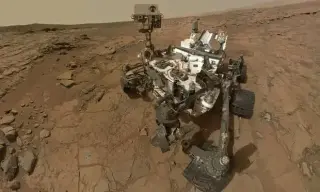
Two NASA rovers, Curiosity and Perseverance, run on a Martian day of 24 hours 39 minutes, so JPL staff spend about 90 sols living on Mars time, shifting their wake/sleep cycles and meals to align with Martian sunrise. Because of the signal delay, commands are scripted for the next sol rather than realtime control, and coping measures like blue-light lighting, blackout curtains, and timed caffeine help manage sleep loss and social dislocation. After the commissioning phase, teams gradually revert to Earth time, aided by increased rover autonomy (Mars Global Localization) that reduces the need for humans to chase Martian dawn.

Curiosity Frees Stubborn Mars Rock, Then Captures New Drill Imagery
space14 days ago

Curiosity Frees Stubborn Mars Rock, Then Captures New Drill Imagery

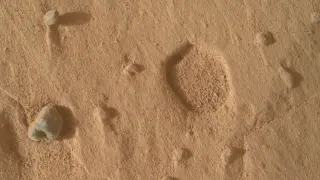
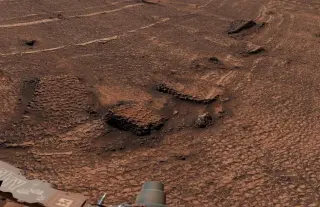
NASA’s Curiosity rover freed a 1.5‑foot rock that froze onto its drill on Mount Sharp after several days of remote recovery work. The rock, nicknamed Atacama, finally detached on May 1 following vibration-based maneuvers, and Mastcam imagery shows the drill hole left behind while mission controllers confirm the rover remains healthy and continues to explore for clues about ancient Mars water.

Curiosity Drill Sticks, Arctic Fjord Yields Deep-Sea Insight, Artemis II Photo Gallery Drops
science17 days ago

Curiosity Drill Sticks, Arctic Fjord Yields Deep-Sea Insight, Artemis II Photo Gallery Drops

NASA’s Curiosity rover encountered an unusual hitch when a rock named Atacama stuck to its drill sleeve during a Mars sampling attempt, but ground teams freed it after several maneuvers; in Greenland’s Inglefield Bredning, researchers deployed a deep-water camera and hydrophone at 260 meters to document 478 organisms and sounds (including narwhals and iceberg activity), showing a feasible approach for Arctic seafloor studies; NASA also released thousands of Artemis II mission photos featuring lunar, Earth, and Milky Way views.

Mars’ Marathon Wheels: Curiosity’s Six-Year Tale of Wear and Wind
space18 days ago

Mars’ Marathon Wheels: Curiosity’s Six-Year Tale of Wear and Wind

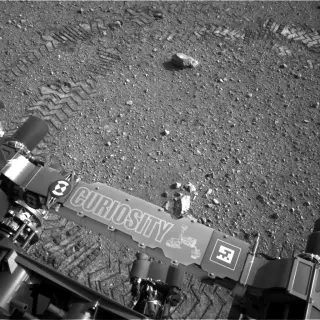
NASA’s Curiosity rover, after six years on Mars, reveals in a new time-lapse how its wheels and the Martian surface have endured. Captured from 2020–2026, the footage shows wheel wear from rocky terrain and dust moved by wind and seasons, helping scientists distinguish wheel-imprinted material from wind-blown dust and study atmospheric changes. Despite punctures and tears, Curiosity remains mobile, having driven about 32 kilometers, and its observations have influenced the design of the Perseverance rover.

Curiosity’s Six-Day Standoff: How a 29-Pound Mars Rock Held NASA’s Rover
science18 days ago

Curiosity’s Six-Day Standoff: How a 29-Pound Mars Rock Held NASA’s Rover

NASA’s Curiosity rover drilled into a large Mars rock nicknamed Atacama (about 1.5 feet wide at its base, 6 inches thick, roughly 28.6 pounds). The rock stubbornly stayed attached to the drill sleeve, delaying sampling for six days. Engineers tried vibrating the drill, reorienting the arm, and other maneuvers, and on the first attempt after the standoff the rock cracked free, letting Curiosity resume its Mars science mission with the moment captured on video.

Earthly penny used as scale in Curiosity’s Martian rock photos
space20 days ago

Earthly penny used as scale in Curiosity’s Martian rock photos

NASA's Curiosity rover photographed a real penny on Mars with its MAHLI camera. The coin, which traveled to Mars with the rover, sits dusty on the Martian surface, and its true purpose is to provide a known-size reference for scale in geology photos, helping scientists gauge rock features. The penny was minted in 1909 and has accumulated dust during the mission's time on Mars.

Mars Drill Surprise: Curiosity Snags a Rock, Then Breaks Free
space20 days ago

Mars Drill Surprise: Curiosity Snags a Rock, Then Breaks Free

During a 2026 drilling attempt, NASA's Curiosity rover pulled the rock named Atacama free with its drill sleeve—the first time a rock remained attached in the mission—before it finally dislodged after multiple maneuvers, highlighting the unpredictability of Martian rocks and the rover team's adaptive approach while Curiosity continues to reveal Mars' geology and history.

Curiosity Timelapse Reveals How Martian Sand Moves and Wheels Endure
science22 days ago

Curiosity Timelapse Reveals How Martian Sand Moves and Wheels Endure

NASA released a two‑minute timelapse from the Curiosity rover spanning six years at Gale Crater to study how sand grains shift on the rover’s deck as it climbs Mount Sharp; the footage helps scientists separate wheel‑driven sand from wind‑blown dust, part of broader findings about Mars’ past habitability and ongoing challenges like wheel wear, with Curiosity having traveled about 23 miles since landing in 2012, and NASA continuing engineering tweaks to keep the rover moving.

NASA rovers reveal parallel Martian histories in paired panoramas
space-exploration25 days ago

NASA rovers reveal parallel Martian histories in paired panoramas

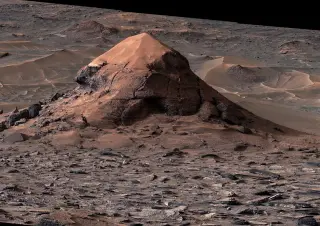
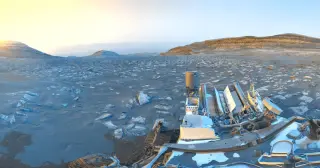
NASA released two 360-degree panoramas from the Perseverance and Curiosity rovers—assembled from nearly 1,000 images each—that contrast two Martian environments: Perseverance’s ancient lake and delta at Jezero Crater and Curiosity’s boxwork-rich terrain in Gale Crater. The pair highlights Mars' watery past and prebiotic chemistry, with Perseverance seeking signs of past life and Curiosity studying habitability while continuing to map the planet’s geological timeline.

New Martian Organics Deepen the Case for Ancient Life on Mars
science26 days ago

New Martian Organics Deepen the Case for Ancient Life on Mars

NASA’s Curiosity rover drilled the Mary Anning 3 rock on Mount Sharp and, using the SAM instrument with tetramethylammonium hydroxide, detected seven organic molecules — including nitrogen heterocycles and benzothiophene — the greatest diversity of organics found on Mars to date. The find reinforces the idea that ancient Mars had water and carbon-based chemistry capable of supporting life, though it does not prove life existed. Researchers also note that deeper chemical layers may remain undiscovered, with future missions like ESA’s Rosalind Franklin rover and NASA’s Dragonfly to Titan expected to continue probing Mars’ past chemistry.

Curiosity Discovers Seven New Organic Molecules in Martian Rock, Hinting at Past Habitability
space28 days ago

Curiosity Discovers Seven New Organic Molecules in Martian Rock, Hinting at Past Habitability

NASA's Curiosity rover analyzed the Mary Anning 3 rock and found 21 carbon-containing molecules, including seven never seen before on Mars, using the Sample Analysis at Mars (SAM) instrument with tetramethylammonium hydroxide (TMAH); the diverse organics support the idea that ancient Mars hosted life-friendly chemistry and environments capable of preserving organics for billions of years.

Curiosity detects diverse organics on Mars, hinting at ancient habitability
science-space1 month ago

Curiosity detects diverse organics on Mars, hinting at ancient habitability

NASA’s Curiosity rover, via a wet-chemistry experiment on a Mary Anning rock at Gale Crater, uncovered 21 carbon-containing molecules, including seven not previously detected on Mars. The organics could be preserved for about 3.5 billion years, reinforcing the idea that ancient Mars was habitable, though the findings do not prove life. Researchers say definitive answers require returning samples to Earth, and future missions with similar chemistry experiments (e.g., ExoMars Rosalind Franklin, Dragonfly) will continue probing Mars’ organic past.

Curiosity Documents Vast Dragon-Scale Patterns on Mars
science1 month ago

Curiosity Documents Vast Dragon-Scale Patterns on Mars

NASA's Curiosity rover captured thousands of honeycomb-like polygons on rocks near Antofagasta crater in Gale crater, Mars, forming patterns that resemble giant reptile scales. Scientists note that similar polygon textures have appeared before and are usually linked to drying mud or moving ice beneath the surface, but formation details for these rocks are still under study. The rover has collected extensive images and chemistry data to test competing hypotheses, and researchers emphasize that the abundance of these textured rocks is surprising yet not indicative of any extraterrestrial life.