
Fossilized Wings Reveal the Lost Chorus of Jurassic Insects
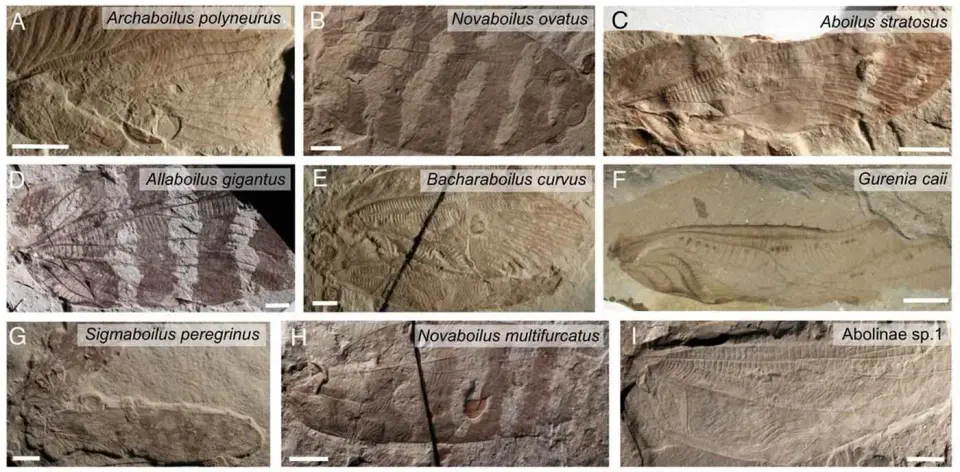
Scientists have reconstructed the sounds of nine extinct insect species from the Middle Jurassic, creating the first evidence-based approximation of a 165-million-year-old soundscape. By analyzing fossilized wing structures from Inner Mongolia and comparing them to modern relatives, researchers used computer modeling to simulate the chirps, trills, and clicks of ancient crickets and katydids. The study, published in PNAS, reveals a diverse acoustic environment that challenges previous theories about insect evolution and provides a new layer of realism for media depictions of prehistoric life.
Key points
- An international team led by Jun-Jie Gu of Sichuan Agricultural University analyzed 20 fossil specimens from Inner Mongolia, representing nine species of Orthoptera (crickets and katydids).
- The researchers used high-speed cameras and laser Doppler vibrometry to study the wing mechanics of living relatives, then applied this data to 2D models of the fossils to simulate their stridulations.
- The reconstructed calls span a wide frequency range, including one species, Sigmaboilus peregrinus, which produced ultrasonic sounds between 20 and 22 kilohertz, exceeding human hearing.
- The findings suggest that ultrasonic communication evolved in insects millions of years before the appearance of bats, challenging the long-held view that bat predation was the primary driver of high-frequency insect calls.
- The team collaborated with the creators of the Netflix documentary 'The Dinosaurs' to incorporate these scientifically accurate insect sounds into the show's audio design.
Background
This study builds on earlier coverage of the same research, which highlighted the discovery of ultrasonic tones in Jurassic insects and the collaboration with Netflix. The new briefing synthesizes details from multiple outlets, including The New York Times and Science News, to provide a comprehensive view of the methodology and implications of the PNAS publication.
How outlets are covering it
The New York Times emphasizes the novelty of the reconstruction, noting that it is the first evidence-based approximation of a Jurassic soundscape and contrasts it with the fictional sounds of 'Jurassic Park.' Science News focuses on the evolutionary implications, particularly the challenge to the 'bat hypothesis' for ultrasonic communication. Good News Network highlights the diversity of the calls and the specific frequency of Sigmaboilus peregrinus. All sources agree on the core findings but differ in their emphasis on the cultural impact (media) versus the scientific implications (evolutionary biology).
Why it matters
This research provides the first scientifically grounded reconstruction of insect sounds from the Jurassic period, offering a new perspective on the acoustic environment of prehistoric forests. It challenges established theories in evolutionary biology regarding the origins of ultrasonic communication and demonstrates the potential for using fossilized structures to reconstruct biological functions that are not directly preserved, such as sound. This work also has practical applications in media and education, allowing for more accurate depictions of prehistoric life.
What to watch
The researchers hope that this work will encourage a shift away from fictional, artist-created sounds in media depictions of prehistoric life. They may continue to explore other fossilized structures to reconstruct additional aspects of the Jurassic soundscape, potentially including the sounds of other insects or even dinosaurs, though the latter remains more challenging due to the lack of preserved soft tissues.
- Scientists Recreated Chirps of Jurassic Insects, Simulating a 165 Million-yo Soundscape (Listen) Good News Network
- What Did Jurassic Forests Sound Like? Like This. The New York Times
- A choir of katydid ancestors filled the Jurassic rainforest with song Science News
- 165-Million-Year-Old Insect Fossils Help Reconstruct What a Jurassic Forest May Have Sounded Like Discover Magazine
- Jurassic forest sounds recreated by scientists The Telegraph
Want the full story? Read the original reporting
Read on Good News Network