
NASA Highlights May 2025 M1 Solar Flare in H-alpha Imaging
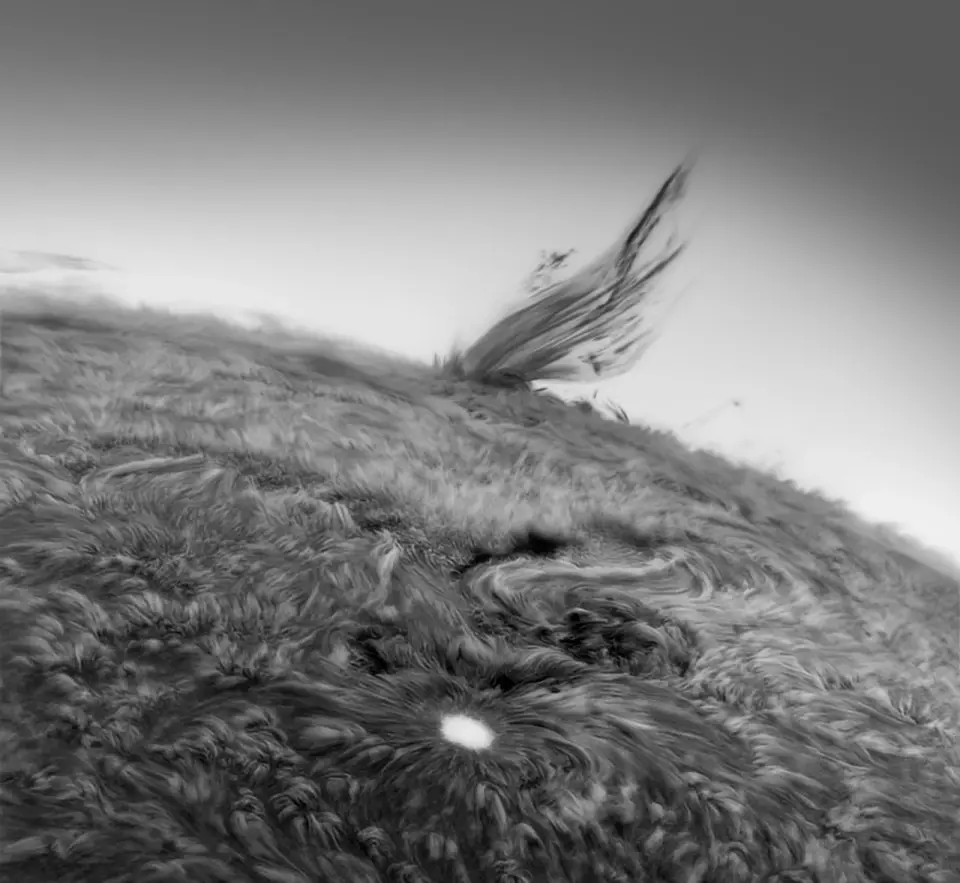
NASA’s Astronomy Picture of the Day features an H-alpha image of an M1-class solar flare observed on May 14, 2025. The flare, captured in the Sun’s chromosphere, demonstrates how magnetic field interactions release energy. While M-class flares can cause polar radio blackouts and minor radiation storms, they are less intense than X-class events. Agencies like NASA and NOAA monitor such activity to protect astronauts and infrastructure.
Key points
- The featured image shows a solar flare in the chromosphere, the atmospheric layer above the Sun’s surface where temperatures rise due to magnetic energy.
- The flare occurred on May 14, 2025, and was classified as M1 by GOES satellites, indicating moderate brightness in X-rays.
- M-class flares can trigger radio blackouts at Earth’s poles and minor radiation storms that pose risks to astronauts.
- NASA, NOAA, and other agencies monitor solar activity to predict and mitigate these space weather events.
- The image was captured using an H-alpha filter, which highlights light from energized hydrogen atoms during the flare.
Background
Recent coverage has linked solar flare mechanics to broader physics, such as the theoretical concept of gravitational reconnection identified by physicists in late 2026. Additionally, solar activity in October 2026 triggered G2-class geomagnetic storms, producing visible auroras in Australia and Michigan. The current feature serves as a visual reminder of the solar processes that drive these space weather events.
Why it matters
Understanding solar flare classification and impact is crucial for protecting satellite communications, power grids, and human life in space. Monitoring M-class flares helps agencies issue timely warnings for radio blackouts and radiation exposure, ensuring safety for astronauts and ground-based infrastructure.
What to watch
Continued monitoring by NASA and NOAA will track future solar flares and their potential impacts on Earth’s magnetosphere. Public interest in aurora viewing may increase if subsequent flares trigger stronger geomagnetic storms.
Want the full story? Read the original reporting
Read on NASA Science (.gov)