
New study links rapid Earth tipping to dinosaur-era sea level shifts
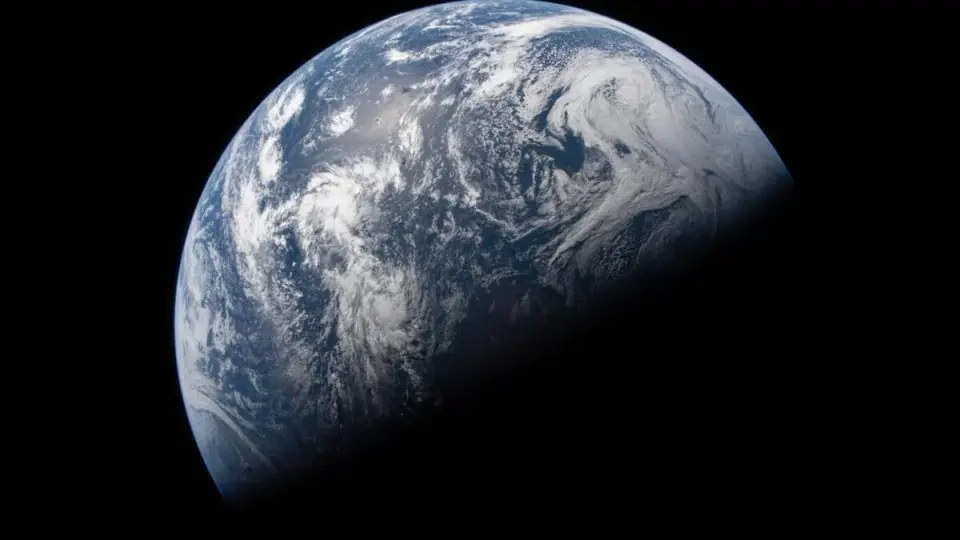
A new study in Science suggests Earth’s solid crust has tipped over multiple times in the last 320 million years, causing significant sea level changes during the Jurassic and Cretaceous periods. Researchers used ancient flooding maps to identify four rapid 'true polar wander' events, challenging previous views that this process was slow or negligible. These shifts, which occur as the planet reorients to balance mass distribution, may have profoundly impacted global climate and biology, though the exact triggers remain unknown.
Key points
- A team led by Mathew Domeier at the University of Oslo published a study in Science identifying four episodes of rapid true polar wander in the past 320 million years.
- The researchers analyzed ancient sea-level changes and continental flooding maps rather than relying solely on paleomagnetic data, which had yielded conflicting results.
- The identified rapid wander events occurred approximately 200-190 million years ago (Early Jurassic), 150-140 million years ago (Late Jurassic/Early Cretaceous), 100-90 million years ago (Mid-Cretaceous), and 30-20 million years ago (Oligocene/Miocene).
- True polar wander occurs when Earth’s solid outer layers shift relative to its spin axis to restore rotational balance, causing sea levels to rise in some regions and fall in others.
- Current true polar wander is measurable at about 10 centimeters per year, primarily driven by melting ice caps, but the ancient events were significantly faster and more impactful.
- The study suggests these events could have reshaped coastlines, ocean currents, and ecosystems during the age of dinosaurs, though the specific biological impacts are not detailed in the paper.
Background
Previous research on true polar wander relied heavily on paleomagnetic records, which often produced divergent interpretations, particularly regarding the speed and frequency of these events during the dinosaur ages. Some scientists had characterized the phenomenon as 'substantial but persistently slow' or even negligible. This new study offers an independent test using hydrological data, providing a different perspective on the dynamics of Earth's rotation and its environmental consequences.
How outlets are covering it
Gizmodo and Scientific American both highlight the surprise factor of the findings, noting that the team’s results contradicted the prevailing view that true polar wander was slow. Scientific American emphasizes the 'four-leaf-clover' pattern of flooding caused by the shifting poles, while Gizmodo focuses on the broader environmental implications. New Scientist provides a more technical explanation, noting that the movement rate exceeded 0.6 degrees per million years, which is faster than most tectonic plate movements. All three outlets agree that the study provides a crucial independent verification of magnetic data, but they differ in emphasis: Gizmodo and Scientific American focus on the historical impact, while New Scientist highlights the ongoing, albeit slower, nature of the process today.
Why it matters
Understanding true polar wander is essential for modeling long-term climate change and sea level fluctuations. If these rapid tipping events were more common or impactful than previously thought, they could explain sudden environmental shifts in the geological record that are not accounted for by tectonic or climatic models alone. This knowledge helps scientists better predict how Earth’s rotation and mass distribution might affect future environmental stability.
What to watch
The next step is to determine what triggers these rapid true polar wander events and how far the poles move during them. Researchers plan to investigate the specific mechanisms that caused these shifts at 20, 90, 140, and 190 million years ago. Additionally, further scrutiny of the Jurassic signals is warranted to confirm the findings with traditional paleomagnetic methods.
Want the full story? Read the original reporting
Read on Gizmodo