
Pluto's nitrogen ice plain erases its own history through rapid geological renewal
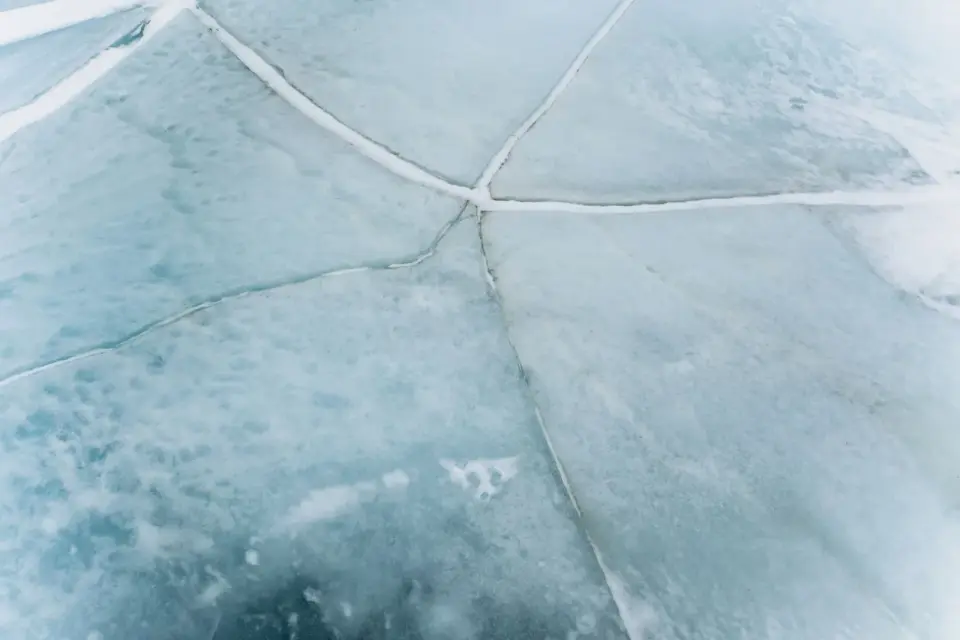
Sputnik Planitia, the western lobe of Pluto's heart-shaped Tombaugh Regio, lacks any visible impact craters. This absence suggests the nitrogen ice surface is geologically active, being churned and replaced by convection and glacial flow on a cycle that may be shorter than the history of human species.
Key points
- No impact craters have been detected in Sputnik Planitia by New Horizons, unlike other regions of Pluto which show over 1,000 craters.
- The lack of craters implies a surface age of less than 10 million years, based on crater statistics and impact rate models.
- Computer models suggest the nitrogen ice layer is several kilometers thick and undergoes convection, renewing the surface every 500,000 years.
- The surface features, including 10 to 40 km wide cells, are consistent with slow overturning of soft nitrogen ice, which can bury or distort impact scars.
- The driving mechanism for this convection is debated, with some models attributing it to internal heat from radioactive decay and others to surface cooling from sublimation.
Background
Previous coverage noted that New Horizons' 2015 flyby revealed Pluto as a geologically active world with smooth nitrogen-ice plains and evidence of ice flow. Recent studies have also identified a mysterious molecule on Pluto's surface, further highlighting the complexity of its geology and atmosphere.
Why it matters
The dynamic nature of Sputnik Planitia challenges the view of Pluto as a static, ancient relic. It demonstrates that even distant, cold worlds can have active geological processes that erase their historical record, providing insights into planetary evolution and the potential for surface renewal in other icy bodies.
What to watch
Further analysis of New Horizons data and future missions may clarify the exact mechanisms driving convection in Sputnik Planitia. Ongoing studies aim to refine models of Pluto's geology and understand the role of sublimation and internal heat in surface renewal.
Want the full story? Read the original reporting
Read on Space Daily